
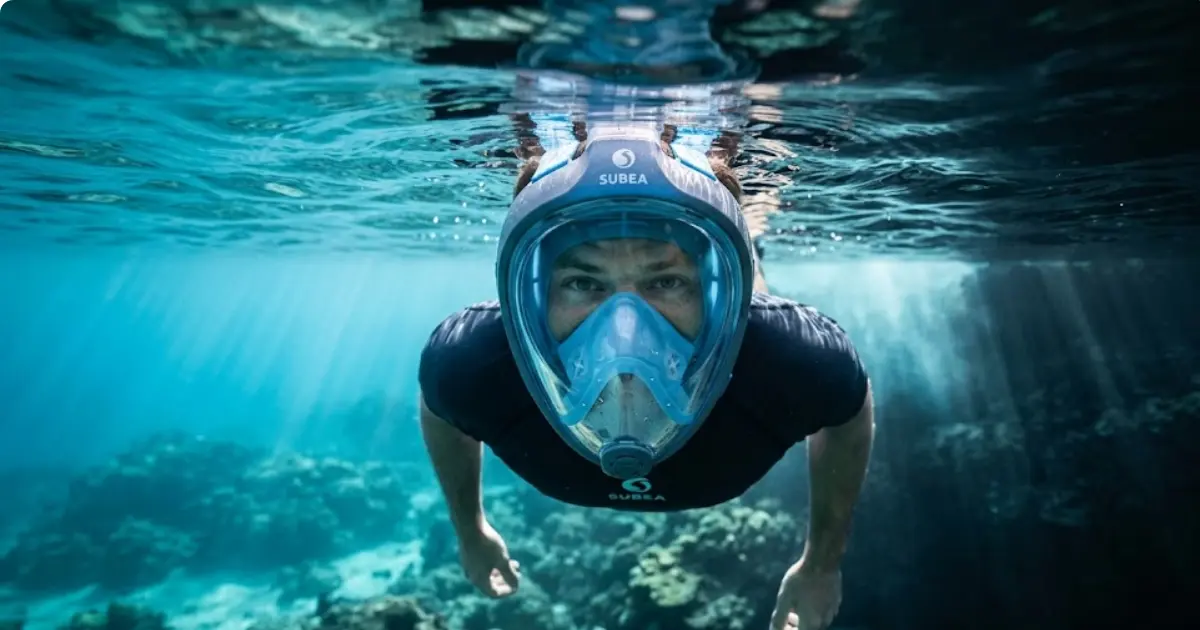

We’ve spent months testing snorkel gear in real ocean conditions — and no piece of equipment generates more confusion, fear, and bad advice than the full face snorkel mask. Most buyers either buy a cheap one without thinking or avoid them entirely after reading a horror story online. Neither approach is right. This article cuts through the noise and gives you the science, the facts, and the buying framework to make a confident decision.
QUICK ANSWER: Full face snorkel masks are safe when bought from reputable brands with proper dual-airflow design. Cheap, poorly engineered masks can cause dangerous CO2 buildup. The risk is real but avoidable. Stick to trusted brands, avoid exertion in the water, and never use them for diving below the surface.
What Is a Full Face Snorkel Mask?
Full face snorkel masks cover your entire face — eyes, nose, and mouth — in a single sealed unit. They replaced the traditional two-piece setup of a separate mask and mouthpiece snorkel.
- Use a single dry-top tube that seals when submerged
- Allow natural breathing through nose or mouth
- Provide a wide panoramic field of view, typically 180 degrees
- Sit flush against the face with a silicone skirt seal
- Come in multiple sizes to match different face shapes
How the Breathing System Works
A well-designed full face mask uses two separate channels: one for inhaling fresh air, one for exhaling CO2. The separation is the critical safety feature. In quality masks, exhaled air travels through a dedicated exhaust valve and exits through the snorkel tube. Fresh air flows in through a separate intake path. This is how reputable brands like Subea (Tribord) and Ocean Reef engineer their masks.
Cheap knock-offs often use a single combined airway. Inhaled and exhaled air mix inside the mask. That is where the danger begins.
Full Face vs. Traditional Snorkel Mask
| Feature | Full Face Mask (Quality Brand) | Traditional Mask + Snorkel |
|---|---|---|
| Breathing Method | Nose or mouth — natural breathing | Mouth only — mouthpiece required |
| CO2 Risk | Low with dual-airflow design; high with budget masks | Low — smaller dead space by design |
| Field of View | ~180 degrees panoramic | ~90–120 degrees |
| Ease of Use | High — no mouthpiece technique required | Moderate — requires mouthpiece habit |
| Duck Diving | Not possible — no pressure equalization | Yes — nose pinch equalization possible |
| Water Clearing | Difficult if water enters the mask | Easy — standard blow-clear technique |
| Emergency Removal | Slower — larger seal and straps | Faster — smaller, simpler design |
| Fogging | Anti-fog built into quality designs | Requires manual defogging solution |
| Tour Operator Acceptance | Banned by many Hawaii and Red Sea operators | Universally accepted |
| Best For | Calm surface snorkeling, beginners | All snorkelers, all conditions |
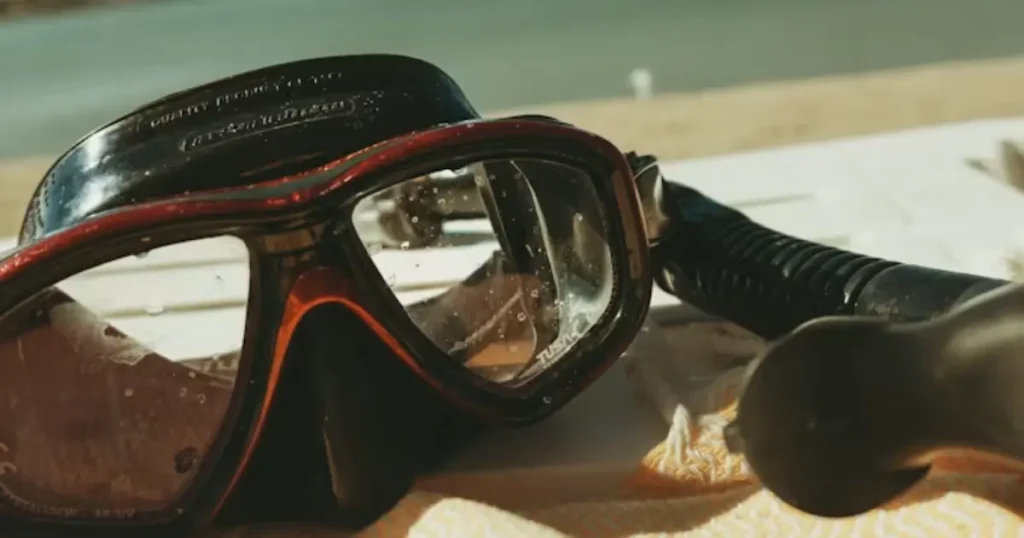
The core difference is breathing mechanics. Traditional masks require you to grip a mouthpiece and breathe only through your mouth. Full face masks let you breathe naturally. However, traditional masks have a much smaller dead space — the volume of air that can trap CO2. For our full breakdown of traditional gear options, see our [snorkel sets] guide.
Are Full Face Snorkel Masks Safe? The Real Answer
The honest answer is: it depends entirely on the mask’s engineering and how you use it. The design is not inherently dangerous. The implementation often is.
- Avoid any mask without a clearly separated inhale and exhale airway
- Skip masks under $40 — they rarely have proper dual-channel airflow
- Check that the internal seal separates the eye pocket from the breathing zone
- Never use a full face mask for surface diving or duck-diving below the surface
- Stop immediately if you feel dizzy, lightheaded, or short of breath
The CO2 Buildup Problem Explained
CO2 buildup is the core safety issue. When you exhale, carbon dioxide needs to exit the mask fully before your next breath. In poorly designed masks, exhaled air pools in the mask’s dead space — the internal volume around your nose and mouth. You then re-inhale a mixture of fresh air and your own CO2.
At low levels this causes headaches and dizziness. At higher concentrations it can cause confusion, loss of consciousness, and drowning. The risk increases with any physical exertion because you breathe harder and exhale more CO2. That is why calm, slow snorkeling matters as much as the mask itself.
What the Science Actually Says
A peer-reviewed study published in the journal Diving and Hyperbaric Medicine tested multiple commercially available full face masks on human subjects with real-time monitoring of blood oxygen and CO2 levels. The findings were clear: two of the three mask design types tested did not function as advertised. However, none of the masks in that study produced physiologically dangerous CO2 levels in subjects at rest.
A separate study found more alarming results under exercise conditions. During moderate activity, 41% of full face mask trials were stopped early because CO2 levels exceeded safe thresholds — compared to 19% for conventional snorkels. Four of the five participants who dropped below 90% blood oxygen saturation were wearing full face masks. Children were flagged as especially vulnerable due to smaller lung volumes.
INSIDER SECRET: The internal seal between the eye and breathing zones is more important than any other safety feature. If the oronasal pocket is not fully separated from the eye pocket, exhaled CO2 can migrate upward and get re-inhaled even when the mask is not fogging and appears to be functioning normally.
Why Cheap Masks Are the Real Danger
Reputable manufacturers invest in multi-channel airflow engineering and test against standards like EN 250, the benchmark used for scuba diving regulators. Budget masks sold on Amazon or at Costco often use a single combined airway — the same path carries both fresh and exhaled air. This is a design failure, not a user error.
- Check the product description for explicit mention of “dual airflow” or “separated inhale/exhale channels”
- Look for third-party safety certification, not just brand claims
- Read reviews specifically for reports of dizziness or lightheadedness
- Avoid any mask that doesn’t specify its internal airway architecture
Why Full Face Snorkel Masks Are Banned in Hawaii
Hawaii’s ban on full face snorkel masks is not universal across the state, but it is widespread among tour operators, and understanding why matters before you book a trip.
What Happened in Hawaii
Snorkeling-related deaths in Hawaii had averaged around 17 per year for decades. In the first three months of 2018 alone, ten snorkeling-related deaths were recorded. Several of those incidents involved full face masks. A 2016 death off the Big Island — a frequent visitor using a full face mask for the first time — became the catalyst for a sustained campaign by her husband, Guy Cooper, who pushed state officials and regulators to investigate.
By 2018, reports indicated that nearly half of snorkeling-related drownings in Hawaii had involved full face masks. However, data quality was a problem. Of 112 snorkeling-related drownings in Hawaii from 2014 to 2018, mask type was recorded in only 16% of cases. The causal link was never definitively proven, but the precautionary response was swift.
The ban has since spread beyond Hawaii. Tour operators in Egypt’s Red Sea, several Caribbean cruise lines, and the Galápagos have also restricted their use.
Which Tour Operators and Locations Ban Them
- Pride of Maui banned full face masks citing CO2 buildup risk
- Snorkel Bob’s rental stores across four Hawaiian islands refuse to carry them
- Dolphins and You and Turtles and You (Oahu) ban them on all tours
- Hawaii Ocean Project stopped offering them pending further research
- Multiple operators in the Red Sea and Caribbean have followed suit
If you are booking a snorkeling tour, check the operator’s gear policy before arrival. Showing up with a full face mask at a tour that bans them means you snorkel with their gear or not at all.
How to Choose a Safe Full Face Snorkel Mask
Choosing safely comes down to three things: design architecture, brand track record, and correct sizing.
- Pick masks with explicitly separated inhale and exhale channels
- Choose brands that publish third-party testing results
- Size correctly — a poor seal creates the same CO2 risk as a bad design
- Avoid masks that combine eye and breathing zones in one unsealed cavity
- Check that the dry-top valve closes reliably when submerged
Design Features That Matter
The most critical feature is the internal oronasal pocket — a separate sealed zone around your nose and mouth inside the mask. This pocket should be fully isolated from the eye area. Exhaled air must travel out through the dedicated exhaust valve, not circulate back toward your face.
Additionally, the dry-top snorkel mechanism must seal completely on submersion and reopen cleanly on resurfacing. Masks that allow water ingress under even mild wave action force the snorkeler to clear water while managing CO2 simultaneously — a dangerous combination for any inexperienced user.
Brands That Pass the Safety Test
Two brands consistently earn recommendation from experienced snorkelers and safety-conscious operators:
Subea Easybreath (Tribord / Decathlon): The original dual-airflow full face mask design. Separate inhale and exhale channels. Anti-fog construction. Available in multiple sizes. The Decathlon brand makes sizing guidance accessible and the price point is reasonable for the engineering quality.
Ocean Reef Aria: Higher price point, premium build, excellent face seal on a wider range of face shapes. Separate airflow channels. Frequently cited by tour operators who do allow full face masks as the one they trust.
Both brands have been independently tested and publicly confirmed their masks meet or exceed EN 250 CO2 standards.
For reef-safe protection while snorkeling, pair your mask choice with the right [reef sunscreen] — it protects the coral and your skin on longer sessions.
Who Should (and Shouldn’t) Use a Full Face Snorkel Mask
Full face masks are not right for everyone. Matching the mask to the user matters as much as brand selection.
Good candidates:
- Beginner snorkelers who struggle with mouthpiece breathing
- Snorkelers with jaw fatigue or dental issues
- Swimmers who want hands-free, relaxed surface snorkeling
Poor candidates:
- Anyone planning to duck-dive below the surface — pressure equalization is not possible with a full face mask
- Strong swimmers who exert significant physical effort while snorkeling
- Children under approximately 10 years — smaller tidal volumes increase CO2 vulnerability
- Anyone with respiratory conditions — consult a physician first
Always avoid:
- Wearing a full face mask in rough or choppy water
- Using a full face mask as a substitute for scuba equipment
- Ignoring early warning signs: dizziness, tingling lips, or narrowing vision are signals to surface immediately
The Verdict
Full face snorkel masks are not inherently dangerous. Cheap, poorly engineered full face masks are. That distinction is what every buyer needs to understand before purchasing one.
Our testing and the published research both point to the same conclusion: dual-airflow design from a reputable brand — specifically Subea Easybreath or Ocean Reef Aria — delivers a safe snorkeling experience for calm surface use. The risk is real with budget knock-offs, and it is real under physical exertion regardless of brand. If you are booking a Hawaii trip, check your tour operator’s gear policy in advance. If you are buying for independent snorkeling, spend the extra $30 and get the engineering right. The ocean does not grade on a curve.
