

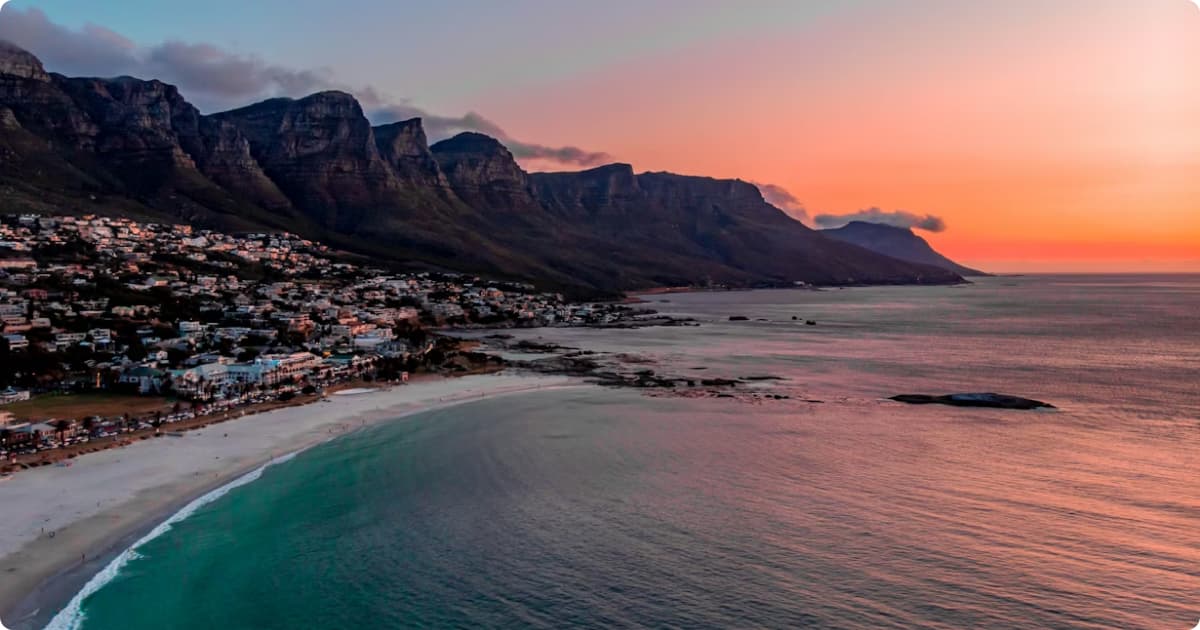
Cape Town doesn’t ease you in. It hits you with a flat-topped mountain rising straight out of the ocean, penguin colonies forty minutes from the city center, and wine estates that could hold their own in Burgundy all before lunch.
The problem is that most guides treat Cape Town like a highlight reel. They list everything and explain nothing. You’re left wondering which neighborhood to base yourself in, which attractions are worth the entry fee, and whether you actually need to worry about safety.
This guide gives you the decision framework the other guides skip neighborhood comparisons, honest 2026 costs, and itinerary structures for three, five, and seven days so you can plan a trip that fits your time and budget, not just someone else’s bucket list.
QUICK ANSWER:
Cape Town’s top experiences are Table Mountain, the Cape Peninsula drive, Boulders Beach, Bo-Kaap, and Robben Island. Visit October to March for the best weather. Mid-range travelers should budget R1,500–R3,000 per day. Use Uber for all city transport.
What to Know Before You Go
Here are the fast facts every Cape Town traveler needs before booking.
- Currency: South African Rand (ZAR) — $1 USD trades at approximately R18–19 in 2026.
- Language: English is spoken widely across Cape Town’s tourist zones.
- Voltage: South Africa runs on 220V with Type M plugs — bring an adapter from the US or UK.
- SIM cards: Buy a Vodacom or MTN prepaid SIM at the airport for affordable local data.
- Visa: US and UK citizens receive 90 days on arrival — no advance visa required.
- Tipping: 10–15% at restaurants and for guides is expected and appreciated.
These basics take five minutes to sort. However, skipping them costs you real time and money on arrival.
Best Time to Visit Cape Town
Cape Town’s seasons run opposite to the US and UK, so timing your visit shapes everything.
- Visit November to March for warm, dry days perfect for beaches, hiking, and driving the Peninsula.
- Book 3–4 months ahead for peak December and January — it’s South Africa’s summer holiday rush.
- Choose October or April for shoulder-season value with near-perfect weather and fewer crowds.
- Avoid July and August if you’re beach-focused — Cape winter brings cold, rain, and strong wind.
- Watch for the Cape Doctor: a powerful southeast wind that blows hardest in summer and can close the Table Mountain cableway without warning.
October and November are therefore the sweet spot: warm weather, lower prices, and no Christmas crowds.
Where to Stay in Cape Town
| Neighborhood | Best For | Walkable at Night? | Avg. Hotel Cost/Night | Vibe |
|---|---|---|---|---|
| City Bowl | First-timers, central access | ⚠️ Use Uber after dark | R1,200 – R2,500 | Urban, cafes, Long Street nightlife |
| De Waterkant | Boutique stays, food lovers | ⚠️ Use Uber after dark | R1,500 – R3,000 | Vibrant, LGBTQ-friendly, stylish |
| Camps Bay | Beach lovers, luxury stays | ✅ Beachfront strip is safe | R2,500 – R6,000+ | Glamorous, scenic, mountain views |
| Sea Point | Budget-conscious, local feel | ✅ Promenade is walkable | R900 – R2,000 | Residential, laid-back, coastal |
| V&A Waterfront | Families, safety-conscious travelers | ✅ Safest area in Cape Town | R2,000 – R5,000 | Secure, busy, shopping and dining |
| Green Point | Value seekers near Waterfront | ✅ Generally safe | R1,000 – R2,200 | Quieter, convenient, good restaurants |
Cape Town’s neighborhoods feel like different cities your base shapes your entire experience.
City Bowl and De Waterkant
City Bowl sits directly below Table Mountain. It’s the most central option and gives you walking access to Long Street’s cafes, restaurants, and nightlife. De Waterkant is the vibrant, LGBTQ-friendly district immediately next door, with excellent boutique hotels and a strong dining scene.
- Choose City Bowl if it’s your first visit and you want easy access to everything.
- Pick De Waterkant for boutique stays, great food, and a lively social atmosphere.
- Avoid walking alone in City Bowl after dark take Uber between venues.
Camps Bay and Sea Point
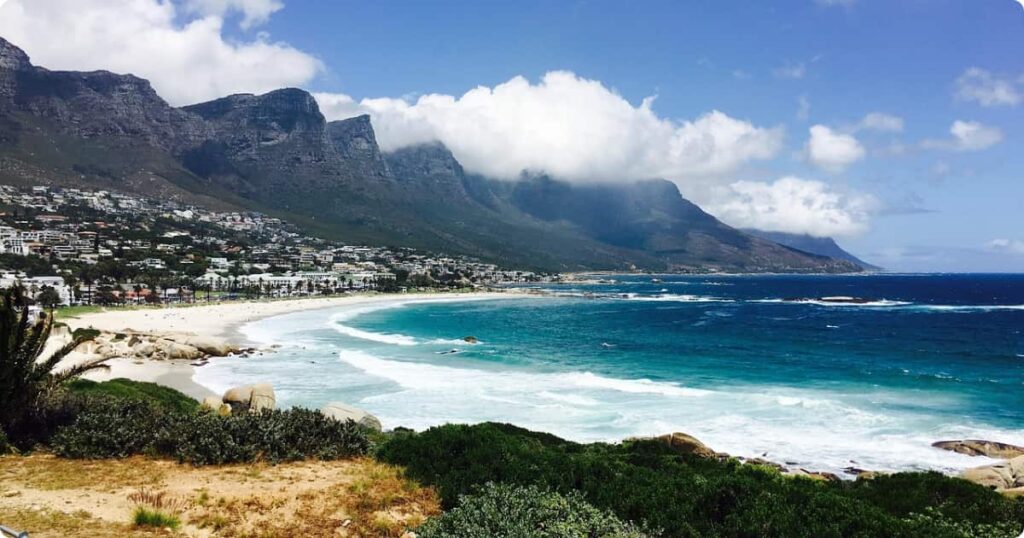
Camps Bay is Cape Town’s glamorous beachfront strip white sand, mountain backdrop, and a boulevard lined with bars and restaurants. Sea Point sits just north along the Atlantic, quieter and significantly better value.
- Choose Camps Bay for postcard views, beach access, and the full “Mother City” experience.
- Pick Sea Point for a more local feel, excellent restaurants, and the scenic coastal promenade.
- Expect Camps Bay hotels to run 30–50% more than Sea Point equivalents for similar quality.
V&A Waterfront and Green Point
The V&A Waterfront is Cape Town’s safest area to walk at night. It’s convenient, well-lit, and packed with restaurants and shops. Green Point is a five-minute walk away and offers slightly lower accommodation prices.
- Pick the Waterfront for maximum security and walkability especially for families.
- Choose Green Point for better value with easy access to Waterfront dining and nightlife.
- Use this area as a base if you’re attending events at the nearby Cape Town Stadium.
Top Things to Do in Cape Town
Cape Town packs more bucket-list experiences into one city than almost anywhere else on earth.
- First-timers should prioritize Table Mountain, the Cape Peninsula, and Robben Island.
- Add Bo-Kaap and Kirstenbosch if you have five or more days.
- Boulders Beach is a must it requires a half-day and works best paired with the Peninsula drive.
Table Mountain
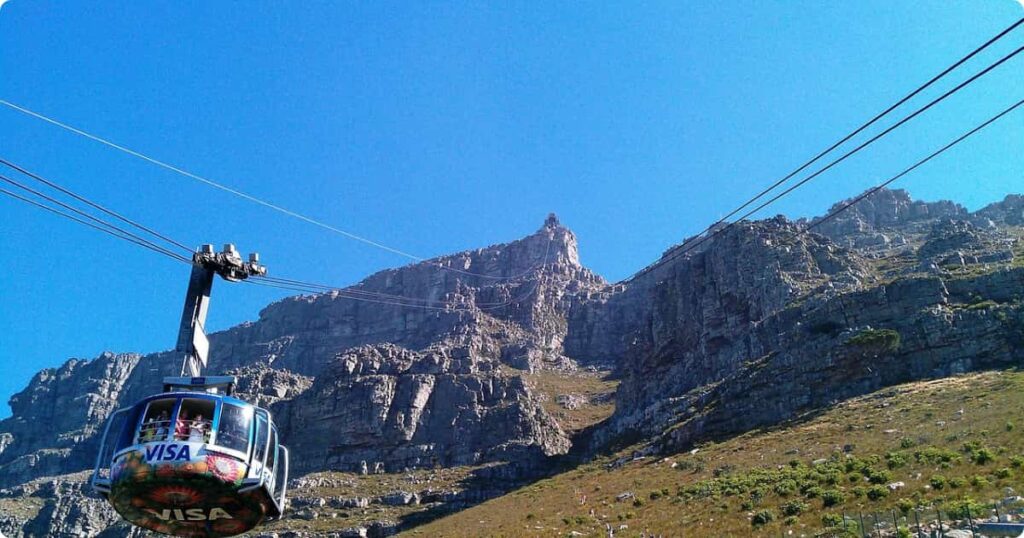
Table Mountain is non-negotiable. It’s one of the New7Wonders of Nature and the defining icon of the city. Take the Aerial Cableway for R430 return (adults, 2026 price) or hike the Platteklip Gorge trail for free it’s steep but achievable in two hours.
- Book cableway tickets online in advance queues in peak season stretch over an hour.
- Hike Platteklip Gorge for a rewarding 2-hour ascent with 360° views at the top.
- Check the mountain’s weather app — the cableway closes in high winds with little warning.
- Go early morning to avoid crowds and get the clearest views over Table Bay.
The cableway runs roughly 8am to 6pm in peak season. Conditions change fast always carry a light layer, even in summer.
Cape Peninsula and Cape Point
The Cape Peninsula drive ranks among the great road trips on earth. It runs south from Cape Town through Muizenberg and Simon’s Town to the Cape of Good Hope, then returns via Chapman’s Peak Drive along the Atlantic coast.
- Rent a car or book a tour — public transport doesn’t cover the full Peninsula route.
- Buy Cape of Good Hope entry tickets (R455 per person in 2026) online before you go.
- Include Chapman’s Peak Drive on the return — it’s one of the world’s most spectacular coastal roads.
- Allow a full day — rushing the Peninsula is the most common mistake first-timers make.
Robben Island
Robben Island held Nelson Mandela prisoner for 18 of his 27 years behind bars. Today, former political prisoners lead the tours. It’s one of the most moving historical experiences in all of Africa.
- Book ferry tickets through the Robben Island Museum website well in advance they sell out fast.
- Budget a full half-day: ferry, bus tour, and prison visit together take around 3.5 hours.
- Choose morning departures for calmer seas and better light throughout the visit.
Bo-Kaap
Bo-Kaap is Cape Town’s most photographed neighborhood. The brightly colored houses date to the 18th century, when enslaved workers were first housed here by the Dutch. Today it remains a living Muslim-Cape Malay community with deep cultural roots.
- Visit early morning (7–9am) to photograph the colorful facades without tourist crowds.
- Respect the residents — Bo-Kaap is an active neighborhood, not a theme park.
- Book a walking tour to properly understand the history behind the colors.
- Explore side streets instead of the main tourist strip for a more authentic experience.
Kirstenbosch National Botanical Garden
Kirstenbosch sits at the eastern foot of Table Mountain and covers 1,300 acres. It’s widely regarded as one of the world’s great botanical gardens. Additionally, the Sunday summer concerts on the lawn are a long-standing Cape Town tradition.
- Buy entry tickets (R250 adults in 2026) at the gate or book online.
- Check the summer concert schedule — popular shows sell out weeks in advance.
- Walk the Boomslang Canopy Walkway for treetop-level views over the garden below.
INSIDER SECRET: The entrance closest to the Constantia Nek parking area is almost always quieter than the main gate. You’ll get the same garden with half the crowd.
Boulders Beach
Boulders Beach in Simon’s Town is home to a colony of around 3,000 African penguins. It’s one of the few places on earth where you can swim in close proximity to wild penguins. Entry costs R250 per adult in 2026.
For everything you need to know before visiting including the best time of day, parking, and how to combine it with the Peninsula drive read our complete Boulders Beach penguins guide.
Best Beaches in Cape Town
Cape Town’s beaches are some of the most dramatic on earth. However, water temperature varies sharply depending on which coast you’re on.
- Clifton 4th Beach: sheltered, calm, and beautiful — no lifeguards, small waves.
- Camps Bay Beach: lively and social with mountain views — can be windy in summer afternoons.
- Noordhoek Beach: vast and wild — ideal for horse riding and long empty-shore walks.
- Muizenberg Beach: warmer Indian Ocean water — the best option for beginner surfers.
- Boulders Beach: penguin colony access — not ideal for swimming, but completely unmissable.
The Atlantic side beaches (Camps Bay, Clifton) look incredible but run cold around 14–16°C even at peak summer. Muizenberg on the Indian Ocean side is noticeably warmer. Choose based on whether you want to swim or simply sunbathe.
Food, Wine, and Nightlife in Cape Town
Cape Town consistently ranks among the world’s top food cities and the prices will shock you in the best possible way.
Food Markets and Restaurants
- Visit the Oranjezicht City Farm Market on Saturday mornings at Granger Bay for local produce and street food.
- Try the Old Biscuit Mill in Woodstock on Saturdays for Cape Town’s best artisan food market.
- Book top restaurants 4–6 weeks ahead in the November–March peak season — tables fill fast.
- Eat in Woodstock or Observatory for excellent local restaurants at significantly lower prices than Camps Bay.
- Budget R400–R800 per person for a quality sit-down dinner including a bottle of wine.
First-timers are regularly stunned by Cape Town’s dining value. A full meal with wine at a respected restaurant often costs less than a fast-food combo in London or New York.
Cape Winelands Day Trip
Franschhoek and Stellenbosch sit 45–75 minutes from Cape Town. Both offer world-class wines, dramatic mountain scenery, and estate restaurants that rival anything in Europe.
For a full breakdown of which wineries to visit, current tasting fees, and how to structure the day, read our Cape Town wine country guide.
Getting Around Cape Town
Cape Town is not a walkable city. Therefore, planning your transport before you arrive saves significant stress.
- Use Uber for all city travel — it’s safe, affordable, and available around the clock.
- Rent a car for the Cape Peninsula drive, day trips to the Winelands, and Garden Route excursions.
- Avoid metered taxis — Uber is consistently safer and more competitively priced.
- Skip the MyCiti bus for tourist purposes — it’s slow and doesn’t connect key attractions reliably.
- Download Uber before arrival and set up your payment method while still at home.
A one-way Uber from City Bowl to Camps Bay costs R80–R120 (~$4–$6) in 2026. Cape Town International Airport (CPT) is 20 km from the city center budget 45 minutes with traffic during arrival.
Is Cape Town Safe for Tourists?
Safety is the number one question first-time visitors raise — and the honest answer is more nuanced than most guides provide.
- Use Uber after dark — walking in unfamiliar areas at night carries genuine risk.
- Keep your phone out of sight in busy tourist areas like Bo-Kaap and Long Street.
- Avoid the Cape Flats and township areas unless you’re with a reputable guided tour operator.
- Use hotel safes for passports and keep payment cards separate from cash at all times.
- Stay in established tourist neighborhoods — City Bowl, Camps Bay, Sea Point, and the V&A Waterfront.
Cape Town’s crime is concentrated in specific areas that are largely separate from tourist zones. Meanwhile, thousands of travelers visit safely every year by applying straightforward, common-sense precautions.
For a thorough, unvarnished breakdown of safety by neighborhood and situation, read our guide on Is Cape Town safe.
How Many Days Do You Need in Cape Town?
Most travelers underestimate Cape Town significantly. Five days is the realistic minimum for a satisfying first visit.
3-Day Cape Town Itinerary
- Day 1: Table Mountain cable car, Bo-Kaap walking tour, V&A Waterfront dinner.
- Day 2: Full Cape Peninsula drive — Cape Point, Boulders Beach, Chapman’s Peak.
- Day 3: District Six Museum, City Bowl exploration, Long Street sundowner.
Three days delivers the highlights. However, you’ll feel rushed at every single stop.
5-Day Cape Town Itinerary
- Days 1–3: Follow the 3-day plan at a noticeably more relaxed pace.
- Day 4: Robben Island morning, then Kirstenbosch for a late-afternoon concert or sunset walk.
- Day 5: Constantia wine estates or a day trip to Stellenbosch or Franschhoek.
Five days is the sweet spot for first-timers. You’ll leave satisfied rather than breathless and already planning the return.
7-Day Cape Town Itinerary
- Days 1–5: Follow the 5-day plan above.
- Day 6: Chapman’s Peak hike, Noordhoek Beach, and Hout Bay for lunch.
- Day 7: Woodstock art district, morning market, and a long farewell lunch in the CBD.
Seven days lets Cape Town breathe. You get beaches, wine, history, hikes, and still have time to sit in a café and watch the city do its thing. As a result, seven days is what we recommend to anyone with the flexibility.
Real 2026 Budget Guide for Cape Town
| Traveler Type | Daily Budget (ZAR) | Daily Budget (USD approx.) | What’s Covered |
|---|---|---|---|
| Budget | R800 – R1,200 | ~$42 – $63 | Hostel dorm, Uber rides, food markets, free hikes |
| Mid-Range | R1,500 – R3,000 | ~$80 – $160 | Boutique hotel, restaurant dinners, paid attractions |
| Luxury | R5,000+ | ~$260+ | 5-star hotel, private guides, fine dining, wine estates |
| Table Mountain Cableway | R430 return | ~$23 | Adult return ticket (2026 rate) |
| Cape of Good Hope Entry | R455 per person | ~$24 | Conservation fee (2026 rate) |
| Robben Island Ferry + Tour | R750 per adult | ~$40 | Return ferry, bus tour, and prison visit included |
| Boulders Beach Entry | R250 per adult | ~$13 | SANParks conservation fee (2026 rate) |
| Restaurant Dinner + Wine | R400 – R800 | ~$21 – $42 | Per person at a quality Cape Town restaurant |
| Airport Uber to City | R300 – R450 | ~$16 – $24 | CPT to City Bowl or Sea Point (2026 estimate) |
Cape Town is exceptional value for US and UK travelers the Rand exchange rate works powerfully in your favor.
- Budget traveler: R800–R1,200/day (~$42–$63) — hostel bed, Uber rides, food markets.
- Mid-range traveler: R1,500–R3,000/day (~$80–$160) — boutique hotel, restaurant meals, paid attractions.
- Luxury traveler: R5,000+/day (~$260+) — five-star hotels, private guides, fine dining.
- Table Mountain cableway: R430 return per adult (~$23).
- Cape of Good Hope entry: R455 per person (~$24).
- Robben Island ferry and tour: R750 per adult (~$40).
- Boulders Beach entry: R250 per adult (~$13).
- Average restaurant dinner with wine: R400–R800 per person (~$21–$42).
As a result, a well-planned week in Cape Town can cost less than three nights in a comparable European city. The Rand’s current strength against the Dollar and Pound makes this one of the world’s most compelling value destinations right now.
The Verdict
We’ve analyzed dozens of global cities for this platform. Cape Town is in its own category.
It’s the only destination that puts a UNESCO-listed mountain, wild penguin colonies, world-class wine estates, and a profound apartheid history all within 90 minutes of each other. First-timers consistently call it their greatest travel experience. Repeat visitors keep coming back.
For US and UK travelers, the Rand exchange rate makes it one of the best-value destinations on earth right now. Plan five days minimum. Base yourself in City Bowl or Sea Point. Use Uber at night without exception. Put Table Mountain and the Cape Peninsula at the top of your list then let Cape Town fill in the rest.
