
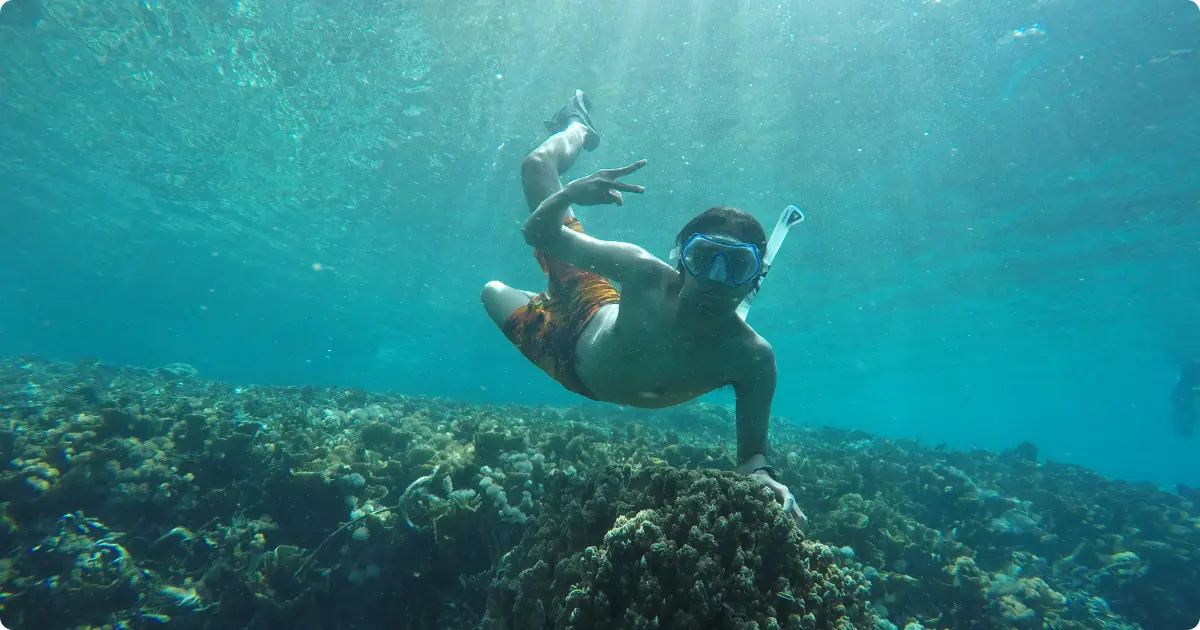

We’ve watched hundreds of first-time snorkelers panic within sixty seconds of putting their face in the water. Most of the time, it wasn’t the ocean that scared them — it was bad gear, zero preparation, and advice that skipped the basics.
The frustration is real. Every “beginner guide” online tells you to “just relax” without explaining how to actually breathe through a tube, stop your mask from flooding, or enter the water without tripping over your fins. That’s not a guide. That’s a motivational poster.
This article walks through the exact steps — from gear selection to your first 30 minutes in the water — so you snorkel with confidence instead of saltwater in your sinuses.
QUICK ANSWER: Learning how to snorkel for beginners takes about 15–30 minutes of practice. Start with a properly fitted mask and dry snorkel, practice breathing in shallow water, float face-down before kicking, and use slow hip-driven kicks. Defog your mask with baby shampoo before every session. Always snorkel with a buddy and wear a snorkel vest if you’re not a strong swimmer.
What You Need Before You Get in the Water
| Gear | Why You Need It | Priority | Buy or Rent? |
|---|---|---|---|
| Snorkel Mask | Lets you see underwater with a watertight seal | Essential | Buy — fit is personal |
| Dry Snorkel | Prevents water flooding the tube when submerged | Essential | Buy — mouthpiece comfort matters |
| Fins | Reduces effort and lets legs do the work | Essential | Buy if snorkeling more than twice |
| Snorkel Vest | Adjustable buoyancy for safety and energy savings | Highly Recommended | Buy — inexpensive and packable |
| Rash Guard | Sun and jellyfish protection without sunscreen reapplication | Highly Recommended | Buy |
| Reef-Safe Sunscreen | Protects exposed skin without damaging coral | Highly Recommended | Buy |
| Baby Shampoo (diluted) | Defogging solution — cheaper than commercial sprays | Recommended | Buy — a small bottle lasts months |
| Waterproof Bag | Keeps phone, keys, and valuables dry on the beach | Recommended | Buy |
Getting the right gear eliminates 80% of beginner frustration. Most first-time problems — foggy masks, sore jaws, blistered feet — come from equipment that doesn’t fit.
- Pick a mask that seals without tightening the strap
- Use a dry snorkel with a purge valve
- Choose fins that match your foot size exactly
- Wear a rash guard instead of relying on sunscreen alone
- Skip full face masks until you’re comfortable with standard gear
Choosing the Right Mask
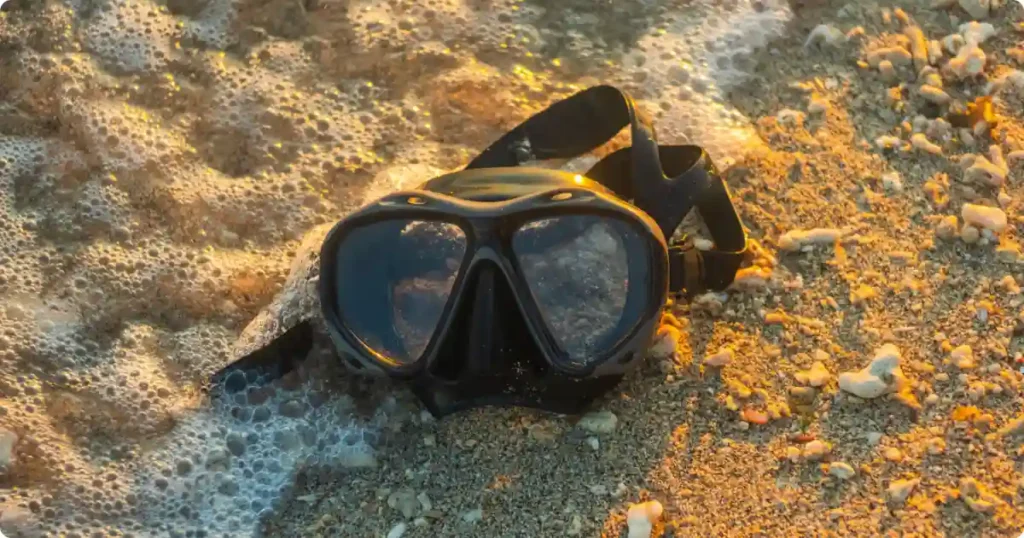
The mask is the single most important piece of snorkeling gear. A leaking mask ruins everything.
Here’s the test most beginners skip. Press the mask to your face without using the strap. Breathe in gently through your nose. If the mask stays sealed to your face, the fit is correct. If it falls, try a different shape.
However, a common mistake is overtightening the strap to fix a bad seal. Overtightening actually warps the silicone skirt and causes more leaks. The water pressure does the real sealing work once you’re submerged. Additionally, a single strand of hair under the mask skirt will break the seal instantly. Pull all hair back before you put the mask on.
Picking a Snorkel
A dry snorkel is the best choice for beginners. It has a valve on top that seals shut when submerged. This prevents water from flooding the tube when a wave rolls over you.
Look for a snorkel with a purge valve at the bottom. This small one-way valve lets you blow water out with a short sharp exhale — without lifting your head. Therefore, you stay face-down and keep breathing. A comfortable silicone mouthpiece also matters. Bite gently. If your jaw aches after ten minutes, the mouthpiece is too stiff.
Fins, Vests and Sun Protection
Fins transform snorkeling from exhausting to effortless. They let your legs do the work while your upper body stays relaxed.
- Pick full-foot fins for warm tropical water
- Choose open-heel fins with booties for rocky entries
- Avoid fins that pinch your toes or slide off when shaken
- Use a snorkel vest for extra buoyancy — no shame in it
Sun protection is non-negotiable. A long-sleeve rash guard covers more skin than any sunscreen. For exposed areas — face, ears, neck, backs of hands — apply reef-safe sunscreen 20 minutes before you enter the water. Reapply after every session.
How to Defog Your Snorkel Mask (And Keep It Clear)
A foggy mask is the number one complaint from first-time snorkelers. It happens because warm moisture from your face hits the cooler lens and creates condensation.
- Apply a drop of baby shampoo to the inside of each lens
- Rub it across the entire surface with your finger
- Leave the thin film in place — do not rinse it off yet
- Just before entering the water, give the mask one quick dip
- Avoid exhaling through your nose while snorkeling
Baby shampoo works because it creates a surfactant layer that prevents water droplets from forming on the glass. Commercial defog sprays work the same way. Additionally, never touch the inside of your lens with dry fingers. The oils from your skin make fogging worse.
INSIDER SECRET: Brand new masks have a factory silicone residue on the lens that causes heavy fogging. Before your first use, scrub the inside of each lens with white non-gel toothpaste, rinse, and repeat three times. This removes the residue permanently.
For new masks, this toothpaste prep is a one-time fix. After that, the baby shampoo method before each session keeps visibility crystal clear.
Your First 30 Minutes in the Water
This is where most beginners either fall in love with snorkeling or quit forever. The difference comes down to a simple sequence that builds confidence in stages.
Step 1 — Practice Breathing on Dry Land
Before you touch the ocean, put on your mask and snorkel while standing on the beach. Breathe slowly and deeply through your mouth. In through the mouth. Out through the mouth.
Your body naturally wants to breathe through your nose. Because the mask covers your nose, this triggers a mild panic response in most beginners. Spending two minutes breathing through the snorkel on land retrains that instinct. It sounds unnecessary. It isn’t.
Step 2 — Start in Shallow Water
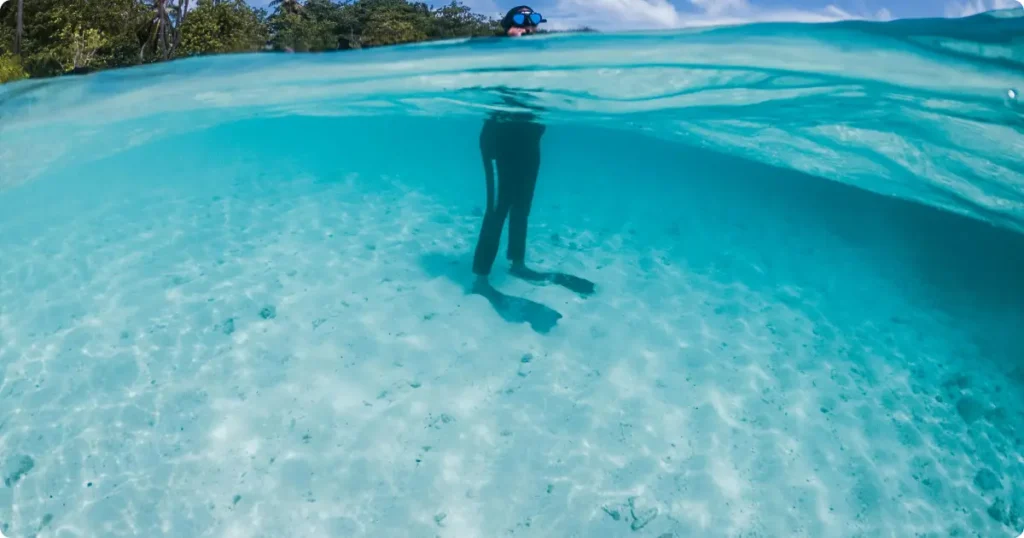
Walk into the water until it reaches your waist. Keep your fins in your hand or clipped to your arm until you’re deep enough.
Next, put on your fins while standing. Hold onto your buddy’s shoulder for balance if needed. Then simply lower your face into the water and breathe. Don’t kick. Don’t swim. Just stand there with your face down and breathe through the snorkel for 30 seconds.
This single step eliminates the most common panic trigger — the unfamiliar sensation of breathing with your face submerged.
Step 3 — Float Before You Kick
Once you’re breathing comfortably, lean forward and let your body float. Saltwater provides significantly more buoyancy than a pool. Most people are surprised at how effortlessly they float.
Spread your arms slightly for balance. Keep your legs relaxed and extended behind you. Your body should be flat on the surface — stomach down, back of your head just above the waterline. Don’t try to swim yet.
Step 4 — Move Slowly and Stay Relaxed
When floating feels natural, begin gentle kicks. Keep your movements slow and deliberate. Snorkeling is not swimming laps. It’s gliding.
Meanwhile, control your breathing. Slow, deep breaths through the snorkel keep your heart rate down and your air supply steady. If you feel winded, stop kicking and float. The ocean holds you up.
Snorkeling Technique That Actually Matters
Good technique makes snorkeling feel effortless. Bad technique makes it exhausting within minutes.
Body Position
Stay horizontal at the surface. Your body should form a straight line from head to fins.
- Keep your head face-down at roughly a 45-degree angle
- Avoid lifting your head to look forward — this drops your legs
- Arms stay relaxed at your sides or held loosely in front
- Back of your head stays just above the waterline
The biggest mistake beginners make is trying to swim with their head up. This creates drag and tires your legs quickly. Therefore, trust the mask to let you see everything below.
Kicking Technique
Kick from your hips, not your knees. Think of your entire leg as one long paddle.
- Use slow, steady flutter kicks
- Keep fins fully submerged — no splashing
- Avoid bicycle-pedaling motions
- Let the fins do the work — bigger fins mean less effort
Splashing attracts attention from marine life you’d rather avoid. It also wastes energy. A smooth, quiet kick is more efficient and keeps the underwater world calm around you.
Clearing Water from Your Snorkel
Water will enter your snorkel. This is normal. The technique to clear it takes five seconds to learn.
First, take a short breath in through the snorkel. Then blow out sharply and forcefully — like blowing out a candle — in one quick burst. The water shoots out the top of the snorkel and through the purge valve. Resume breathing normally.
If your snorkel floods completely, don’t panic. Lift your head above water, pull the snorkel from your mouth, dump the water out, replace the mouthpiece, and start again.
How to Snorkel Safely
Snorkeling is a low-risk activity when done with basic precautions. Most accidents happen because people ignore simple rules.
- Always snorkel with a buddy — never alone
- Check weather and wave conditions before entering
- Avoid areas with boat traffic or strong currents
- Wear a snorkel vest if you’re not a confident swimmer
- Stay within your comfort zone — never push past fatigue
- Don’t touch coral, rocks, or marine life
Because conditions change, keep checking your surroundings while snorkeling. Currents can shift, wind can pick up, and visibility can drop. If something feels wrong, exit the water. Additionally, know your entry and exit point before you start. Getting swept past your exit by a current is a common beginner mistake.
Never snorkel after heavy rain. Runoff reduces visibility to near zero and can stir up debris. Sunny, calm mornings offer the best conditions for beginners.
Shore Entry vs Boat Entry
For first-time snorkelers, shore entry is the better choice. You control the depth, the pace, and the exit.
- Walk in from a sandy beach until waist deep
- Put fins on while standing — don’t walk in fins on sand
- Float and test your gear before swimming out
- Return to standing depth if anything feels wrong
Boat entry is more advanced. You sit on the edge of the boat with your mask and fins already on. Hold the mask to your face and slide into the water. Getting back on the boat is harder — remove fins while holding the ladder, then climb up.
As a result, beginners should master shore snorkeling first. Most guided boat tours also start with a pool or shallow water practice session. Ask before booking.
Snorkeling Do’s and Don’ts
| Do | Don’t |
|---|---|
| Defog your mask before every session | Skip defog and hope for the best |
| Breathe slowly and deeply through your mouth | Breathe through your nose — it fogs the mask |
| Kick from the hips with fins below the surface | Bicycle-pedal or splash with your fins |
| Practice breathing in shallow water first | Jump off a boat for your very first snorkel |
| Wear a snorkel vest for extra buoyancy | Feel embarrassed about using a flotation aid |
| Always snorkel with a buddy | Go alone — even in calm conditions |
| Check weather and current before entering | Snorkel after heavy rain or in strong wind |
| Wear a rash guard for sun and sting protection | Rely only on sunscreen for long sessions |
| Look but never touch coral or marine life | Stand on coral or grab sea creatures |
| Exit the water if you feel tired or uneasy | Push past fatigue to “finish” a snorkel route |
This section covers the common mistakes that ruin first experiences — and the habits that make every session better.
- Do defog your mask before every session
- Do kick from the hips with fins below the surface
- Do breathe slowly and deeply through your mouth
- Don’t exhale through your nose — it fogs the mask
- Don’t touch or stand on coral — it’s fragile and alive
- Don’t snorkel in unfamiliar areas without local guidance
Finally, bring a small waterproof bag for your belongings on the beach. Valuables left unattended on a towel are an invitation for problems.
The Verdict
We’ve tested every method, made every beginner mistake, and refined this process over years of ocean snorkeling across three continents. The truth is simple — snorkeling is not hard. It just requires preparation that most people skip.
Get a mask that seals without cranking the strap. Use a dry snorkel with a purge valve. Defog with baby shampoo. Practice breathing on land first. Float before you kick. Stay relaxed.
Those six steps separate a miserable first experience from one that hooks you for life. Once you’re comfortable, the underwater world opens up in ways no video or photo can capture.
