
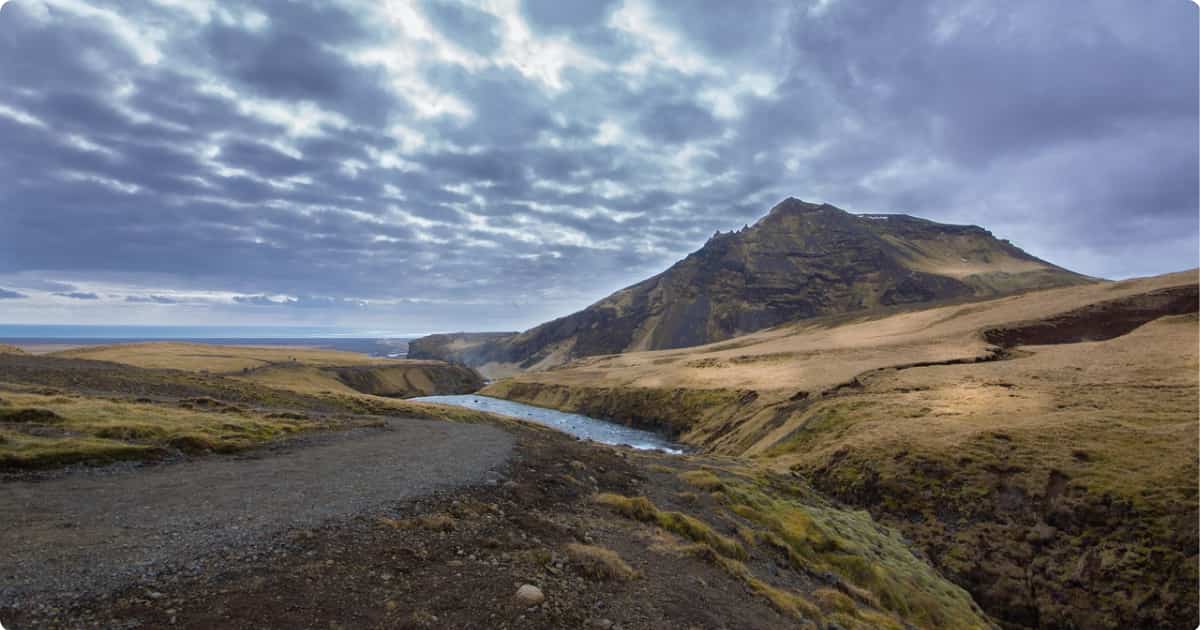

We’ve researched Iceland’s hot spring scene from end to end — and one experience consistently beats every other for value, scenery, and authenticity.
Most travelers land in Iceland, see the Blue Lagoon price tag, and assume that’s just what hot springs cost here. They pay it. They don’t know there’s a better option.
This guide covers everything you need to hike to Reykjadalur, soak in a real geothermal river, and spend almost nothing doing it.
QUICK ANSWER: Reykjadalur is a free-to-soak geothermal river located 45 km from Reykjavík in Hveragerði. Reach it via a 5.5-mile round-trip moderate hike. No entry fee. Pay only for parking. Best visited early morning or late evening to avoid crowds.
What Is Reykjadalur? (And Why It Beats the Blue Lagoon on Value)
| Factor | Reykjadalur Hot Springs | Blue Lagoon |
|---|---|---|
| Entry Fee | Free | $80–$120+ per person |
| Parking Cost | ~250 ISK/hour (~$2 USD) | Free (included with ticket) |
| Booking Required | No — just show up | Yes — advance booking essential |
| Physical Effort | Moderate hike — 5.5 miles round-trip | None — walk from car park |
| Facilities | Toilets + café at trailhead only | Full spa, showers, lockers, restaurant |
| Changing Rooms | Wooden privacy dividers only | Full changing rooms with lockers |
| Water Type | Natural geothermal river | Engineered geothermal lagoon |
| Crowd Level | Moderate — spreads across river | High — controlled capacity |
| Distance from Reykjavík | 45 km — ~45 min drive | 47 km — ~50 min drive |
| Best For | Budget travelers, hikers, authenticity seekers | Spa lovers, comfort-first travelers |
| Year-Round Access | Yes — check trail status in winter | Yes — open all year |
Reykjadalur is Iceland’s most rewarding free natural experience — and most visitors only discover it after they’ve already paid for something else.
- Skip the Blue Lagoon if budget matters — entry runs $80–$120+ per person
- Choose Reykjadalur for zero entry fee and a more authentic soak
- Expect a naturally heated river, not a resort pool
- Know that “Reykjadalur” translates directly to Steam Valley in Icelandic
- Understand the valley sits inside the active Hengill geothermal area
- Visit over 100,000 travelers make this hike annually
The valley is state-owned and publicly accessible. That’s the key difference.
The Thermal River Explained
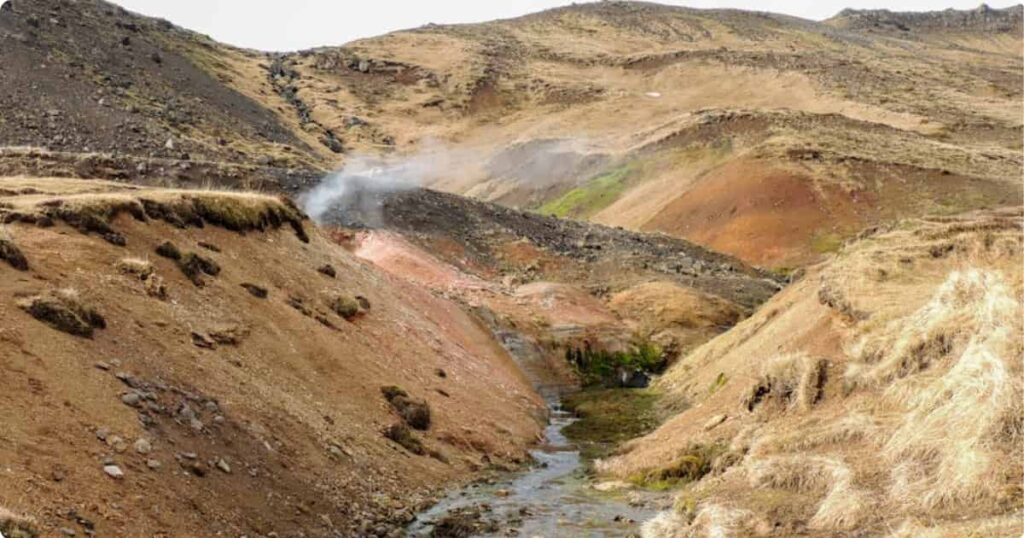
The river at Reykjadalur isn’t engineered. It forms naturally when boiling geothermal water from dozens of hillside hot springs mixes with glacial and rainwater. The result is a river you can actually bathe in — temperature varies by section, so you choose your comfort level.
The water runs through a lush valley floor surrounded by steam vents, orange mineral-stained rocks, and bubbling mud pools. There are no infinity pools, no swim-up bars, and no wristbands. Just a warm river and mountain air.
One closing note: the bathing area has wooden privacy dividers for changing — minimal, but they exist.
Reykjadalur vs Blue Lagoon: The Honest Comparison
Both are geothermal. Everything else is different.
- Pick Reykjadalur if you want a free, natural, hike-earned experience
- Pick Blue Lagoon if you want spa facilities, zero hiking, and a hotel nearby
- Avoid expecting changing rooms or showers at Reykjadalur — there are none
- Note Blue Lagoon requires advance booking; Reykjadalur requires nothing
- Check Blue Lagoon costs $80–$120+ per person in 2026; Reykjadalur costs parking only
- Skip neither — they deliver completely different experiences
Reykjadalur wins on authenticity and cost. Blue Lagoon wins on comfort and convenience. Both have a place in an Iceland itinerary — but only one is free.
The Hike to Reykjadalur: What to Actually Expect
This section covers exactly what the trail looks and feels like — so you arrive prepared, not surprised.
- Expect a moderate difficulty rating — not a beginner stroll
- Plan for 5.5 miles round-trip with 1,243 feet of elevation gain
- Allow 3–4 hours total including hiking time and a soak
- Know the steepest section hits in the first 45 minutes
- Note the trail is well-marked gravel throughout — no navigation skills needed
- Bring trekking poles in winter — ice on the path is common
The uphill burn at the start is real. Most travelers find it levels off into a manageable rhythm once you clear the initial ridge.
Trail Distance, Elevation & Difficulty
The out-and-back trail covers 5.5 miles with 1,243 feet of elevation gain. AllTrails rates it moderate. Most fit adults complete it in 3–3.5 hours including time at the river.
The first kilometer is the hardest. After that, the trail opens onto a plateau with sweeping views of Hveragerði and the coastline on clear days. From the plateau, you’ll begin to see steam rising from the valley floor — that’s your destination.
Families with older children manage this trail comfortably. It is not suitable for strollers or anyone with limited mobility.
What You’ll See Along the Way
The trail rewards attention. Don’t just hike with your head down.
- Spot Djúpagilsfoss waterfall on the left side during the early ascent
- Notice sulfur steam vents appearing as you gain elevation
- Watch for orange and rust-colored rocks — bacteria staining from mineral-rich water
- Look for Icelandic sheep grazing on hillside grass in summer
- See guided horseback riding groups passing on the same trail
- Find bubbling mud pools near the top — stay on the path, don’t touch
INSIDER SECRET: The moment the gravel trail transitions to a wooden boardwalk, you’ve arrived. That’s your signal to start choosing your soaking spot — move upstream for hotter water, downstream for cooler.
How to Get to Reykjadalur
Getting to the trailhead is straightforward — if you have a rental car.
- Drive from Reykjavík — approximately 45 minutes, 45 km southeast
- Search “Car park for thermal river Hveragerði” directly in Google Maps
- Park at the large paid car park at the trailhead
- Pay parking at the Reykjadalur Café or via the smartphone app on-site
- Note parking costs approximately 250 ISK per hour
- Avoid arriving late on summer weekends — the car park fills by mid-morning
Driving from Reykjavík
Take Route 1 (Ring Road) southeast from Reykjavík toward Hveragerði. The drive takes 40–45 minutes in normal conditions. Turn into Hveragerði and follow signs toward the Reykjadalur trailhead parking area. The road leading to the car park is unpaved but manageable in a standard rental car.
However, in winter, check road conditions on the Safe Travel Iceland website before departing. The trail has been closed seasonally in past years to allow path repair after heavy winter footfall.
Getting There Without a Car
This is genuinely harder than most guides admit.
- Take the Strætó bus from Reykjavík to Hveragerði — around 1.5 hours each way
- Walk approximately 4 km from the Hveragerði bus stop to the trailhead
- Book a guided tour with Reykjavík pickup included — the most practical car-free option
- Choose private or group hiking tours — several depart daily from Reykjavík
- Consider horseback riding tours from May to September as an alternative access option
- Skip relying on taxis — the remote trailhead makes return trips unpredictable
A guided tour with transport is the clear recommendation for those without a rental car. It adds cost but eliminates logistics. For related packing advice, see our guide to what to wear in Iceland.
What to Bring: Packing for the Hike & Soak
Packing for Reykjadalur means packing for both a moderate hike and an outdoor soak — in a country where weather changes hourly.
- Wear your swimsuit under your hiking clothes before you start
- Pack a quick-dry towel — full-size towels are heavy and awkward to carry wet
- Bring a dry bag or waterproof stuff sack for wet clothes on the return hike
- Carry water and snacks — there are no facilities on the trail itself
- Use waterproof hiking boots — the path can be muddy, especially in spring
- Add trekking poles for winter visits when ice is present on the trail
Clothing & Layers
Iceland’s weather doesn’t follow seasons the way other countries do. Dress in layers regardless of the forecast.
- Choose moisture-wicking base layers — cotton holds moisture and chills fast
- Pack a waterproof outer shell — wind and rain arrive without warning
- Wear warm mid-layer fleece even in July — the ridge can be significantly colder
- Avoid jeans — they’re heavy, slow-drying, and uncomfortable when wet
- Bring a buff or neck gaiter for wind exposure on the plateau section
For a full season-by-season breakdown, our complete guide to what to wear in Iceland covers every month in detail.
Gear & Essentials
- Pack insect repellent for summer — flies on the trail are persistent and well-documented
- Bring microspikes or mini-crampons for winter visits — the path ices over
- Carry a reusable water bottle — there are no bins on trail, carry all waste out
- Use sunscreen in summer — Iceland’s extended daylight means longer UV exposure
- Grab a plastic bag for wet swimwear — it will be soaking when you hike back
- Leave large backpacks at home — a 20L daypack is plenty for this trail
Best Time to Visit Reykjadalur
Timing your visit correctly determines your entire experience.
- Visit June to August for the best weather and trail conditions
- Expect the most crowds in July — Iceland’s peak tourism month
- Hike early morning (before 9 AM) or late evening (after 5 PM) to avoid peak crowds
- Consider September and October for quieter trails and early autumn color
- Avoid March to May — the trail is sometimes closed during spring thaw for path repair
- Check safetravel.is before any winter visit for current trail status
Summer vs Winter: The Real Trade-Offs
Summer brings lush green valley walls, wildflowers along the riverbank, and Iceland’s famous midnight sun. You can hike at 11 PM in daylight. The trade-off is crowds and flies — both peaking in July.
Winter brings silence, snow-covered slopes, and the possibility of seeing the northern lights from the hot river itself. However, the trail becomes significantly more demanding. Ice on the path is common, and some sections require microspikes. The trail has closed in past years due to winter damage — always verify current status before visiting.
How to Beat the Crowds
Over 100,000 visitors hike to Reykjadalur each year. Crowds are real — but manageable.
- Arrive before 8 AM in summer — the car park empties and the river is quiet
- Hike on weekdays — weekend crowds peak noticeably
- Visit in shoulder season — late August and September offer the best balance
- Go at night in summer — Iceland’s midnight sun makes 10 PM hiking fully viable
- Choose a weekday in October — the trail is quieter and the light is spectacular
The car park looks alarming when full. However, once in the valley, the river spreads out and finding a private spot is almost always possible.
Costs, Facilities & What to Know Before You Go
| Item | Detail | Estimated Cost (USD) |
|---|---|---|
| Trail Entry | Free — no ticket or booking needed | $0 |
| Soaking in Thermal River | Free — open access | $0 |
| Parking (2.5 hrs) | ~250 ISK/hour — pay at café or via app | ~$5–$8 |
| Reykjadalur Café | Hot drinks, light snacks — seasonal hours | ~$5–$12 |
| Guided Tour (with Reykjavík pickup) | Group tour — most practical without a car | ~$60–$90 |
| Horseback Riding Tour | May–September only — departs near trailhead | ~$100–$140 |
| Changing Facilities | Wooden privacy dividers at river — no fee | $0 |
| Toilets | Available at car park only | $0 |
| Trail Distance | 5.5 miles round-trip (8.9 km) | — |
| Elevation Gain | 1,243 feet (379 m) | — |
| Typical Visit Duration | 3–4 hours including hike and soak | — |
Reykjadalur is free to enter and free to soak in. The only unavoidable cost is parking.
- Pay approximately 250 ISK per hour for parking at the trailhead
- Use the Reykjadalur Café at the car park to pay or use the smartphone app
- Find public toilets at the parking area — the only facilities on site
- Note there are no showers, no lockers, and no staffed changing rooms at the river
- Carry all waste out — there are no bins on the trail
- Budget total visit cost around $5–$8 USD for 2–3 hours of parking
Parking, Café & Changing Areas
The Reykjadalur Café (also known as Reykjadalur Lodge or Dalakaffi) sits at the trailhead parking area. It offers drinks, light food, and restroom access. Hours vary seasonally — it is not always open, particularly in off-peak months.
At the river itself, several wooden dividers provide minimal privacy for changing. They help, but they are not enclosed rooms. The near-universal recommendation from experienced hikers: wear your swimsuit under your clothes from the car park. It makes the river arrival far smoother.
Rules, Safety & Leave No Trace
The geothermal area requires respect. These aren’t suggestions — they’re safety rules.
- Stay on the marked path at all times — geothermal ground can be unstable
- Avoid all unmarked hot springs and mud pools — temperatures can reach boiling
- Keep children and dogs away from unroped geothermal features
- Carry everything out — no bins exist anywhere on the trail
- Check Safe Travel Iceland before winter visits for closures or advisories
- Follow all posted signs — some areas have been roped off to protect fragile terrain
The valley is state-owned and ecologically fragile. It has been closed for path repair in the past due to visitor damage. Staying on designated paths directly protects future access for everyone.
The Verdict
Reykjadalur is the most honest hot spring experience Iceland offers. No booking system, no wristbands, no $100 entry fee — just a real geothermal river you earn by hiking to it. Research consistently shows travelers who make the trek rate it among Iceland’s most memorable experiences. The trail is moderate, the facilities are minimal, and that’s exactly the point. If you want a spa, the Blue Lagoon exists. If you want Iceland as it actually is — wild, free, and geothermally extraordinary — Reykjadalur is the answer. Hike it early. Wear your swimsuit under your clothes. Carry everything out. That’s all you need.
