
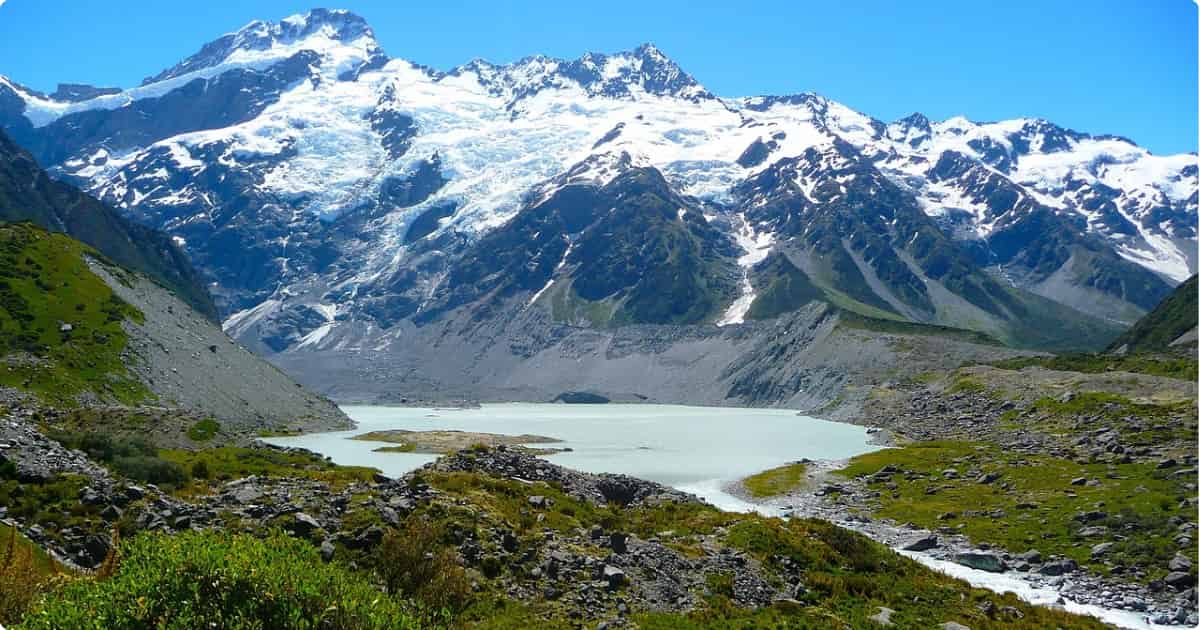

The South Island of New Zealand is one of the few places on earth where the drive between stops is as good as the stops themselves.
Most travelers book flights, pick an itinerary off a blog, and discover too late that Google Maps times mean nothing on winding alpine passes. The gap between “2 hours to Milford Sound” and the reality of that road is where most South Island road trips go wrong.
This guide gives you the full 14-day loop, the key drives decoded segment by segment, and the honest tradeoffs so you spend less time in the car and more time standing at the edge of something extraordinary.
QUICK ANSWER:
The South Island classic loop runs Christchurch → Kaikōura → Marlborough → West Coast → Wānaka → Queenstown → Milford Sound → Tekapo → Christchurch. Allow 14 days minimum. Drive on the left, expect mountain roads to add 30–60 minutes to every estimated drive time.
Why the South Island Drive Is Unlike Any Road Trip on Earth
The South Island is not a backdrop for a road trip. It is the road trip. The landscapes here shift every 90 minutes — ocean cliff, beech forest, glacier valley, turquoise lake, alpine pass — in a sequence that never repeats and never bores.
- Choose a circular loop to avoid expensive one-way car hire fees
- Expect winding roads to add 30–60 minutes to Google Maps estimates
- Allow one full rest day per four driving days or you will burn out
- Book Milford Sound and Franz Josef accommodation 6–8 weeks ahead in peak season
- Drive on the left — this is non-negotiable and takes a day to feel natural
The South Island covers roughly 150,000 square kilometres. Most travelers see only the central spine — and still come home with their best travel photos.
How to Plan Your South Island Road Trip (Before You Book Anything)
This section covers the decisions that shape every day that follows.
How Many Days Do You Actually Need?
| Duration | Route | What You Get | What You Miss |
|---|---|---|---|
| 7 Days | Christchurch → Tekapo → Wānaka → Queenstown | Mackenzie Basin, Wānaka, Queenstown | West Coast, Milford Sound, Marlborough |
| 10 Days | Above + Milford Sound or Kaikōura or Franz Josef | One major addition to the 7-day core | Full West Coast, Abel Tasman |
| 14 Days | Full clockwise loop from Christchurch | Every major landscape and region | Catlins, Stewart Island |
| 21 Days | Full loop + Catlins, Stewart Island, Great Walk | Complete South Island experience | Nothing significant |
Seven days is a highlights reel. Fourteen days is the real trip. Three weeks lets you breathe.
- 7 days: Christchurch → Queenstown one-way, via Tekapo and Wānaka
- 10 days: Add Milford Sound, Franz Josef glacier, or Kaikōura
- 14 days: Full loop including Abel Tasman, Marlborough, West Coast glaciers
- 21 days: Add the Catlins, Stewart Island, or a Great Walk overnight
Most international travelers take 10–14 days. That’s the sweet spot between depth and cost.
Car vs. Campervan: Which Is Right for You?
Both work on South Island roads. The choice is about flexibility and budget.
- Choose a campervan to cut accommodation costs by 40–60%
- Choose a standard car for tighter mountain roads and better fuel economy
- Campervans require freedom camping permits in some areas — check DOC rules
- Car hire is significantly cheaper but adds daily accommodation costs
- Book either at Christchurch or Queenstown airports for best availability
Most first-timers choose a car. Experienced South Island travelers often switch to a campervan on the second visit.
When to Go — and What Changes by Season
New Zealand’s summer runs December to March. That is peak season — and for good reason.
- Summer (Dec–Mar): Long daylight, all trails open, book everything ahead
- Autumn (Mar–May): Fewer crowds, golden beech forest, excellent driving conditions
- Winter (Jun–Aug): Skifields open near Queenstown and Wānaka; some passes close
- Spring (Sep–Nov): Wildflowers, unpredictable weather, shoulder prices
Avoid the last two weeks of December and the first two weeks of January if you dislike crowds. New Zealand’s domestic summer holiday period floods the key sites.
The Classic Route: Christchurch to Queenstown (and Back)
This is the route most travelers follow — a 14-day clockwise loop that covers every major landscape the South Island offers.
Christchurch — Your Starting Point
Christchurch is the South Island’s main air hub and the natural start for any loop itinerary.
- Collect your rental car at the airport — no need to go into the city centre first
- Allow one full day to explore the rebuilt city centre, Botanic Gardens, and Avon River
- Stock up on supplies here — supermarkets are large and well-priced in Christchurch
- The Cardboard Cathedral is worth 30 minutes — a real architectural response to the 2011 earthquake
- Head north or south depending on your chosen route direction
Most guides send you north first toward Kaikōura. We agree — it saves the most dramatic scenery for later in the trip.
Kaikōura — Whales, Seals & the Coast Road
Kaikōura sits between the Kaikōura Ranges and the Pacific Ocean, 2.5 hours north of Christchurch. The drive there is already spectacular.
- Book a whale watching boat tour 48 hours ahead — sperm whales are present year-round
- Stop at the Point Kean seal colony — fur seals rest within metres of the car park
- The Kaikōura Peninsula Walkway (3 hours return) offers the best seal and ocean views
- Eat crayfish here — Kaikōura means “meal of crayfish” in Māori and it shows on every menu
- Stay one night minimum — the town empties after day-trippers leave and it becomes genuinely peaceful
The 2016 earthquake reshaped this coastline. The road has been rebuilt, but you can still see uplifted rock platforms along the shore.
Marlborough & Nelson — Wine Country and Abel Tasman
From Kaikōura, continue north to Marlborough — New Zealand’s most famous wine region.
- Marlborough produces over 70% of New Zealand’s Sauvignon Blanc — sample it at the source
- Cloudy Bay and Brancott Estate are the big names, but smaller wineries offer better value
- Nelson is an easy 1-hour drive west — a relaxed arts and craft town worth one night
- Abel Tasman National Park requires a half-day kayak or water taxi to reach properly
- The Abel Tasman Coast Track is one of New Zealand’s nine Great Walks — book months ahead
INSIDER SECRET: Take the Queen Charlotte Drive from Picton to Havelock instead of the main highway. It’s a narrow, winding coastal road with jaw-dropping Marlborough Sounds views. Add 45 minutes. Every one of those minutes pays off.
The West Coast — Glaciers and Wild Green Silence
The West Coast is the South Island’s most dramatic shift in landscape — rainforest, wild beaches, and active glaciers within an hour of each other.
- Drive the Lewis Pass or Arthur’s Pass to cross from Marlborough to the West Coast
- Franz Josef Glacier and Fox Glacier are both accessible by easy 2-hour return hikes
- Helicopter glacier walks are expensive (NZD $350–550) but genuinely unlike any other experience
- Pancake Rocks at Punakaiki are a 30-minute stop from the highway — worth it in high tide
- Fill your petrol tank at every opportunity — West Coast towns are 60–90km apart
The West Coast receives around 5,000mm of rain annually. Expect weather to change within the hour. Pack a waterproof layer you can access from the back seat.
Wānaka — The Quieter Alternative to Queenstown
Wānaka sits 1 hour north of Queenstown and offers the same mountain-lake scenery with a fraction of the crowds.
- That Wānaka Tree is real — a willow growing from the edge of the lake — and worth 15 minutes
- Roy’s Peak Track is a 6-hour return hike with 1,200m elevation gain and summit views across four lakes
- Wānaka is a better base than Queenstown for Aoraki/Mount Cook day trips
- The town has excellent cafes, independent restaurants, and a laid-back evening atmosphere
- Stay two nights minimum — one night is not enough
Travelers who skip Wānaka in favour of more time in Queenstown consistently say they regret it.
Queenstown — Adventure Capital, Done Right
Queenstown delivers on its reputation. It’s also very easy to overspend and under-experience here.
- Bungee jumping, skydiving, and white-water rafting are all well-run and genuinely safe
- The Skyline Gondola (NZD $38) gives the best lake and mountain views without a hike
- Arrowtown — 20 minutes by car — is one of the most underrated stops on the entire South Island
- Milford Sound day tours depart from Queenstown but a Te Anau overnight is better value and calmer
- Budget NZD $150–250 per person per day in Queenstown including accommodation and one activity
Three nights in Queenstown is enough. Four nights starts to feel repetitive unless you are there to ski.
Milford Sound — The Drive Is Half the Experience
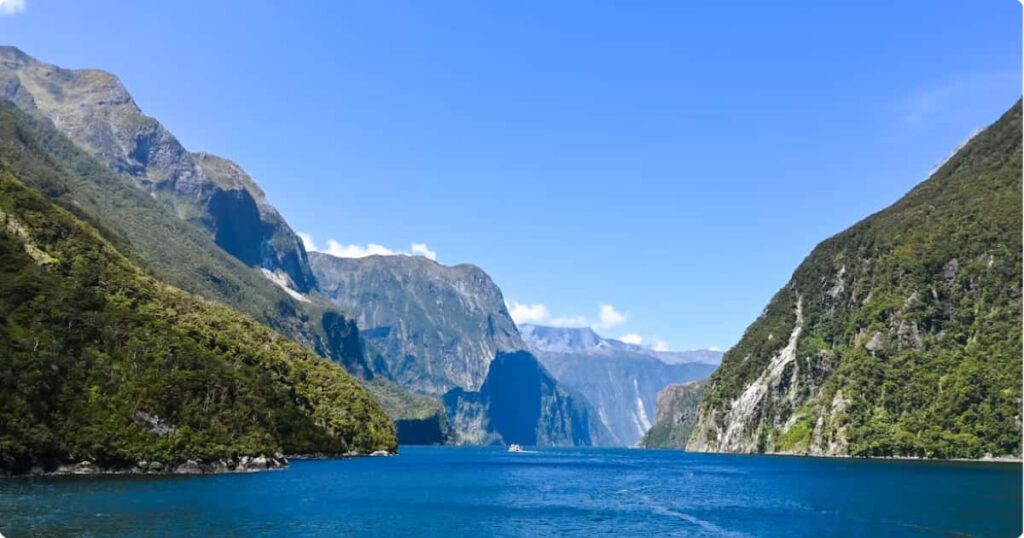
Milford Sound (Piopiotahi) is a 2.5-hour drive from Queenstown via Te Anau. The road itself is the attraction.
- Stop at Mirror Lakes, 35 minutes from Te Anau — the reflections are best in the morning calm
- The Homer Tunnel is a single-lane, unlit tunnel through raw rock — one of the world’s great engineering moments
- Book a 2-hour boat cruise — it costs NZD $70–130 and takes you to the face of Stirling Falls
- Overnight stays in Milford Sound are possible and transform the experience — the valley empties after day-trippers leave
- Doubtful Sound is accessible by guided tour only, 3 hours deeper into Fiordland, and significantly less crowded
Milford Sound receives 7,000mm of rain annually. Rain actually improves the experience — hundreds of temporary waterfalls cascade from the cliffs after a downpour.
Aoraki/Mount Cook — The Detour That Defines the Trip
Most itineraries treat Aoraki as an afterthought. It should be a headline.
- Drive from Twizel or Lake Tekapo — 1 hour from either — through the Mackenzie Basin
- Lake Pukaki’s colour is extraordinary — glacial flour creates a blue that no photo fully captures
- The Hooker Valley Track (3 hours return) ends at a glacial lake with direct Mount Cook views
- Aoraki stands at 3,724 metres — New Zealand’s highest peak — and dominates the skyline on clear days
- Stock up on food and fuel in Twizel before entering the national park — there is one small shop in Mount Cook Village
Book accommodation in Mount Cook Village well ahead in summer. There are limited beds and they go fast.
Tekapo — Stargazing Capital of the Southern Hemisphere
Lake Tekapo is 2.5 hours from Queenstown on the return leg to Christchurch.
- The Church of the Good Shepherd is the most photographed building in New Zealand
- Tekapo is an International Dark Sky Reserve — the night sky here is genuinely stunning
- Earth & Sky runs guided stargazing tours (NZD $149) from 10pm — book ahead
- Lupins bloom along the lakeshore in November and December in extraordinary purple-pink masses
- Tekapo makes an ideal overnight stop between Queenstown and Christchurch
From Tekapo it is 3.5 hours back to Christchurch. Most travelers do this final drive in one straight shot.
The Queenstown to Wānaka Drive: What to Know
This 75km drive on State Highway 6 and 84 is one of the South Island’s best.
- Allow 1 hour 15 minutes without stops — the road winds alongside Lake Wānaka and the Cardrona Valley
- The Crown Range Road is the scenic alternative — a 1-hour 30-minute drive over New Zealand’s highest sealed pass
- Crown Range offers panoramic views of the Cardrona ski area and Arrow Basin — take this route at least one direction
- Stop at the Cardrona Hotel (built 1863) — a historic pub with a fire, a pie, and authentic high-country character
- The Wānaka to Queenstown direction on Crown Range gives the better downhill valley views
This drive is the most frequently searched leg on the South Island for good reason. It consistently exceeds expectations.
Wānaka to Lake Pukaki and Twizel: The Turquoise Corridor
This 2-hour drive from Wānaka to Twizel via the Lindis Pass is one of the South Island’s quieter scenic routes.
- The Lindis Pass (971m) cuts through golden tussock country — wild, treeless, and unlike anywhere else
- Lake Pukaki appears without warning around a corner — the impact is immediate and physical
- Pull over at the Lake Pukaki viewpoint layby — directly on SH8 — for the full Aoraki framing
- Twizel is a small town with excellent accommodation and a good supermarket — a practical overnight base
- Wānaka to Lake Tekapo is 2 hours 15 minutes via Lindis Pass — or 3 hours via Mount Cook if you add the detour
Most travelers who do the Wānaka → Twizel → Tekapo run call it the best single day of driving on the trip.
Lake Tekapo to Queenstown: Closing the Loop
The Tekapo to Queenstown run (2 hours 30 minutes via Lindis Pass) is the final leg for most loop itineraries.
- Drive via Twizel and the Lindis Pass on SH8 — the most direct and scenic route
- Add a Mount Cook detour if you haven’t visited — it adds 2 hours but is the most worthwhile diversion on the island
- Stop at Lake Ohau Lodge (between Twizel and Omarama) for a coffee overlooking the lake — it’s rarely crowded
- The Lindis Pass tussock landscape looks completely different eastbound vs. westbound — it rewards the return
- Fill petrol in Twizel or Omarama before entering the Lindis — the pass has no services
This stretch is often driven in a rush on the final day. Give it the morning — not the afternoon.
South Island Driving: Practical Rules of the Road
| Rule | Detail | Why It Matters |
|---|---|---|
| Drive on the left | Mandatory — no exceptions | Most foreign driver accidents happen on Day 1 |
| Open road speed limit | 100km/h maximum | Mountain roads routinely require 40–60km/h |
| Town speed limit | 50km/h through all towns | Strictly enforced — speed cameras common |
| One-lane bridges | Yellow diamond = you give way | Common on rural and West Coast roads |
| Fuel stops | Fill up every town over 2,000 people | Rural stations up to 80km apart |
| Mobile coverage | Drops in Fiordland, West Coast, Lindis Pass | Download offline maps before leaving Queenstown or Christchurch |
New Zealand roads reward patience and punish speed.
- Drive on the left — and give yourself a full day to adjust before tackling mountain passes
- Speed limits drop to 100km/h on open roads and 50km/h through all towns
- One-lane bridges require priority yield — a diamond yellow sign indicates which direction has right of way
- Campervans and motorhomes travel significantly slower than cars — plan for overtaking delays on mountain roads
- Fuel up in every town over 2,000 people — rural South Island stations can be 80km apart
Mobile coverage drops in the Fiordland, West Coast, and Lindis Pass regions. Download offline maps on Google Maps or Maps.me before leaving Queenstown or Christchurch.
Hidden Gems Most Travelers Miss
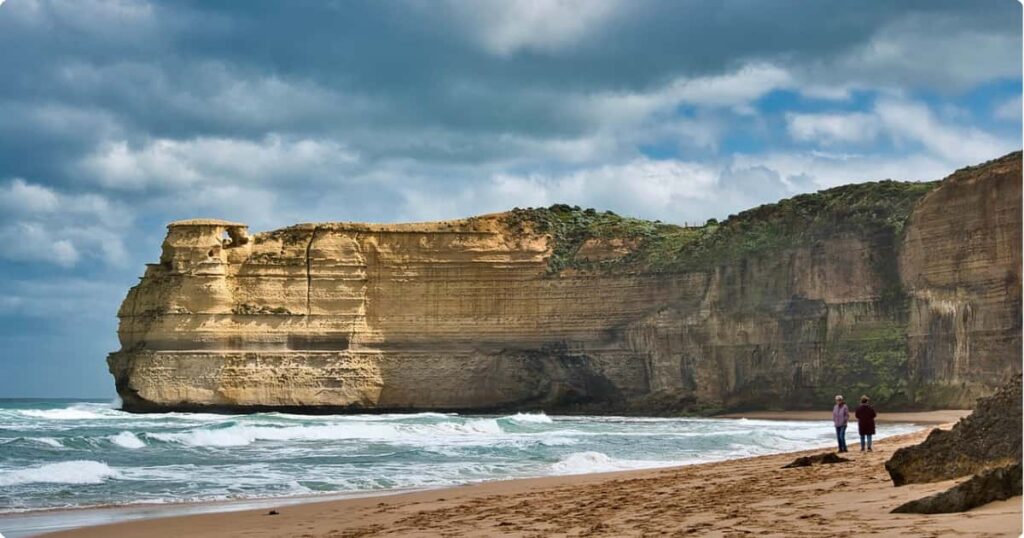
These stops never make the headline itineraries. They should.
- Ōamaru: A Victorian-era town 90 minutes north of Dunedin with the world’s best little blue penguin colony — watch them waddle ashore at dusk
- Arrowtown: 20 minutes from Queenstown, this gold-rush town has autumn colour that rivals anything in Europe
- The Catlins: A coastal wilderness in the far south — waterfalls, sea lions, rare Hector’s dolphins — almost nobody goes here
- Nugget Point Lighthouse: An hour east of the Catlins — sea stacks, fur seals, and zero crowds
- Lake Ōhau: A quieter, smaller version of Tekapo without the tour buses
The South Island hides its best places one turn past where most people stop.
The Verdict
The South Island road trip is not overhyped. It is one of the handful of drives on earth that delivers exactly what it promises and then goes further. Our research consistently shows that travelers who plan a 7-day version leave wishing they had booked 14. Go for 14. Drive the Crown Range at least once. Add Aoraki even if the itinerary says you don’t have time. Stop in Ōamaru. The South Island rewards the traveler who slows down, pulls over, and follows the road one more kilometre past where everyone else turned back.
