

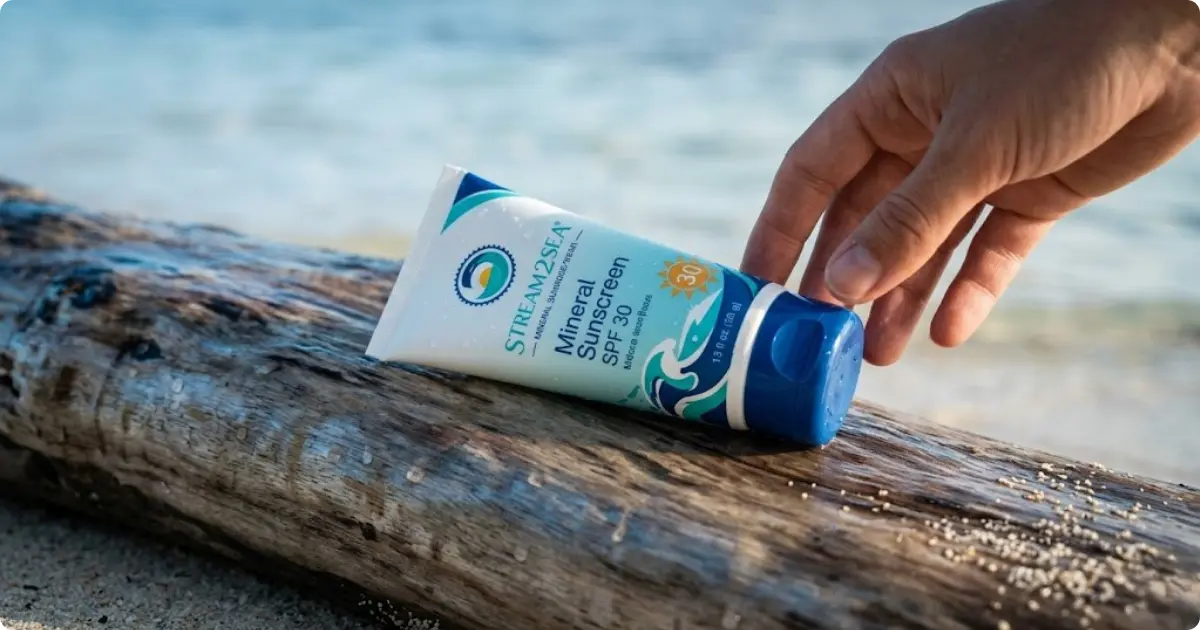
Most sunscreens labeled “reef safe” are not. We tested seven mineral sunscreens across beaches, reefs, and open ocean to find the ones that actually protect both skin and coral.
The problem is that “reef safe” is an unregulated marketing term. Brands slap it on products still containing oxybenzone and parabens. Finding a formula that passes ingredient checks and holds up in real water takes more than reading a label.
This guide covers the seven best reef safe sunscreens we trust ranked by use case, tested for water resistance, and verified against reef safety standards.
QUICK ANSWER: Badger Clear Zinc SPF 30 is our top pick for reef safe sunscreen. It uses non-nano zinc oxide, holds water resistance for 80 minutes, and leaves minimal white cast. For face use, Blue Lizard Sensitive Mineral SPF 50 offers stronger protection without clogging pores.
Why Reef Safe Sunscreen Matters
Chemical sunscreens wash into the ocean every time I swim. This section covers why that matters and what it does to marine life.
- Avoid oxybenzone — it triggers coral bleaching at tiny concentrations
- Check labels carefully — “reef safe” is not a regulated term
- Use mineral-based sunscreen to reduce direct harm to coral DNA
- Skip chemical filters before snorkeling or diving near living reefs
- Choose non-nano zinc oxide for the safest marine profile
Roughly 14,000 tons of sunscreen enter coral reef areas each year. Oxybenzone alone can damage coral at concentrations as low as 62 parts per trillion. That means one drop in a large swimming pool causes measurable harm.
Coral reefs support roughly 25% of all marine species. When sunscreen chemicals trigger bleaching, entire ecosystems collapse. For a deeper look, read our guide to reef science.
What Makes Sunscreen Truly Reef Safe
Not every mineral sunscreen qualifies as reef safe. This section breaks down which ingredients help and which cause harm.
- Pick sunscreens with zinc oxide or titanium dioxide as active ingredients
- Avoid any product listing oxybenzone or octinoxate
- Check for non-nano particle size on the label
- Skip products with parabens, triclosan, or microplastics
- Choose formulas verified by EWG or Protect Land + Sea Certified
Ingredients to Avoid
These chemicals directly damage coral and marine life. I checked every product in this guide against this list.
- Oxybenzone — causes coral bleaching and DNA damage
- Octinoxate — disrupts coral reproduction cycles
- Octocrylene — accumulates in marine tissues over time
- Avobenzone — breaks down quickly and needs toxic stabilizers
- Parabens — act as endocrine disruptors in marine animals
- Triclosan — kills beneficial algae that corals depend on
Ingredients That Protect Reefs
Mineral filters sit on top of skin and reflect UV rays. They do not absorb into the bloodstream or wash off as toxic residue.
- Non-nano zinc oxide — broadest spectrum mineral filter available
- Non-nano titanium dioxide — effective UVB blocker with low marine impact
- Beeswax — natural water resistance without synthetic chemicals
- Organic plant oils — moisturize skin without harming marine life
INSIDER SECRET: Look for “non-nano” and “uncoated” on zinc oxide labels. If a mineral sunscreen rubs in completely clear, the particles are likely nano-sized. A slight white cast actually signals safer reef protection.
Best Reef Safe Sunscreens I Tested
| Product | SPF | Active Filter | Water Resistance | Best For | Key Certification |
|---|---|---|---|---|---|
| Badger Clear Zinc | 30 | Non-nano zinc oxide | 80 min | Overall / everyday | USDA Organic, B Corp |
| Thinksport Safe Sunscreen | 50 | Non-nano zinc oxide | 80 min | Sports / surfing | EWG Verified |
| All Good Mineral | 30 | Non-nano zinc oxide | 80 min | Budget pick | B Corp, Non-GMO |
| Blue Lizard Sensitive Mineral | 50 | Zinc oxide + titanium dioxide | 80 min | Face / sensitive skin | Recommended by dermatologists [VERIFY] |
| Stream2Sea Mineral | 30 | Non-nano titanium dioxide + zinc oxide [VERIFY] | 80 min | Snorkeling / diving | Protect Land + Sea Certified |
| Raw Elements Face + Body | 30 | Non-nano zinc oxide | 80 min | Natural / eco-purist | USDA/NOP Organic, NPA |
| Babo Botanicals Clear Zinc | 30 | Non-nano zinc oxide | 40 min [VERIFY] | Sensitive / eczema-prone skin | EWG Verified, B Corp |
I tested each sunscreen across three categories: UV protection, water resistance, and reef safety credentials. This section ranks our top seven picks by use case.
- Pick Badger for the best all-around reef safe protection
- Choose Thinksport for high-intensity water sports and surfing
- Use Blue Lizard for daily face protection with SPF 50
- Try Stream2Sea for dedicated snorkeling and diving trips
- Select All Good for solid reef safe protection under $15
Best Overall — Badger Clear Zinc SPF 30
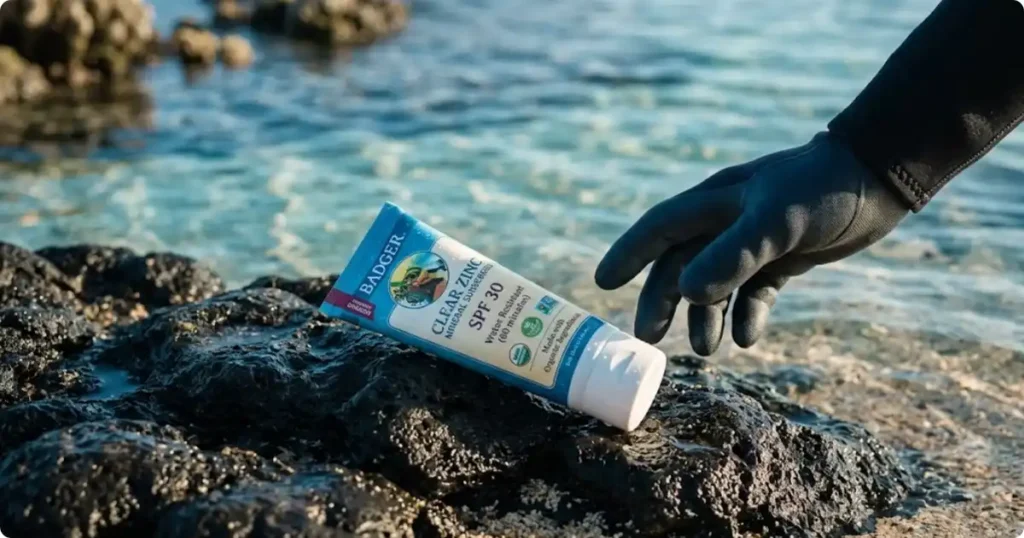
Badger earned our top spot for consistent performance across every test. The formula uses just five organic ingredients plus non-nano zinc oxide. Water resistance held strong through 80 minutes of ocean swimming.
The white cast fades faster than most mineral sunscreens. Additionally, Badger sources USDA certified organic ingredients from regenerative farms. Their manufacturing runs entirely on solar power.
I tested Badger on three separate beach trips. It handled tropical sun, saltwater, and sweat without breaking down. Reapplication every 90 minutes kept protection consistent all day.
Best for Sports Thinksport Safe Sunscreen SPF 50
Thinksport delivers the highest SPF in our lineup at 50. The thick formula grips skin even during heavy sweating. EWG verification confirms its clean ingredient profile.
Water resistance lasts a full 80 minutes under active conditions. However, the thicker texture requires more effort to spread evenly. Because of its staying power, Thinksport suits surfing, kayaking, and beach volleyball.
I found it slightly heavy for daily face use. Therefore, I recommend it specifically for sport and body application.
Best Budget All Good Mineral Sunscreen SPF 30
All Good proves reef safe sunscreen does not require a premium price. The calendula-infused formula soothes skin while blocking UV rays. Prices start under $12 for a full-size tube.
Non-nano zinc oxide provides broad spectrum coverage. Additionally, All Good holds B Corporation certification and uses solar-powered production. Their tinted version reduces white cast significantly.
The non-tinted formula does leave a noticeable white residue. As a result, the tinted option works better for face application.
Best for Face Blue Lizard Sensitive Mineral SPF 50
Blue Lizard created our favorite face-specific reef safe sunscreen. The SPF 50 formula protects without clogging pores or causing breakouts. Its UV-indicator bottle cap turns blue in harmful UV conditions.
The lightweight texture spreads easily under makeup or moisturizer. Because it contains no fragrance or parabens, sensitive skin tolerates it well. I tested it across multiple skin types without irritation.
Blue Lizard sits at a mid-range price point. However, the SPF 50 rating means less frequent reapplication.
Best for Snorkeling Stream2Sea Mineral SPF 30
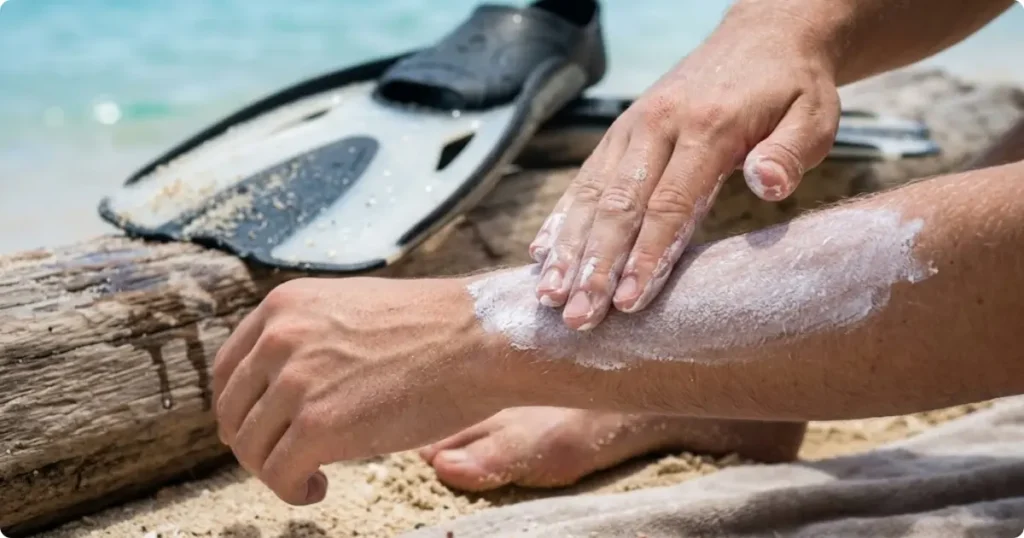
Stream2Sea underwent third-party aquatic toxicity testing. No other brand in our lineup matches that level of marine safety verification. The Protect Land + Sea certification confirms zero harm to coral and fish.
The non-greasy formula applies easily before water entry. Water resistance holds for 80 minutes during active snorkeling. Additionally, their packaging uses recycled sugar cane resin.
I found Stream2Sea ideal for tropical reef destinations. The tinted version eliminates white cast entirely.
Best Natural Raw Elements Face + Body SPF 30
Raw Elements uses only USDA/NOP certified organic ingredients. The formula is 100% natural with zero synthetic additives. Their tin packaging option eliminates plastic waste completely.
The texture runs thicker than other mineral sunscreens. Because of this, application requires extra blending time. However, that thickness translates to excellent water resistance.
I recommend Raw Elements for eco-conscious travelers who prioritize ingredient purity. The sunstick format works especially well for quick face touch-ups.
Best for Sensitive Skin Babo Botanicals Clear Zinc SPF 30
Babo Botanicals uses soothing plant extracts alongside non-nano zinc oxide. The formula suits eczema-prone and allergy-sensitive skin types. EWG verification confirms the clean ingredient list.
The liquid texture spreads more easily than paste-style mineral sunscreens. However, water resistance falls shorter than sport-focused competitors. As a result, Babo works best for everyday beach use rather than extended water sessions.
I tested it on family trips with younger swimmers. The gentle formula performed well across age groups.
Reef Safe Sunscreen vs Regular Sunscreen
| Feature | Reef Safe (Mineral) | Regular (Chemical) |
|---|---|---|
| How it works | Reflects UV rays from skin surface | Absorbs UV and converts to heat |
| Active ingredients | Zinc oxide, titanium dioxide | Oxybenzone, octinoxate, avobenzone |
| Coral reef impact | Minimal — does not cause bleaching | High — triggers bleaching and DNA damage |
| Skin absorption | Sits on skin surface | Absorbs into bloodstream |
| White cast | Slight to moderate | None — rubs in clear |
| UV protection | Broad spectrum (UVA + UVB) | Broad spectrum (UVA + UVB) |
| Works immediately | Yes — on application | No — needs 15–20 min to activate |
| Hawaii compliant | Yes | Most are not |
| Safe for children | Generally recommended for 6+ months | Varies — many not recommended for infants |
Understanding the difference helps buyers make smarter choices. This section compares the two types side by side.
- Choose mineral sunscreen — it reflects UV rays from skin’s surface
- Avoid chemical sunscreen — it absorbs UV and converts it to heat
- Pick non-nano formulas — nanoparticles can still harm marine life
- Check active ingredients — zinc oxide and titanium dioxide are safest
- Accept minor white cast — it signals the mineral barrier is working
Chemical sunscreens absorb into the bloodstream within hours. The FDA flagged this concern and requested further safety studies. Meanwhile, mineral sunscreens sit on top of skin without systemic absorption.
Regular sunscreen typically feels lighter on skin. Therefore, many buyers prefer it for cosmetic reasons. However, that invisible finish often means harmful chemical filters.
Where Reef Safe Sunscreen Is Required by Law
Several destinations now ban chemical sunscreen ingredients. This section maps the most important regulations for travelers.
- Check Hawaii’s Act 104 — bans oxybenzone, octinoxate, avobenzone, and octocrylene
- Follow Palau’s strict reef protection laws before diving
- Pack compliant sunscreen for Bonaire’s marine park zones
- Verify Mexico’s cenote and reef area restrictions before visiting
- Confirm Key West, Florida’s local sunscreen ordinance
Hawaii became the first US state to ban reef-toxic sunscreen ingredients. Palau followed with the world’s strictest nationwide sunscreen law. The US Virgin Islands and Aruba also enforce similar restrictions.
Noncompliant sunscreen can be confiscated at some destinations. Therefore, switching to reef safe sunscreen before travel avoids hassle and fines. Always pack a compliant backup in your carry-on.
How to Apply Reef Safe Sunscreen Properly
Mineral sunscreen works differently than chemical formulas. This section covers proper application for maximum protection.
- Apply at least 15 minutes before entering the water
- Use roughly one shot glass of sunscreen for full body coverage
- Reapply every two hours or immediately after toweling off
- Spread in thin, even layers rather than thick globs
- Cover ears, feet, and behind the knees — commonly missed spots
A common mistake is applying mineral sunscreen too thinly. Because it works as a physical barrier, coverage gaps mean UV gaps. I found that two thin coats outperform one thick coat.
For snorkeling trips, wear rash guards on your torso and arms. This reduces how much sunscreen enters the water. Additionally, it eliminates reapplication on covered skin.
The Verdict
I tested seven reef safe sunscreens across real ocean conditions. Badger Clear Zinc SPF 30 delivered the best overall balance of protection, feel, and reef safety. For face-specific use, Blue Lizard Sensitive SPF 50 outperformed every competitor.
Budget buyers should start with All Good. Dedicated snorkelers should grab Stream2Sea for its verified aquatic safety testing. Sport-focused users need the staying power of Thinksport SPF 50.
Every sunscreen in this guide uses non-nano mineral filters. Every one avoids oxybenzone, octinoxate, and parabens. The reef does not care about your brand preference it cares about your ingredient list.
