


Guatemala is the only country in Central America where you can wake up inside a UNESCO colonial city, spend the afternoon on a sacred Maya lake, and end your trip watching Pacific sunsets on black volcanic sand all within a 5-hour travel radius.
The problem is that most guides either bury these three destinations inside a 3-week itinerary or treat them as footnotes to Tikal. Neither approach helps someone planning a 7–10 day first trip who wants to see the country’s best without wasting half their time on buses.
This guide covers exactly that triangle: Antigua, Lake Atitlán, and Monterrico. We break down how long to spend in each, how to connect them, what it costs, and where the real gaps in competitor advice are.
QUICK ANSWER:
Antigua, Lake Atitlán, and Monterrico cover Guatemala’s essential triangle. Fly into Guatemala City, shuttle to Antigua in under 90 minutes, and loop all three in 7–10 days. Daily budget runs $40–80. Best months are November through April during the dry season.
Why Guatemala Deserves a Spot on Your Itinerary
Guatemala combines Mayan culture, volcanic landscapes, and affordability in a way no other Central American country matches.
- Expect daily budgets 30–50% lower than Costa Rica or Belize
- Choose from three distinct experiences within a 5-hour travel radius
- Pick up artisan textiles directly from indigenous weaving cooperatives
- Explore UNESCO-listed colonial architecture without resort crowds
- Taste some of the world’s highest-rated single-origin coffee at the source
Guatemala shares borders with Mexico and Belize. That makes it easy to combine with Mayan ruins in the Yucatán or the cayes off Belize’s coast.
Antigua Guatemala Colonial Beauty at the Base of Volcanoes
Antigua is the starting point for nearly every Guatemala trip. This UNESCO World Heritage city sits at 1,533 meters elevation between three volcanoes. The year-round spring climate keeps daytime temperatures around 24°C (75°F).
- Walk cobblestone streets lined with pastel Baroque buildings
- Use Antigua as a base for volcano hikes Pacaya and Acatenango
- Visit cathedral ruins left standing since the 1773 earthquake
- Shop for jade, textiles, and chocolate at walkable markets
- Book Spanish-language immersion schools starting around $150 per week
The city is compact enough to explore entirely on foot. However, those cobblestones are uneven and jagged. Sturdy shoes are essential sandals will slow you down.
Best Things to Do in Antigua Guatemala
Antigua rewards slow exploration. Most key sites sit within a 15-minute walk of Parque Central.
- Check out the ruins of Convento Santa Clara and San José Cathedral
- Climb Cerro de la Cruz for a panoramic view of Volcán de Agua
- Pick a coffee or chocolate workshop both cost under $25
- Skip the expensive hotel breakfasts and eat at market stalls instead
- Avoid Semana Santa week unless you specifically want the crowds
The Acatenango volcano overnight hike is Antigua’s standout experience. The 13,045-foot summit offers sunrise views directly over erupting Volcán de Fuego. Most guided treks run around $50–70 and include camping gear. Additionally, Pacaya volcano works well as a half-day alternative for hikers wanting a less demanding climb.
Where to Eat and Drink in Antigua
Antigua’s food scene spans street-side pupuserías to upscale courtyard restaurants. Quality is consistently high because the city attracts both expats and culinary tourists.
- Try pepián Guatemala’s national stew of chicken, seeds, and spices
- Use Calle del Arco as your starting point for evening restaurant browsing
- Pick up fresh tamales wrapped in banana leaves from morning vendors
- Check out rooftop bars near Parque Central for volcano-view sundowners
- Skip overpriced tourist menus near the main square walk two blocks out
Most mid-range restaurant meals cost $8–15 per person. Street food runs $2–4. Guatemalan coffee is world-class. Therefore, budget time for at least one proper tasting at a local roastery.
Where to Stay in Antigua
Antigua offers everything from $8 dorm beds to $200 boutique hotels inside restored colonial mansions.
- Choose guesthouses within four blocks of Parque Central for walkability
- Pick hostels around Calle del Arco for the best social atmosphere
- Avoid hotels directly on the main square — noise carries until midnight
- Book ahead for November through March Antigua fills quickly in peak season
Most travelers find three to four nights ideal. That allows time for a volcano day trip, a full city exploration day, and one rest day before moving to Lake Atitlán.
Lake Atitlán The Highlands’ Crown Jewel
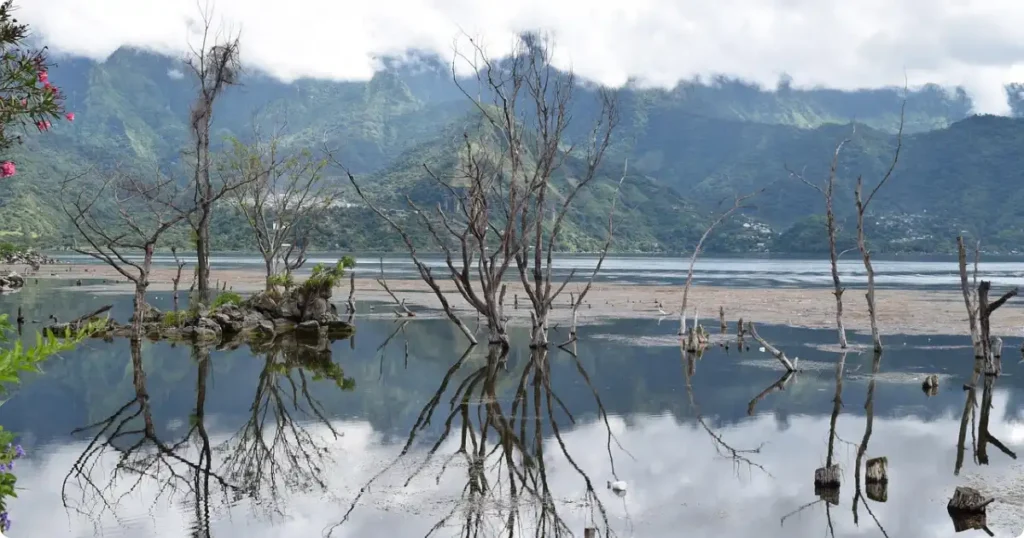
Lake Atitlán sits at 1,562 meters in a volcanic caldera surrounded by three towering cones San Pedro, Tolimán, and Atitlán. The lake has no outlet. Its surface shifts between deep cobalt and turquoise depending on wind and light conditions.
- Arrive via a 2.5-hour shuttle from Antigua to Panajachel
- Choose a lakeside town as your base each has a distinct personality
- Use public lanchas (water taxis) to hop between villages for $1–3
- Expect cooler mornings and strong afternoon winds called Xocomil
- Allocate at least three nights to avoid feeling rushed
The surrounding villages are home to Tz’utujil and Kaqchikel Maya communities. Traditional textiles, patterns, and huipiles vary by village. Each design tells you exactly which community the wearer belongs to.
Best Towns Around Lake Atitlán
Each lakeside town appeals to a different type of traveler. Pick your base carefully.
San Pedro La Laguna draws backpackers and budget travelers. The main street is lined with bars, hostels, and language schools. Nightlife runs late. Dorm beds start around $6.
San Marcos La Laguna is the wellness hub. Yoga studios, meditation retreats, and vegan cafés cluster along the lakeshore. It’s quieter than San Pedro. Additionally, the Cerro Tzankujil nature reserve offers cliff jumping and forest walks.
San Juan La Laguna is the most culturally authentic option. Weaving cooperatives, natural dye workshops, and colorful street murals define this small village. It’s the best place to buy textiles directly from the artisans who make them.
Santa Catarina Palopó is a hillside village known for brightly painted houses decorated with Mayan motifs. It’s a quieter, more boutique option with fewer services but stunning lake views.
Panajachel called “Pana” locally is the main transport hub. Most shuttles arrive here. The town has the widest range of ATMs, pharmacies, and restaurants. However, it feels more commercial than the smaller villages across the lake.
Things to Do in Lake Atitlán
The lake’s appeal lies in its mix of nature, culture, and slow-paced village life.
- Hike Indian Nose (Nariz del Indio) for the best sunrise viewpoint
- Pick a kayak or SUP session on calm morning water before winds build
- Visit San Juan La Laguna’s weaving cooperatives and coffee farms
- Swim and cliff-jump at Cerro Tzankujil in San Marcos
- Skip trying to visit more than two or three villages less is more
INSIDER SECRET: The Chichicastenango market runs every Thursday and Sunday about 1.5 hours north of the lake. It’s one of the largest indigenous markets in Central America. Time your lake visit so at least one day overlaps with market day.
Getting Around Lake Atitlán
Lanchas are the primary transport. These small motorboats run frequent routes between villages throughout the morning.
- Use Panajachel as the main departure point boats leave every 20 minutes
- Pay $1–3 per ride depending on distance
- Avoid afternoon crossings Xocomil winds make the water dangerously choppy
- Plan boat transfers before 2 PM for the calmest conditions
- Use tuk-tuks within villages agree on a price before getting in
There are no roads connecting every lakeside village. Boats are not optional they are the only way to reach several communities.
Monterrico Beach Guatemala’s Black Sand Pacific Coast
Monterrico is Guatemala’s most accessible Pacific beach. The volcanic black sand stretches for miles along a coastline that most international visitors never see.
- Reach Monterrico in about 2.5 hours from Antigua by shuttle
- Expect powerful surf the Pacific here is rough, not calm Caribbean water
- Visit between November and February for sea turtle nesting season
- Choose from budget beachfront hotels starting around $30 per night
- Stay two nights maximum the town is small and relaxed
Monterrico sits behind a network of mangrove channels. The approach by boat through the mangroves is part of the experience. Meanwhile, the beach itself is wide, uncrowded, and dramatically different from anything on the Caribbean side.
What to Do in Monterrico
Monterrico is about slowing down. There are no ruins, no museums, and no shopping streets.
- Walk the black sand beach at sunrise when the sand is cool
- Check the sea turtle hatcheries conservation projects release baby turtles seasonally
- Pick a beachfront restaurant and watch Pacific sunsets over fresh ceviche
- Avoid swimming in deep water riptides are strong and unpredictable
- Use the mangrove boat tours to spot herons, iguanas, and caiman
The surf here is not beginner-friendly. Because the Pacific shelf drops off quickly, waves break hard and close to shore. Strong swimmers only.
Where to Stay in Monterrico
Monterrico’s hotel scene is simple. Most properties sit directly on the beachfront.
- Choose a hotel with a pool — the ocean is not always safe for swimming
- Pick weekday visits over weekends — Guatemalan families crowd the beach Saturday and Sunday
- Expect basic amenities — this is not a resort town
- Budget $30–60 per night for a clean double room with air conditioning
Two nights gives you the full Monterrico experience. One for the beach and sunset, one for a mangrove tour and turtle conservation visit.
How to Get Between Antigua, Lake Atitlán and Monterrico
| Route | Transport | Duration | Cost (per person) |
|---|---|---|---|
| Guatemala City → Antigua | Private shuttle | 1–1.5 hours | $50–65 total |
| Antigua → Panajachel (Lake Atitlán) | Shared tourist shuttle | 2.5–3 hours | $18–25 |
| Antigua → Monterrico | Shuttle + boat transfer | 2.5 hours | $15–20 |
| Panajachel → Lakeside villages | Lancha (water taxi) | 15–40 minutes | $1–3 |
| Any route (budget option) | Chicken bus | Varies (longer) | $1–3 |
Guatemala’s tourist triangle connects efficiently by shuttle. No domestic flights needed for this route.
- Antigua to Lake Atitlán: Tourist shuttle, 2.5–3 hours, $18–25 per person
- Antigua to Monterrico: Shuttle plus boat transfer, 2.5 hours, $15–20 per person
- Lake Atitlán to Antigua (return): Same shuttle route in reverse, 2.5–3 hours
- Guatemala City airport to Antigua: Private transfer 1–1.5 hours, $50–65 total
Book shuttles through Atitrans, GuateGo, or Bookaway. Shared shuttles pick up from your hotel. Because times are approximate, allow a 30-minute buffer for pickup windows.
The most efficient routing is: Guatemala City → Antigua (3–4 nights) → Lake Atitlán (3–4 nights) → Antigua (1 night stopover) → Monterrico (2 nights) → Guatemala City for departure.
Chicken buses the iconic painted school buses are the cheapest option at $1–3 per ride. They’re a cultural experience worth trying once. However, they make frequent stops and the journey takes significantly longer.
Guatemala Budget What Does It Actually Cost?
| Expense | Budget ($30–40/day) | Mid-Range ($50–80/day) | Comfort ($100–150/day) |
|---|---|---|---|
| Accommodation | $6–12 dorm | $30–60 private room | $80–150 boutique hotel |
| Food (3 meals) | $6–12 street food | $15–30 mixed dining | $30–50 restaurants |
| Transport | $1–3 chicken bus | $15–25 tourist shuttle | $50–65 private transfer |
| Activities | $0–10 self-guided | $15–50 guided tours | $50–100 private guides |
| 7-Day Total | $210–280 | $350–560 | $700–1,050 |
Guatemala is one of Central America’s most affordable destinations. The quetzal trades at roughly 7.7 GTQ to $1 USD.
- Budget traveler: $30–40 per day (dorms, street food, chicken buses)
- Mid-range traveler: $50–80 per day (private rooms, sit-down meals, shuttle transfers)
- Comfort traveler: $100–150 per day (boutique hotels, guided tours, private transport)
Specific costs that help with planning:
- Hostel dorm bed: $6–12 per night
- Mid-range hotel double: $30–60 per night
- Street food meal: $2–4
- Restaurant meal: $8–15
- Acatenango guided hike: $50–70
- Tourist shuttle between cities: $15–25
- Lancha ride on Lake Atitlán: $1–3
- Coffee farm tour: $15–25
ATMs are reliable in Antigua and Panajachel. However, smaller lakeside villages and Monterrico have limited banking. Therefore, carry enough quetzales in cash before leaving larger towns.
Safety in Guatemala What Travelers Need to Know
Guatemala requires common-sense precautions. The tourist triangle of Antigua, Lake Atitlán, and Monterrico is well-traveled and has established infrastructure.
- Avoid Guatemala City beyond the airport transfer Zone 10 is safest if you must stay
- Use pre-booked shuttles or hotel-arranged transport between cities
- Skip walking alone at night outside of well-lit central areas
- Carry a photocopy of your passport leave the original in your hotel safe
- Check government travel advisories before departure for the latest updates
Tourist-oriented areas have a visible police and guide presence. Most travelers report feeling safe throughout the highland circuit. Because Guatemala’s risks concentrate in urban areas and rural highways, sticking to the main tourist corridor significantly reduces exposure.
Best Time to Visit Guatemala
Guatemala’s dry season runs November through April. This is the best window for the highland triangle.
- November–February: Peak dry season, comfortable temperatures, lowest humidity
- March–April: Warmer and drier, busiest during Semana Santa (Easter week)
- May–October: Rainy season afternoon downpours are common but mornings stay clear
- September–October: Heaviest rainfall, some road disruptions possible
Antigua sits at elevation. Nights drop to 10–15°C (50–59°F) year-round. Pack layers. Lake Atitlán is similar. Monterrico on the coast is hot and humid regardless of season.
Semana Santa in Antigua is spectacular elaborate street carpets and processions fill the city. However, accommodation prices spike and availability disappears. Book months ahead if visiting during Easter.
The Verdict
We’ve researched Guatemala extensively against every major destination in this silo from Aruba’s resort beaches to Belize’s cayes to Mexico’s Yucatán. Guatemala delivers something none of them can: raw, unpolished cultural depth at a fraction of the cost.
Antigua alone justifies the flight. Lake Atitlán elevates the trip into something you’ll talk about for years. Monterrico adds the Pacific coast contrast that rounds out a complete experience. The infrastructure connecting these three points is simple, affordable, and reliable.
Our recommendation is clear. If you want Caribbean-style relaxation, look elsewhere. If you want a destination that challenges you, feeds you well, costs less than $80 a day, and stays with you long after you leave Guatemala is it.
