

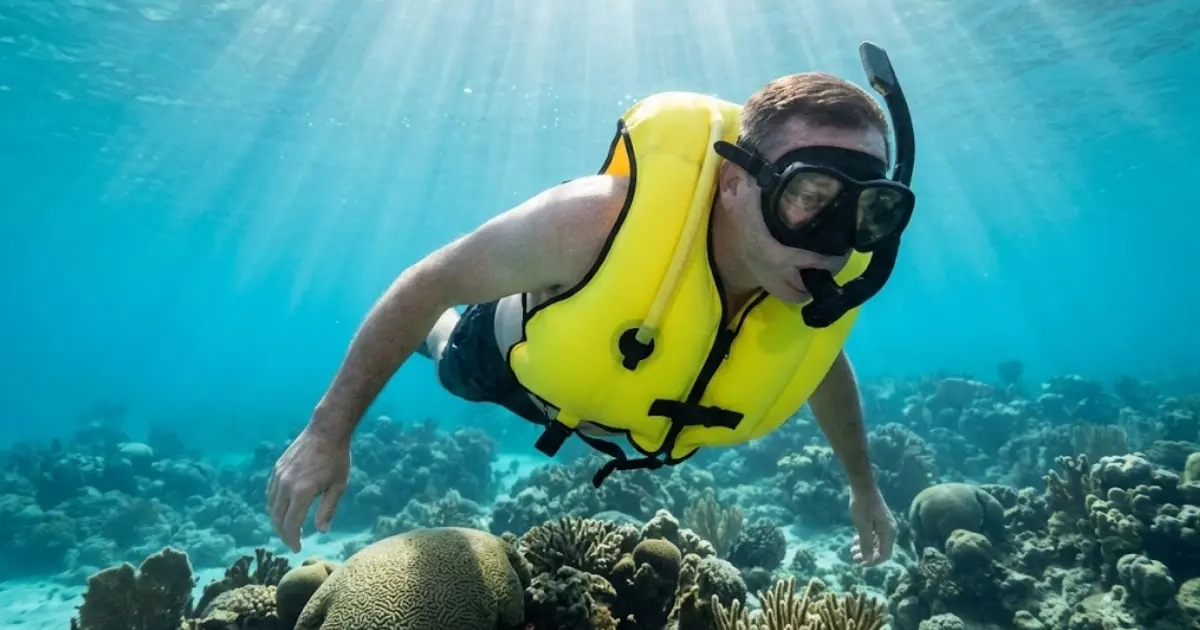
Most rental snorkel vests fail non-swimmers before they ever hit the water. They’re stretched, undersized, or simply the wrong category of flotation and no one at the tour desk explains the difference.
That gap matters. A buoyancy aid and a certified life jacket look nearly identical on a hook. In open water, current, or a boat-entry situation, they perform completely differently.
Here’s exactly which vest to buy, which conditions demand more protection, and why the vest vs. life jacket question is the one most guides skip entirely.
The Short Answer:
The Scubapro Cruiser oral inflatable vest is the best snorkeling vest for most non-swimmers. It adjusts buoyancy on demand, weighs under 200 grams, and keeps you face-down over the reef. In open water or strong currents, a USCG-certified Type III life jacket is the only safe choice.
What a Snorkeling Vest Actually Does
A snorkeling vest gives you buoyancy assistance not guaranteed rescue. Understanding this distinction could save your life.
- Avoid treating a snorkel vest as a life-saving device it is not rated for that
- Use it to reduce fatigue and maintain a face-down position in calm water
- Know that most vests provide 11–18 lbs of buoyancy when fully inflated
- Check whether your vest is Coast Guard-approved before entering strong currents
- Skip foam-only belts in ocean conditions they lack reliable inflation control
Snorkel vests are buoyancy aids. They help you float with less effort. However, they will not flip an unconscious swimmer face-up the way a certified life jacket does.
Buoyancy Aid vs. Life-Saving Device
These two categories look similar on a boat. In the water, they perform very differently.
A buoyancy aid helps a conscious swimmer stay afloat with less effort. A life jacket is engineered to keep an unconscious person face-up and breathing. Snorkel vests fall firmly in the first category.
Most snorkeling vests are not US Coast Guard-approved personal flotation devices. That approval requires a vest to self-right an unconscious wearer. No standard oral-inflate snorkel vest meets that standard. Therefore, non-swimmers in open ocean, strong currents, or unfamiliar conditions should always evaluate whether a certified PFD is the smarter choice.
Snorkel Vest vs. Life Jacket: Which One Do You Need?
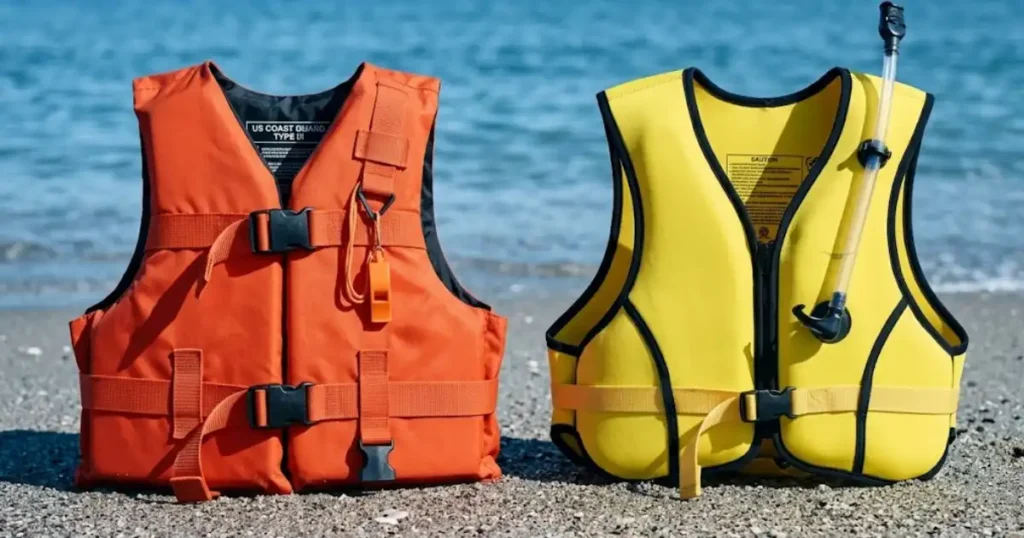
This is the question every non-swimmer should answer before entering the water. Our team finds that most people pick the wrong option usually because no one explains the difference clearly.
- Use a snorkel vest in calm, shallow, supervised reef conditions
- Choose a Type III life jacket for open ocean, boat entries, or strong tidal flow
- Avoid either option if it doesn’t fit snugly loose flotation is dangerous
- Pick a snorkel vest when you need face-down positioning for reef viewing
- Check local tour operator requirements some mandate Coast Guard-approved PFDs
When a Vest Is Enough
A snorkel vest works well in specific, controlled conditions.
Calm, shallow lagoons such as those in Hawaii, the Maldives, or the Caribbean are ideal vest territory. Water is predictable. Guides are nearby. The vest reduces fatigue and helps you stay horizontal without constant kicking. For most resort snorkeling tours, this is all the flotation you realistically need.
Additionally, vests give non-swimmers genuine confidence. That psychological boost is real. A relaxed snorkeler breathes more slowly, conserves energy, and enjoys the reef far longer.
When You Need a Life Jacket Instead
Some conditions demand more than a snorkel vest provides.
- Avoid vests in current-exposed ocean channels tidal pull can overwhelm them
- Use a Type III PFD when jumping from a boat into deep open water
- Choose certified flotation if you cannot swim at all zero exceptions
- Skip inflatable vests in surf conditions waves can prevent oral inflation
- Pick a life jacket for children under 8 regardless of water conditions
If you’re snorkeling from a liveaboard or entering deep water from a zodiac, a Coast Guard Type III jacket is the only responsible choice for a true non-swimmer.
For everything else gear selection, mask fit, and fins our snorkeling guide covers the full kit every beginner needs before their first reef dive.
Types of Snorkeling Vests Explained
Three main vest types exist. Each suits different swimmers, conditions, and budgets.
- Inflatable oral vests — the most popular; you blow them up via a mouthpiece
- Foam-panel vests — always-on buoyancy; bulkier but zero inflation required
- Belt-style flotation — minimal profile; good for strong swimmers wanting backup
- Avoid CO2 cartridge vests for snorkeling — accidental inflation is a real risk
- Check pack size before buying — oral vests compress to fist-size for travel
Inflatable Oral Vests
Oral inflatable vests are the dominant choice for recreational snorkeling worldwide. You control buoyancy by adding or releasing air through a mouthpiece. They pack flat, weigh under 200 grams, and allow full freedom of movement in the water.
The Scubapro Cruiser is the benchmark product in this category. It offers a front-zip design, adjustable waist strap, and reliable oral inflation valve. Most serious snorkelers own one.
Foam-Panel Vests
Foam vests provide constant, passive buoyancy no inflation required. They are heavier and bulkier than inflatable options. However, they are ideal for nervous non-swimmers who don’t trust themselves to inflate a vest under stress.
The tradeoff is mobility. Foam panels restrict arm movement slightly. They also compress less for packing, which matters on carry-on-only trips.
Belt-Style Flotation Devices
Flotation belts sit around your waist rather than your torso. They provide moderate lift and minimal drag. Strong swimmers use them as fatigue insurance on long reef swims.
- Avoid belts as primary flotation for non-swimmers torso coverage is insufficient
- Use belts only as a supplement to swimming ability, not a replacement
- Pick vests over belts for any open-water or ocean snorkeling scenario
How to Choose the Right Snorkeling Vest
Fit matters more than brand. A poorly fitted vest too loose or too small provides unreliable buoyancy when you need it most.
- Check the chest measurement guide on every product before purchasing
- Avoid sizing up — a loose vest rides up and covers your face in deep water
- Use adjustable waist straps to fine-tune fit after initial sizing
- Pick bright colors — yellow and orange improve visibility to boat operators
- Skip dark-colored vests in boat-traffic areas — contrast saves lives
Fit, Sizing & Comfort
Most adult snorkel vests come in S/M and L/XL sizing. Base your choice on chest circumference, not body weight. A vest that fits around the chest but gaps at the sides provides significantly reduced buoyancy when inflated.
Try the vest in a pool before your first ocean trip. Inflate it fully and check that it doesn’t push your face into the water. Additionally, ensure the oral inflation tube reaches your mouth without straining your neck.
Buoyancy Rating: What the Numbers Mean
Snorkel vests typically provide 11–22 lbs of buoyancy when fully inflated. Here’s what those numbers mean in practice.
- 11–14 lbs → suitable for slim adults in calm, shallow conditions
- 15–18 lbs → recommended for most adult non-swimmers in reef environments
- 18–22 lbs → best for heavier adults or choppy open-water conditions
- Check the manufacturer’s weight range buoyancy is rated per body weight
- Avoid using a vest at the top of its rated weight range in rough conditions
Best Snorkeling Vests for Adults (Our Top Picks)
| Vest | Type | Buoyancy | Coast Guard Approved | Pack Size | Best For |
|---|---|---|---|---|---|
| Scubapro Cruiser | Oral Inflatable | 15 lbs | No | Fist-size | Most adult non-swimmers |
| Cressi Snorkeling Vest | Oral Inflatable | 14 lbs | No | Compact | Slim adults, warm-water reefs |
| Stohlquist Fit (Type III) | Foam PFD | 15.5 lbs | Yes — Type III | Bulky | True non-swimmers, open water |
| Onyx MoveVent Dynamic (Type III) | Foam PFD | 15.5 lbs | Yes — Type III | Bulky | Boat entries, deep reef, currents |
| Aqua Lung Snorkeling Vest | Oral Inflatable | 13 lbs | No | Compact | Confident adults, calm lagoons |
Kids Snorkel Vests: What Parents Must Know
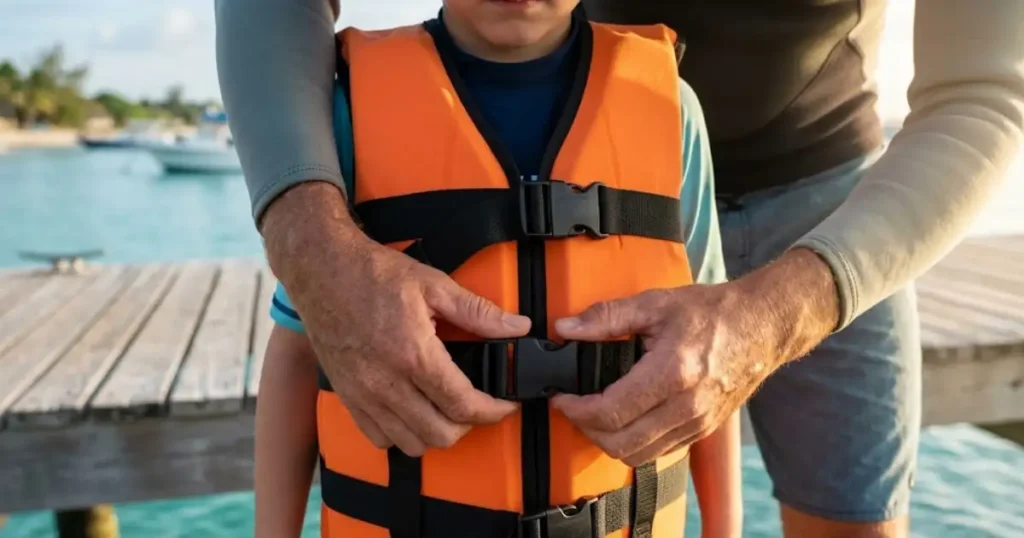
Children require different safety standards than adults. Most adult vests are not appropriate for children under 12.
- Use only vests specifically designed and sized for children — not scaled-down adult versions
- Check that kids’ vests meet USCG Type III standards for children under 8
- Avoid arm-ring floats and pool toys — they are not snorkeling safety equipment
- Pick a vest with a crotch strap for children — it prevents the vest from riding up
- Skip inflatable oral vests for children under 8 — foam Type III PFDs are mandatory
Children panic differently than adults in water distress. An oral inflate vest requires a calm, deliberate response. Most children under 8 cannot reliably self-inflate under stress. Therefore, foam-panel certified PFDs are non-negotiable for young non-swimmers.
Additionally, always pair a kids’ vest with adult supervision in the water never on the boat deck only. Our full breakdown of beginner snorkel sets covers masks, fins, and vests sized specifically for younger snorkelers.
INSIDER SECRET: Tour operators in Hawaii and the Maldives frequently provide undersized or over-stretched rental vests. Bring your own. It weighs under 200 grams, costs under $50, and is the single highest-value safety investment any non-swimmer can make.
The Verdict
A snorkel vest is not optional equipment for non-swimmers it is the difference between an exhausting, anxious session and a confident, enjoyable one. However, not all flotation is equal.
Our testing points to the Scubapro Cruiser as the benchmark for recreational snorkeling vests. It fits well, inflates reliably, and travels easily.
For true non-swimmers entering open water, currents, or deep reef zones, We recommend a USCG Type III life jacket without exception. No reef view is worth the risk of inadequate flotation.
Buy the right tool for the actual conditions you’ll face. Then get in the water.
