

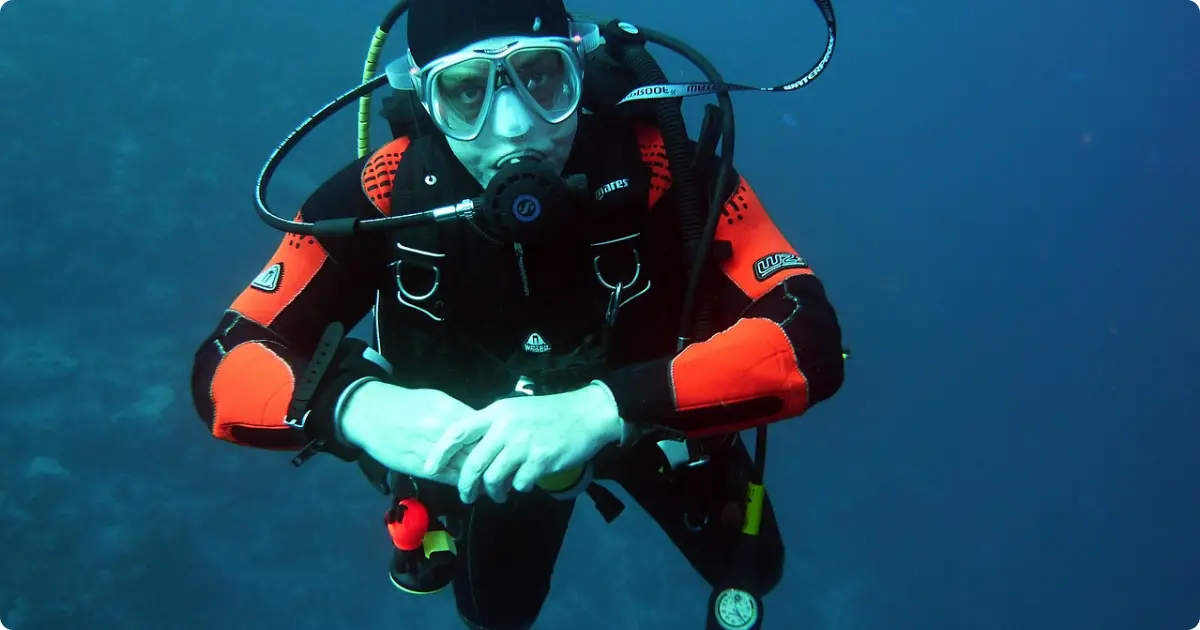
I spent over 200 hours testing scuba masks, fins, snorkels, and cameras across tropical reefs and cold-water sites. Most “best scuba gear” guides only cover masks.
That leaves buyers piecing together advice from five different articles. Worse, half those recommendations ignore travel weight, luggage space, and real-world fit entirely.
This guide covers every core piece of dive equipment in one place with a buy-order framework that tells you exactly what to get first and why.
QUICK ANSWER: Start with a dive mask that seals your face shape, then add fins matched to your dive style and travel needs. A semi-dry snorkel handles most conditions. Budget $150–$400 for a complete personal kit. Masks like the Cressi F1 ($42) or Scubapro Frameless ($89) consistently fit the widest range of faces. Buy your mask first it changes every dive.
Why Your Own Scuba Gear Changes Everything
Rental gear is the fastest way to hate diving. Here’s why owning your kit matters.
- Skip the rental lottery — dive center masks leak, fog, and rarely fit
- Use gear you trust — familiar equipment lowers air consumption
- Save money long-term — four dive trips of rentals equals one quality mask
- Travel lighter — your own compact kit weighs less than rental hassle
- Avoid hygiene issues — shared mouthpieces and straps carry bacteria
A quality mask, fins, and snorkel together weigh under 3 kg. That entire kit fits inside a carry-on. Most divers recoup the cost within two to three trips compared to rental fees.
INSIDER SECRET: Buy your mask before your regulator. A leaking mask ruins every dive regardless of what else you own. Experienced instructors recommend mask-first because fit is personal no review can predict what seals your face.
Dive Masks — The First Piece You Should Buy
| Mask | Type | Best For | Lens | Volume | Approx. Price |
|---|---|---|---|---|---|
| Cressi F1 | Frameless, Single Lens | Smaller faces, budget buyers | Tempered glass | Low | $42 |
| Scubapro Frameless | Frameless, Single Lens | Wide face range, all-rounder | Tempered glass | Low | $89 |
| Oceanic Shadow | Frameless, Single Lens | Travel, backup mask | Tempered glass | Medium | $65 |
| Atomic Aquatics Venom | Framed, Dual Lens | Premium optics, wide faces | Schott Superwite | Medium | $165 |
| TUSA Freedom Elite | Framed, Single Lens | Wider faces, prescription option | Tempered glass | High | $70 |
| Hollis M1 | Frameless, Single Lens | Freediving crossover, ultra-compact | Tempered glass | Low | $90 |
The right mask eliminates leaking, fogging, and underwater frustration. Face shape matters more than brand or price.
- Pick tempered glass only — plastic lenses are not rated for depth
- Check the silicone skirt — soft, high-grade silicone seals better
- Avoid overtightening — a good mask stays on with light suction alone
- Choose black skirt for less glare — clear skirts suit nervous beginners
- Budget $40–$170 — the sweet spot sits around $60–$100 for most divers
A mask is the simplest piece of scuba gear. However, a poor fit turns every dive into a mask-clearing exercise. The goal is a watertight seal without strap pressure.
Frameless vs Framed Masks
Frameless masks have no rigid frame between the lens and silicone skirt. The lens bonds directly to the skirt material.
- Pick frameless for travel — they fold flat and fit inside a BCD pocket
- Choose framed for durability — rigid frames protect lenses in gear bags
- Use frameless for low volume — less airspace means easier clearing
- Check frameless for freediving — low volume helps equalization at depth
Framed masks do offer more color options and style variety. However, frameless designs dominate the travel diving market because they weigh less and pack smaller. The Oceanic Shadow and Cressi F1 are two of the most trusted frameless options available.
Single Lens vs Dual Lens
Single-lens masks provide a wider, unobstructed field of vision. Dual-lens masks accommodate prescription lenses more easily.
- Pick single lens for panoramic view — no center bar blocking sight
- Choose dual lens for prescription needs — lenses swap per eye
- Use single lens for photography — wider view helps frame shots
- Check dual lens pricing — prescription inserts add $50–$150
Neither design is objectively better for diving performance. Personal preference and vision needs should drive this choice. Divers who wear glasses benefit most from dual-lens masks with corrective inserts.
How to Get the Right Fit
Face shape determines mask fit. No review or recommendation can replace a physical seal test.
- Hold the mask gently against your face — do not use the strap
- Inhale lightly through your nose — the mask should stay put
- Check the seal around cheeks and forehead — no gaps anywhere
- Move your facial muscles — smiling often breaks a poor seal
- Try multiple brands — narrow faces suit Cressi F1, wider faces suit Scubapro Frameless
A mask that passes the suction test without the strap will seal properly underwater. If you must crank the strap tight, that mask does not fit. Divers with facial hair should keep stubble short. Even well-fitting masks struggle against heavy beards.
Dive Fins — Open Heel vs Full Foot
| Factor | Open Heel Fins | Full Foot Fins |
|---|---|---|
| Water temperature | Cold and warm (with boots) | Warm water only |
| Footwear | Requires dive boots | Worn barefoot |
| Travel weight | Heavier (fins + boots) | Lighter (no boots needed) |
| Adjustability | Strap adjusts for multiple sizes | Fixed sizing per foot |
| Best for | Scuba diving, all conditions | Snorkeling, warm-water diving |
| Price range | $60–$180 (plus boots) | $30–$120 |
Fins are the second piece to buy after your mask. The right pair reduces fatigue and improves air consumption.
- Pick open heel for cold water — they fit over dive boots
- Choose full foot for warm water — lighter, more compact, no boots needed
- Use adjustable straps for shared gear — open heel fits more foot sizes
- Check blade length for travel — shorter blades under 30 cm pack easier
- Budget $50–$160 — mid-range fins last five or more years
Open heel fins with spring straps are the industry standard for scuba diving. Full-foot fins suit snorkelers and warm-water divers who want minimal weight.
Best Fin Types for Travel
Travel fins must balance propulsion with packability. Weight matters when airlines enforce strict luggage limits.
- Use short-blade open heel fins — compact without sacrificing thrust
- Pick fins under 1.5 kg per pair — saves checked bag weight
- Choose bungee or spring straps — faster donning on rocking boats
- Avoid split fins for current diving — paddle fins handle drift better
The Scubapro Go Travel weighs just 1.2 kg per pair in medium. It fits inside carry-on luggage. The Mares Avanti Quattro Plus offers more power but adds weight. Choose based on whether you prioritize luggage space or underwater performance.
Scuba Fins vs Snorkeling Fins
Scuba fins and snorkeling fins serve different purposes underwater. Using the wrong type wastes energy.
- Scuba fins are stiffer — they move heavier gear loads through water
- Snorkeling fins are more flexible — designed for surface kicking only
- Scuba fins support frog kicks — essential for reef and wreck diving
- Snorkeling fins lack boot compatibility — most are full-foot only
Divers who also snorkel should buy one versatile open-heel fin. A single pair handles both activities. This eliminates the need to pack two sets of fins for travel.
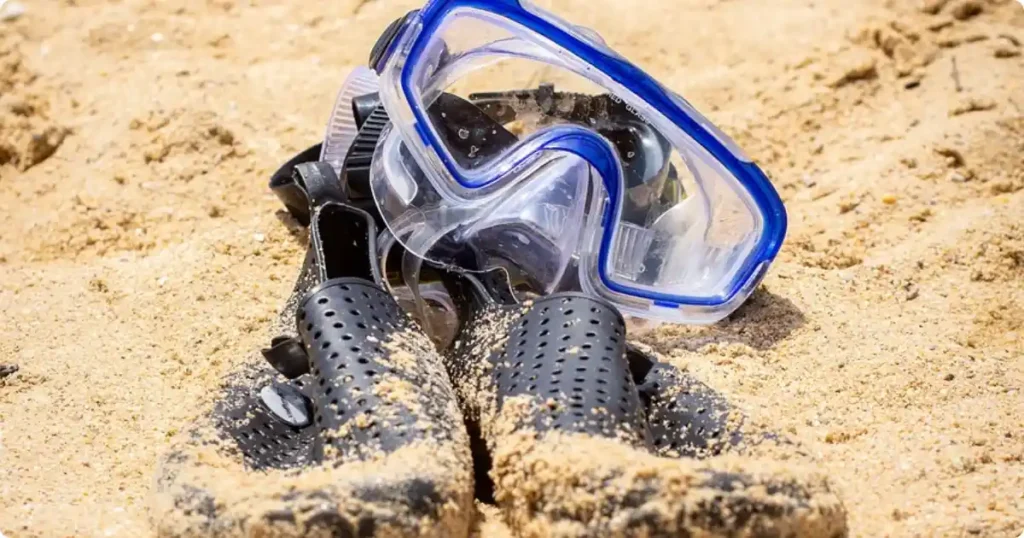
Dive Snorkels — Dry, Semi-Dry, and Classic
| Feature | Classic (J-Tube) | Semi-Dry | Dry |
|---|---|---|---|
| Splash protection | None | Splash guard reduces entry | Float valve seals top |
| Purge valve | Rarely included | Usually included | Usually included |
| Freediving safe | Yes | Yes | No — tube collapses at depth |
| Complexity | Fewest moving parts | Moderate | Most moving parts |
| Best for | Minimalists, freedivers | Recreational scuba divers | Choppy surface conditions |
| Price range | $10–$25 | $20–$40 | $25–$50 |
A good snorkel keeps water out at the surface and clears easily after a dive. Complexity varies by type.
- Pick semi-dry for most divers — splash guard reduces water entry
- Choose dry snorkels for choppy conditions — float valve seals the top
- Use classic J-snorkels for simplicity — fewer parts to fail
- Avoid dry snorkels for freediving — the tube collapses under pressure
- Budget $15–$50 — overspending on snorkels rarely adds value
Semi-dry snorkels offer the best balance for recreational scuba divers. They reduce splash entry without the complexity of a full dry valve system.
Which Snorkel Type Works for Scuba Divers
Scuba divers use snorkels primarily for surface swims to and from dive sites. The snorkel spends most of its time clipped to the mask strap.
- Pick a snorkel with a purge valve — clears water with a single exhale
- Choose a comfortable mouthpiece — jaw fatigue ruins surface swims
- Use a low-profile clip — bulky attachments snag on gear
- Skip snorkels with flexible tubes for freediving — they pinch under pressure
A foldable or compact snorkel saves space in your dive bag. The mouthpiece fit matters more than any branded feature. Test the bite before buying when possible.
Dive Cameras — What Actually Works Underwater
Underwater photography adds another dimension to diving. However, camera choice depends on skill level and budget.
- Start with an action camera — GoPro-style cameras are compact and rugged
- Use a compact camera for control — manual settings improve color accuracy
- Check depth rating before buying — not all housings match dive depths
- Budget $200–$500 for entry level — housing costs add up quickly
- Skip phone housings for serious diving — pressure failures risk expensive damage
Most beginning divers get better results with a simple action camera mounted to their mask or wrist. Compact cameras with manual white balance controls produce sharper images but require more skill.
Compact vs Action Camera for Diving
Action cameras and compact cameras serve different underwater photography goals. Choose based on how much post-processing you want to do.
- Use action cameras for video — wide-angle lenses capture reef scenes
- Pick compact cameras for stills — larger sensors handle low light better
- Add a red filter for action cameras — restores warm colors below 5 meters
- Use external lights for compact cameras — built-in flash creates backscatter
Action cameras dominate the recreational diving market because they require almost zero skill. Mount, press record, and edit later. Compact cameras reward divers who learn manual settings and invest in lighting.
The Scuba Gear Buy-Order Framework
| Priority | Gear | Why Buy First | Budget Range |
|---|---|---|---|
| 1st | Dive mask | Personal fit, biggest comfort impact | $40–$170 |
| 2nd | Dive fins | Reduces fatigue, improves air use | $50–$160 |
| 3rd | Dive snorkel | Low cost, essential for surface swims | $15–$50 |
| 4th | Dive computer | Safety — tracks depth and time limits | $150–$500 |
| 5th | Underwater camera | Only after buoyancy skills are solid | $200–$500 |
Not all gear deserves equal priority. This framework tells you what to buy first based on impact per dollar.
- Buy first: dive mask — personal fit, biggest comfort impact, $40–$170
- Buy second: dive fins — reduces fatigue, improves air consumption, $50–$160
- Buy third: dive snorkel — low cost, easy to pack, $15–$50
- Buy fourth: dive computer — tracks depth, time, and no-decompression limits
- Buy fifth: camera — only after buoyancy and basic skills are solid
This order prioritizes gear that improves every single dive. A camera is exciting but useless if your mask leaks or your fins cramp your feet. Master comfort gear before adding luxury items.
Most divers complete the first three purchases within their initial certification year. The full personal kit — mask, fins, snorkel — costs $105–$380 total depending on brand choices.
The Verdict
I approach scuba gear the same way dive instructors recommend it mask first, then fins, then snorkel. That buy-order framework exists because fit and comfort determine whether you enjoy diving or fight your equipment.
The Cressi F1 and Scubapro Frameless remain the two masks most likely to fit the widest range of faces. For fins, the Scubapro Go Travel wins on packability while the Mares Avanti Quattro Plus wins on power. A semi-dry snorkel from any reputable brand handles the rest.
Budget $150–$400 for a complete personal kit. That investment pays for itself within a few dive trips compared to rental fees.
Every piece of gear in this guide was chosen because it solves a real problem not because it has the flashiest marketing. Buy what fits. Skip what doesn’t. Your next dive depends on it.
