
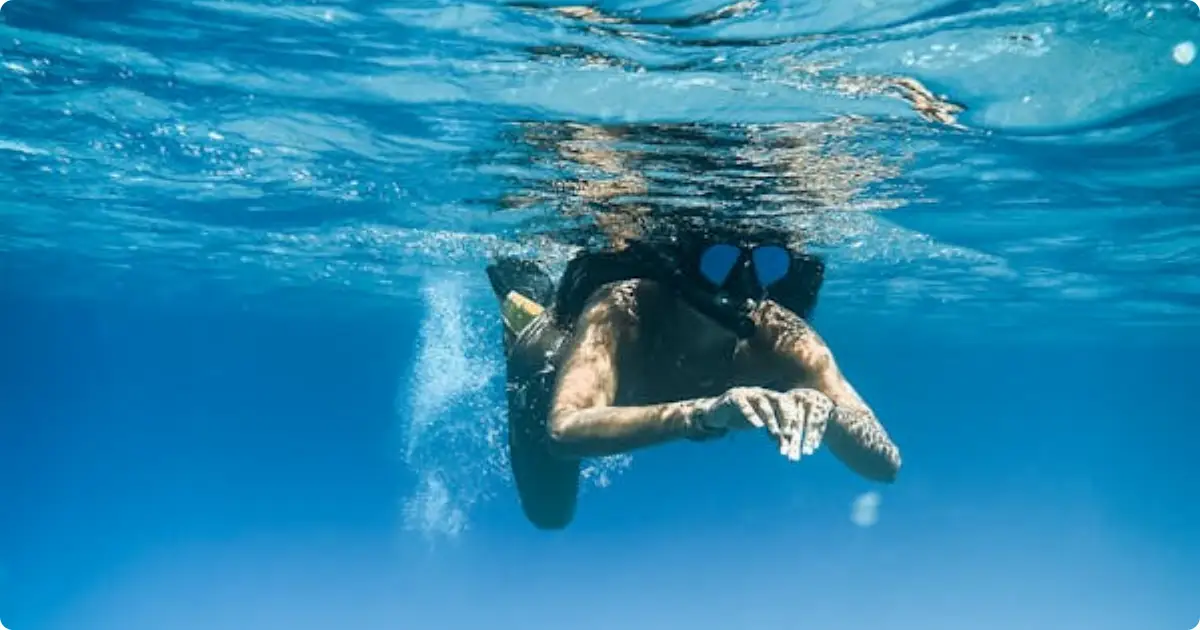

We have snorkeled in water so clear that the only thing burning was our skin. Sunscreen washed off within 30 minutes, and the back of our neck turned lobster red before we even noticed.
Most snorkelers learn this lesson the hard way. You reapply sunscreen between spots, it stings your eyes underwater, and half of it ends up floating on the reef. Meanwhile, your shoulders and lower back cook in silence.
This guide covers the best rash guards for snorkeling and swimming in 2026 — by style, by gender, and by the exact coverage level your trip demands.
QUICK ANSWER: The best rash guard for snorkeling is a long-sleeve, UPF 50+ top made from polyester-spandex blend fabric. Choose a snug (not tight) fit that stays in place underwater. Brands like Coolibar, O’Neill, and Tuga lead for snorkeling-specific features. Add swim leggings for full-body coverage on long sessions.
Why a Rash Guard Beats Sunscreen Alone
A rash guard provides physical UV protection that never washes off, fades, or needs reapplication. Here is why experienced snorkelers rely on them over sunscreen.
- Skip constant reapplication — UPF 50+ fabric blocks 98% of UV rays all day
- Protect the reef — less sunscreen in the water means less chemical runoff
- Prevent chafing — fabric stops mask straps and vest buckles from rubbing skin raw
- Stay warmer longer — even a thin layer adds warmth during extended sessions
- Avoid jellyfish contact — covered skin means fewer exposed sting zones
Many marine parks now require reef-safe sunscreen or restrict chemical sunscreens entirely. A rash guard reduces the amount you need to apply dramatically. You still apply reef-safe sunscreen on exposed areas — face, hands, feet, and calves — but the rash guard handles everything else.
What to Look for in a Snorkeling Rash Guard
| Fabric Type | Dry Time | Saltwater Durability | Stretch | Best For |
|---|---|---|---|---|
| Polyester-Spandex (85/15) | 15–20 min | Excellent | Four-way | Snorkeling & ocean swimming |
| Nylon-Spandex (80/20) | 25–35 min | Good | Four-way | Pool swimming & light snorkeling |
| Recycled Polyester Blend | 15–25 min | Excellent | Four-way | Eco-conscious snorkelers |
| Cotton Blend | 60+ min | Poor | Limited | Not recommended for water use |
Not every rash guard works well for snorkeling. Surf-focused designs often miss features that matter underwater. Here is what separates a great snorkeling rash guard from a generic one.
UPF Rating and Fabric Type
UPF rating tells you how much UV radiation passes through the fabric. This is the single most important spec.
- Choose UPF 50+ minimum — it blocks 98% of UV rays
- Pick polyester-spandex blends — they resist saltwater degradation better than nylon
- Avoid cotton blends — they absorb water, sag, and dry slowly
- Check if UPF is built-in — some budget brands rely on chemical coatings that wash out
INSIDER SECRET: UPF ratings can degrade over time with cheap fabrics. Brands like Coolibar build UV protection directly into the fiber weave. This means it never washes out — even after 100+ washes. Look for “inherent UPF” on the label instead of “treated.”
A good polyester-spandex blend (typically 85/15 or 90/10) offers four-way stretch, resists chlorine and salt, and dries within minutes on a boat deck.
Fit and Coverage
Fit determines comfort, drag, and how well the rash guard stays in place while you swim face-down.
- Choose snug over tight — you want zero bunching without restricted breathing
- Check the hem length — longer backs prevent riding up during snorkeling
- Look for gripper hems — elastic or silicone strips anchor the bottom edge
- Avoid compression fit — it restricts breathing at the surface through a snorkel
- Try thumbhole cuffs — they keep sleeves from pushing up your forearms
A rash guard that rides up exposes your lower back. This is the most commonly burned area among snorkelers. Tucking the hem into swim bottoms helps, but a gripper hem solves it permanently.
Quick-Dry and Saltwater Durability
Snorkelers are in and out of the water all day. Your rash guard needs to dry fast between sites and survive repeated saltwater exposure.
- Pick quick-dry polyester — it sheds water faster than nylon or cotton blends
- Check for saltwater-resistant fabric — some materials pill or lose stretch after ocean use
- Avoid heavy fabrics — anything over 200 GSM dries too slowly for tropical travel
- Test chlorine resistance — pool snorkelers need fabric that holds up to chemicals
Lightweight polyester (around 140-180 GSM) hits the sweet spot. It dries in 15-20 minutes in tropical sun and packs down to almost nothing in a carry-on.
Best Rash Guard Styles for Snorkeling
| Style | UV Coverage | Best Activity | Pros | Cons |
|---|---|---|---|---|
| Long-Sleeve Top | Arms + torso | Snorkeling & open-water swimming | Maximum arm coverage, works as wetsuit base layer | Warmer on land in tropical heat |
| Hooded Top | Arms + torso + head + neck | Extended snorkeling sessions (2+ hours) | Eliminates neck and ear burns, controls hair | Can feel warm out of water, slightly pricier |
| Short-Sleeve Top | Torso only | Pool swimming & short beach snorkels | Maximum airflow, easy layering | Arms fully exposed to UV |
| Full-Body Stinger Suit | Nearly full body | Jellyfish-heavy waters & long diving days | ~95% skin coverage in one piece | Harder to remove, bathroom breaks difficult |
| Swim Leggings (bottom) | Waist to ankle | Paired with any top for full coverage | Protects legs from UV and stings | Must pair with separate top |
Each style solves a different coverage problem. Your choice depends on water temperature, sun intensity, and how long you plan to stay in the water.
Long-Sleeve Rash Guards
Long sleeves are the most popular choice for snorkeling. They protect your arms, shoulders, and torso completely.
- Best for extended sessions — maximum coverage with minimum sunscreen
- Ideal for tropical destinations — strong UV index demands full arm protection
- Works under wetsuits — doubles as a base layer in cooler water
- Choose flatlock seams — they sit flat against skin and prevent chafing
Most experienced snorkelers default to long sleeves. The trade-off is slightly less airflow on land. However, modern polyester blends are thin enough that overheating is rarely an issue.
Hooded Rash Guards
A hooded rash guard adds protection for your head, neck, and ears — the three areas most snorkelers forget to cover.
- Eliminates neck sunburn — the most common snorkeling burn zone
- Tucks over mask strap — prevents forehead burns above the mask seal
- Controls hair — stops loose hair from tangling in mask and snorkel straps
- Choose snug-fitting hoods — loose hoods shift underwater and block peripheral vision
Tuga and Coolibar both offer snorkeling-specific hooded rash guards with thumbhole cuffs. These provide nearly complete upper-body coverage. For snorkelers who spend 2+ hours in the water, a hood is the single biggest comfort upgrade.
Short-Sleeve Rash Guards
Short sleeves offer more freedom but leave arms exposed. They suit cooler conditions or shorter sessions.
- Best for warm-weather layering — less coverage, more airflow
- Works under rental wetsuits — fits easily beneath a shorty wetsuit
- Requires arm sunscreen — your forearms and upper arms remain exposed
- Good for pool swimming — provides core coverage without overheating
Short sleeves make sense if you already wear a wetsuit over the top. Otherwise, long sleeves are the stronger choice for snorkeling.
Best Rash Guards for Women
Women’s rash guards differ in cut, neckline, and coverage options. The best brands now offer complete snorkeling outfits — tops paired with swim leggings for full-body protection.
Women’s Tops and Swim Shirts
Women’s rash guard tops range from fitted athletic cuts to relaxed swim shirts. Both work for snorkeling.
- Coolibar Hightide Swim Shirt — UPF 50+, gripper hem, Skin Cancer Foundation recommended
- Hurley Women’s Rash Guard — budget-friendly, snug fit, UPF 50+, quick-dry
- Tuga Women’s Snorkel Shirt — higher neckline, longer back, hood option available
- O’Neill Basic Skins — lightweight, flatlock seams, good for warm water
Choose based on how much coverage you need. Relaxed-fit swim shirts feel cooler on land. Fitted rash guards create less drag underwater. Both provide the same UPF protection.
Swim Leggings and Full-Coverage Bottoms
Swim leggings complete the snorkeling outfit. They protect thighs and calves from UV exposure and jellyfish.
- Choose UPF 50+ rated leggings — not all swim leggings offer UV protection
- Pick high-waisted styles — they overlap with your rash guard to prevent gaps
- Avoid loose fits — baggy leggings create drag and catch on fins
- Check for reef-friendly fabric — smooth exteriors prevent snagging on coral
A two-piece system (rash guard top + swim leggings) is easier to manage than a full-body suit. You can remove the top between snorkeling sites without a full outfit change.
Best Rash Guards for Men
Men’s rash guard options tend toward athletic cuts with fewer style variations. The key features — UPF rating, fit, and fabric — matter more than aesthetics underwater.
Men’s Tops and Swim Shirts
Men’s rash guards come in fitted and relaxed options. Fitted styles perform better in the water. Relaxed styles work better on land.
- O’Neill Basic Skins — best budget option, UPF 50+, flatlock seams, thin polyester
- Coolibar Ocala Swim Hoodie — hooded, thumbhole cuffs, dermatologist recommended
- Vissla Twisted — loose fit, doubles as a sun shirt, recycled materials
- Tuga Men’s Snorkel Shirt — snorkeling-specific, longer back, Italian recycled fabrics
For snorkeling specifically, Coolibar and Tuga offer the most relevant features. Surf-focused brands like Vissla and O’Neill work well but lack snorkeling-specific details like gripper hems and extended back lengths.
Rash Guard Pants and Swim Tights
Men’s swim tights remain less common than women’s leggings. However, they provide the same UV and sting protection.
- Choose board short length or full-length — based on your comfort level
- Pick quick-dry polyester — cotton or nylon blends stay wet too long
- Look for UPF 50+ rating — some swim trunks offer zero UV protection
- Consider a stinger suit — full-body one-piece options exist for maximum coverage
Full-length swim tights paired with a hooded rash guard cover nearly 95% of your skin. This is the closest you can get to full protection without a wetsuit.
What to Wear Snorkeling: Building a Full Outfit
The best snorkeling outfit combines multiple pieces for maximum protection. Here is the complete layering system we recommend.
- Base layer — UPF 50+ long-sleeve rash guard (hooded for maximum coverage)
- Bottom layer — UPF 50+ swim leggings or board shorts
- Feet — reef-safe water shoes or snorkeling fins with booties
- Hands — thumbhole cuffs on rash guard or thin water gloves
- Face — reef-safe sunscreen, reapplied every 80 minutes
- Head — hood on rash guard, or separate swim hood from EcoStinger
This system eliminates roughly 90% of exposed skin. You only need sunscreen on your face, hands (if no gloves), and the strip of ankle between leggings and fins.
Two pieces beat one-piece stinger suits for practicality. Bathroom breaks are faster. Temperature adjustments are easier. Additionally, you can mix coverage levels based on conditions — leggings with a short-sleeve top on cooler mornings, then switch to full coverage when the sun peaks.
What Color Rash Guard Is Best for Snorkeling?
Color matters more than most snorkelers realize. It affects visibility, heat absorption, and even marine life interaction.
- Choose bright colors for safety — white, yellow, or bright blue are easiest to spot from boats
- Avoid dark colors in tropical heat — black absorbs more sun and heats up faster
- Skip camouflage patterns — boat operators need to see you on the surface
- Consider marine life impact — bright yellows may attract curious fish (not dangerous, just noticeable)
White and light blue offer the best combination of visibility, cool temperature, and neutral appearance. Dark navy and black work well in cooler water where extra warmth is welcome.
However, UPF protection does not change based on color. A black UPF 50+ rash guard blocks the same UV radiation as a white one. Color is a comfort and safety preference, not a protection factor.
How to Care for Your Rash Guard
Proper care extends the life of your rash guard by multiple seasons. Saltwater and sun degrade fabric faster than normal wear.
- Rinse in cold fresh water after every use — removes salt crystals that break down fibers
- Air dry in shade — direct sun degrades spandex and fades colors
- Use mild detergent only — fabric softeners clog moisture-wicking pores
- Never machine dry — heat destroys spandex elasticity permanently
- Inspect seams each season — replace when stitching loosens or fabric thins
A well-maintained polyester-spandex rash guard lasts 2-3 seasons of regular snorkeling use. Nylon blends degrade faster in saltwater. Budget rash guards with chemical UPF coatings may lose protection within one season.
The Verdict
We recommend a long-sleeve, UPF 50+ polyester-spandex rash guard as the foundation of every snorkeling kit. It eliminates the biggest comfort problems — sunburn, chafing, and constant sunscreen reapplication — in one piece of gear.
For women, the Coolibar Hightide paired with UPF swim leggings covers nearly everything. For men, the Coolibar Ocala Hoodie or Tuga snorkel shirt delivers the best snorkeling-specific fit. Budget buyers should start with the O’Neill Basic Skins.
Add swim leggings, a hood, and reef-safe sunscreen for exposed areas. That combination provides more protection than any amount of sunscreen alone.
