

Africa has more than 50 countries and roughly 300 national parks. Narrowing that to one safari destination the right one for you is where most travelers quietly go wrong.
The problem isn’t a lack of information. It’s that every article describes the same six destinations in the same breathless way, without ever telling you which one to actually choose, or why the answer is different depending on what you want from the experience.
This guide ranks Africa’s best safari destinations by traveler type not by raw wildlife numbers. First-timers, luxury seekers, walking safari devotees, and budget travelers each get a different answer, and we explain exactly why.
QUICK ANSWER:
Tanzania leads for most first-timers the Serengeti is Africa’s top-rated safari park. Kenya wins on big cats and culture. Botswana delivers unmatched exclusivity. South Africa offers the best access and budget range. Match your destination to your goal, not the most popular answer.
The Quick Answer: Where Should You Actually Go?
This section maps Africa’s top safari countries to the travelers who will love them most.
- Choose Tanzania if you want the Great Migration and the world’s highest-rated park (Serengeti, 4.86/5 on SafariBookings)
- Choose Kenya if iconic Maasai culture and big cat density matter most to you
- Choose Botswana if exclusivity, no crowds, and delta mokoro experiences are your priority
- Choose South Africa if this is your first safari or budget flexibility is essential
- Choose Zambia if you want walking safaris and zero tourist traffic
- Choose Namibia if dramatic desert landscapes matter as much as wildlife
Every destination below is ranked against the type of traveler it serves best not just the number of animals it holds.
Tanzania Best for First-Timers & the Great Migration
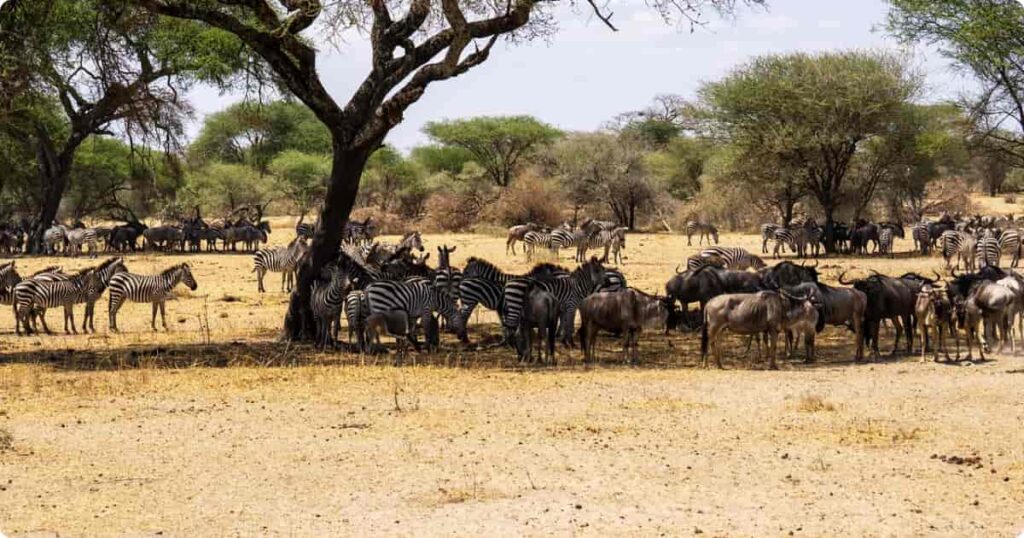
Tanzania is where the world’s safari benchmark was set. It holds more than 20 national parks and game reserves, covering wildlife ecosystems that no single country in Africa can match.
- Pick Tanzania for the Serengeti, rated Africa’s #1 safari park four times by SafariBookings’ annual survey
- Visit July–October for the Great Migration river crossings in the northern Serengeti
- Visit January–March for calving season near Ngorongoro — roughly 8,000 wildebeest calves born daily
- Expect Big Five sightings across all major parks, though rhino remain rare in the Serengeti
- Skip the peak weeks in August around the Mara River if crowd-free game drives matter to you
- Add Zanzibar at the end — it’s a short flight and one of the best beach finishers in Africa
Tanzania is the closest thing to a guaranteed safari experience on the continent.
Serengeti National Park
The Serengeti is the most reviewed safari park in Africa, with an overall rating of 4.86 out of 5 from 2,665 verified reviews. That score holds across both first-time travelers and veteran safari industry experts a rare alignment.
The park covers approximately 5,700 square miles of open savanna. However, it’s the annual wildebeest migration 1.5 million animals crossing between Tanzania and Kenya that makes it singular. No other wildlife event on earth operates at this scale. Combine that with strong resident populations of lion, leopard, elephant, and cheetah, and the Serengeti earns its reputation every time.
Ngorongoro Crater
The Ngorongoro Conservation Area is a UNESCO World Heritage Site built around the world’s largest intact volcanic caldera. Its 100-square-mile floor holds an estimated 25,000 large animals within a naturally enclosed ecosystem.
Because animals rarely leave the crater, wildlife density here is exceptional. Lion prides, black rhino, elephant herds, and vast numbers of wildebeest share the floor year-round. It’s one of the few places in Africa where you can realistically see the Big Five in a single day.
Tarangire National Park
Tarangire is Tanzania’s underrated gem. It receives far fewer visitors than the Serengeti but delivers elephant sightings that are among the best on the continent herds of 300 or more gather at the Tarangire River during the dry season.
It also holds one of Africa’s highest concentrations of baobab trees, giving it a landscape feel unlike anywhere else in Tanzania. For travelers who want depth without the crowds, Tarangire belongs on the itinerary.
Kenya Best for Iconic Safari Culture & Big Cat Sightings
Kenya is where safari culture was born. It has maintained some of the highest game densities in Africa while layering in cultural depth particularly through the Maasai communities that Tanzania and Botswana cannot replicate.
- Choose Kenya if big cat frequency is your single most important variable
- Visit July–October for the Great Migration crossing into the Maasai Mara from Tanzania
- Add Amboseli for the best Kilimanjaro backdrop shots in Africa
- Fly into Nairobi, which has strong international connections from the US, UK, and UAE
- Combine parks — Kenya’s geography makes multi-park itineraries easier than most countries
- Expect higher tourist density in the Mara during peak season book private conservancies to avoid it
Kenya consistently ranks among the top two safari countries on the continent. The question is never whether to go it’s when and where exactly to base yourself.
Maasai Mara National Reserve
The Maasai Mara is where big cat sightings happen at a frequency that few parks on earth can match. Lion prides, leopard, and cheetah are all well-established here, and the flat open terrain makes spotting and photographing them far easier than in dense bush.
The reserve is connected directly to Tanzania’s Serengeti across its southern border. From July to October, the Great Migration sweeps into the Mara, and the river crossings at the Mara River are among the most dramatic wildlife events on the planet. Private conservancies surrounding the reserve Naboisho, Olare Motorogi, and Mara North offer the same wildlife in a far less crowded setting.
Amboseli National Park
Amboseli sits at the foot of Mount Kilimanjaro on the Tanzanian border. The combination of elephant herds and Africa’s highest peak as a backdrop makes it one of the most photographed safari landscapes in the world.
The elephant viewing here is widely regarded as the finest in Kenya. Large matriarchal herds move freely across the open marshlands, and at close range the scale of these animals against Kilimanjaro behind them is genuinely unforgettable. Best visited between June and October for clear mountain views.
Samburu National Reserve
Samburu sits in Kenya’s dry north a completely different ecosystem from the Mara, and one that deserves far more attention than it gets. The reserve is home to the Samburu Special Five: reticulated giraffe, Grevy’s zebra, Beisa oryx, Somali ostrich, and gerenuk. None of these species appear in the southern parks.
For repeat visitors to Kenya or travelers who want something genuinely different, Samburu is the answer.
Botswana Best for Luxury, Wilderness & Off-Grid Immersion
Botswana is the most expensive safari country in Africa and the most exclusive. Its government policy of low-volume, high-value tourism limits the number of visitors allowed in wilderness areas at any time. The result is a safari experience with no day-trippers, no crowded game drives, and landscapes that feel genuinely untouched.
- Budget $800–$2,500 per person per night for premium camps in peak season
- Choose the Green Season (November–March) for prices around 50% lower with wildlife viewing still at roughly 85% of peak quality
- Book the Okavango Delta for the most unique safari ecosystem in Africa no roads, only small planes and mokoro canoes
- Add Chobe for the largest elephant herds on the continent — herds of several hundred gather at the Chobe River in dry season
- Expect no Big Five guarantee — rhino sightings are possible but not common
- Avoid if budget is your primary constraint — Botswana’s model is deliberately inaccessible at lower price points
Botswana has been voted Africa’s best safari country four times in SafariBookings’ annual review-based survey. The cost is real. So is the experience.
Okavango Delta
The Okavango Delta is Africa’s only inland river delta a UNESCO World Heritage Site where the Okavango River fans out into the Kalahari Desert, creating a permanent flood plain that draws wildlife from across Southern Africa. There are no roads. You arrive by small charter plane and travel by mokoro (dugout canoe) or on foot.
The wildlife includes cheetah, wild dog, lion, elephant, hippo, and leopard all in a setting of papyrus channels and floodplains that looks unlike any other safari destination in the world. Dry season (May–October) brings peak flood levels and maximum game concentration. Green season brings lush landscapes, baby animals, and dramatically lower rates.
Chobe National Park
Chobe holds the largest elephant population in Africa, with some estimates placing the total at around 50,000 animals. During the dry season, herds numbering in the hundreds gather at the Chobe River a wildlife spectacle with no equivalent anywhere else.
Chobe is also notable for its boat safaris. Getting onto the river at sunset, with hippos surfacing and elephants swimming across, is an experience that overland game drives simply cannot replicate. It sits within easy reach of Victoria Falls in Zimbabwe, making it a natural pair on any Southern Africa itinerary.
Moremi Game Reserve
Moremi is the only protected area within the Okavango Delta, covering roughly a third of the delta’s landmass. It’s widely considered one of Africa’s finest wildlife reserves combining permanent water channels, floodplains, and dry woodland into a single, extraordinarily diverse ecosystem.
Wild dog sightings in Moremi are among the most reliable in Africa. Lion, leopard, and painted wolf regularly appear on game drives here. For travelers who want the Okavango experience with the best wildlife viewing the delta offers, Moremi is where to base yourself.
South Africa Best for First Safari & Budget Flexibility
South Africa is the most accessible safari destination in Africa by a significant margin. Infrastructure is strong, English is widely spoken, international flights are plentiful, and the range of accommodation from budget to ultra-luxury is broader than anywhere else on the continent.
- Choose South Africa if this is your first safari and you want a guaranteed quality experience
- Book Sabi Sands for the best Big Five experience in the country — often all five in a single day
- Use Kruger National Park if self-drive is your preference and budget is a consideration
- Avoid malaria concerns by choosing lodges in malaria-free reserves like Madikwe or parts of the Eastern Cape
- Combine with Cape Town for a complete South Africa trip — wine country, coastline, and world-class food
- Expect higher tourist numbers in Kruger during school holidays — book private reserves to avoid crowds
South Africa doesn’t top the raw wilderness rankings. However, for accessibility, value, and first-safari experience, it is the smartest entry point on the continent.
INSIDER SECRET: The private reserves bordering Kruger particularly Sabi Sands share an unfenced boundary with the national park. Animals move freely between the two, but in Sabi Sands you’ll have open-vehicle safaris, expert guides, and a fraction of the visitor numbers. It’s a fundamentally different experience from public Kruger.
Sabi Sands Game Reserve
Sabi Sands is widely regarded as the best destination in Africa for leopard sightings. The reserve’s leopards are habituated to vehicles and can be approached at extremely close range encounters that would be impossible in any other safari destination. Lion, elephant, buffalo, and white rhino complete the Big Five picture here.
Lodges within Sabi Sands include Lion Sands, MalaMala, Singita Sabi Sand, and Cheetah Plains all operating at the highest end of the African safari market. Even at mid-range lodges within the reserve, the game viewing is consistently exceptional.
Kruger National Park
Kruger is one of Africa’s largest national parks, covering nearly 7,523 square miles. It’s the backbone of South African safari tourism and one of the few parks on the continent where a genuine self-drive experience is viable good tar roads, rest camps with facilities, and high animal density make it workable without a guide.
For independent travelers or those on a tighter budget, Kruger offers Big Five sightings at a fraction of the cost of private reserves. The tradeoff is crowds particularly during South African school holidays and the open-vehicle, off-road experience that private reserves provide.
Zambia Best for Walking Safaris & Off-the-Beaten-Path Adventure
Zambia is where serious safari travelers go when they’ve done Kenya and Tanzania and want something rawer. It pioneered the walking safari and it remains the best destination in Africa for experiencing wildlife on foot, at eye level, in genuine wilderness.
- Choose Zambia for walking safaris led by armed, highly trained professional guides
- Visit May–October for dry-season wildlife concentration and the best walking conditions
- Book South Luangwa for the highest density walking safari experience in Africa
- Add Lower Zambezi for canoe safaris on the Zambezi River with hippos and crocs alongside
- Expect fewer tourists than Kenya or Tanzania — Zambia sees a fraction of the annual safari visitors
- Budget for quality — Zambia’s top camps are expensive, but the experience justifies it
Zambia won’t suit every traveler. But for those who want physical immersion in the wild not just a game drive it has no equal in Africa.
South Luangwa National Park
South Luangwa is where the walking safari was invented and where it remains most refined. The park holds strong populations of lion, leopard, elephant, hippo, and buffalo. Wild dog sightings here are among the most reliable in Africa.
The Luangwa River is the park’s lifeline during the dry season, animals converge along its banks in concentrations that rival the Serengeti. Leopard sightings in South Luangwa are exceptional; the park is widely recognized as one of the best places in Africa to see this elusive cat.
Lower Zambezi National Park
Lower Zambezi sits along the northern bank of the Zambezi River opposite Zimbabwe’s Mana Pools. It rose from 15th to 2nd place in SafariBookings’ most recent annual rankings a significant move driven by consistently strong traveler reviews.
The park offers canoe safaris on the Zambezi, game drives through floodplain woodland, and walking safaris in a setting of almost complete wilderness. Wildlife includes elephant, lion, leopard, buffalo, and exceptional birdlife. For travelers who want an East Africa-style wilderness experience without East Africa’s tourist numbers, Lower Zambezi is the answer.
Zimbabwe & Namibia Hidden Gems Worth Knowing
These two countries don’t always appear on first-safari shortlists. That’s precisely why they’re worth knowing.
- Choose Zimbabwe for Hwange’s enormous elephant herds and Victoria Falls as a natural add-on
- Choose Namibia if dramatic desert landscapes matter to you as much as the wildlife itself
- Visit Hwange June–October for peak dry-season elephant concentrations around the waterholes
- Consider Namibia’s Etosha for self-drive accessibility second only to South Africa’s Kruger
- Note Zimbabwe’s improvement — political instability has reduced over recent years and tourism infrastructure has recovered significantly
- Note Namibia’s safety record — it ranks among the safest countries in Africa for international travelers
Both countries reward the traveler who looks beyond the obvious shortlist.
Hwange National Park, Zimbabwe
Hwange is Zimbabwe’s largest national park and home to one of the largest elephant populations in Africa. During the dry season, hundreds of elephants gather at man-made waterholes a spectacle that’s genuinely comparable to Chobe at a fraction of the price and visitor numbers.
The park also holds strong lion and wild dog populations, and its painted wolf (wild dog) viewing is considered excellent. Victoria Falls sits just a two-hour drive away, making Hwange a natural pairing on any Zimbabwe itinerary.
Etosha National Park, Namibia
Etosha is built around a vast salt pan one of the largest in the world that gives Namibia’s flagship park its distinctive, otherworldly character. The pan is visible from space. Wildlife concentrates around the pan’s edges and the park’s network of waterholes, particularly in the dry season.
Etosha is one of Africa’s best self-drive safari parks, with well-maintained roads, floodlit night waterholes at rest camps, and reliable sightings of lion, elephant, giraffe, and black rhino. It’s also one of the best parks in Africa for photographing rhino both black and white rhino populations are well-established here.
How to Choose the Right Safari Destination for You
| Traveler Type | Best Country | Top Park / Area | Why It Wins |
|---|---|---|---|
| First-timer | South Africa | Sabi Sands / Kruger | English-spoken, great infrastructure, Big Five nearly guaranteed |
| Great Migration | Tanzania | Serengeti | 1.5 million wildebeest; Africa’s #1 rated park (4.86/5) |
| Big cats focus | Kenya | Maasai Mara | Highest lion, leopard, cheetah frequency in open terrain |
| Luxury & exclusivity | Botswana | Okavango Delta | Low-volume policy; no roads; mokoro + walking only |
| Walking safari | Zambia | South Luangwa | Pioneered the walking safari; top leopard and wild dog sightings |
| Budget-conscious | South Africa | Kruger (self-drive) | Big Five from $150–$300/night; viable without a guide |
| Families | South Africa | Madikwe / Gondwana | Malaria-free reserves; child-friendly camps and activities |
| Off-grid adventurer | Zambia / Zimbabwe | Lower Zambezi / Hwange | Minimal tourists; canoe safaris; raw wilderness experience |
| Desert & landscape | Namibia | Etosha / Skeleton Coast | Oldest desert on earth; desert-adapted wildlife; safe self-drive |
Matching your destination to your goals is the only decision that matters. Here’s the framework we use.
- First safari → South Africa (Sabi Sands or Kruger) infrastructure, English, accessibility
- Great Migration → Tanzania (Serengeti, July–October) or Kenya (Maasai Mara, August–September)
- Big cats focus → Kenya (Maasai Mara) or South Africa (Sabi Sands for leopard)
- Maximum exclusivity → Botswana (Okavango Delta, Moremi, Chobe)
- Walking safari → Zambia (South Luangwa)
- Budget-conscious → South Africa (Kruger self-drive) or Tanzania (Green Season)
- Families with children → South Africa (malaria-free reserves like Madikwe or Gondwana)
- Off-grid adventurer → Zambia or Zimbabwe
No single destination does everything best. The best safari country in Africa is the one that matches what you’re actually going for.
Best Time to Go on Safari in Africa
| Country | Peak Season | Green Season | What to Expect | Avoid |
|---|---|---|---|---|
| Tanzania | July–October | Nov–March | Migration crossings Jul–Oct; calving Jan–Mar near Ngorongoro | April–May (heavy rains, some roads impassable) |
| Kenya | July–October | Nov–March | Migration in Mara Aug–Sep; big cats year-round in Samburu | Peak August in public Mara (crowded river crossings) |
| Botswana | May–October | Nov–March | Dry season brings max wildlife to water; Green Season ~50% cheaper | No bad months — Green Season offers exceptional value |
| South Africa | May–September | Oct–April | Winter = low vegetation, high visibility; summer = lush but dense bush | School holidays (Dec, Easter, July) in public Kruger |
| Zambia | May–October | Nov–April | Dry season best for walking safaris; Luangwa River drives wildlife to banks | Jan–March (walking safari camps often closed) |
| Zimbabwe | June–October | Nov–March | Hwange waterholes peak Jul–Oct; Victoria Falls fullest Feb–May | Jan–Feb (roads can flood in Hwange) |
| Namibia | June–October | Nov–April | Etosha dry season brings rhino and lion to waterholes reliably | No true bad season; Green Season adds dramatic storm skies |
Timing your visit correctly can double the quality of your experience. The dry season delivers the best wildlife viewing across almost all African safari destinations.
- East Africa (Kenya, Tanzania): July–October — peak Migration, dry conditions, open landscapes
- Southern Africa (Botswana, Zambia, Zimbabwe): May–October — dry season, animals concentrate at water
- South Africa: May–September — winter, low vegetation, high game visibility
- Green Season (Nov–March) — cheaper rates, fewer crowds, baby animals, lush landscapes
- Avoid school holiday peaks in South African parks (December, Easter, July) for crowd-free game drives
- Book 6–12 months ahead for peak season in Botswana and top Kenya conservancies
The dry season is universally the gold standard for wildlife viewing. However, the Green Season offers exceptional value and an entirely different safari aesthetic — photographers in particular often prefer it.
The Verdict
Our research points to Tanzania as the best all-round starting point for most travelers the Serengeti delivers the highest-rated safari experience in Africa, and Ngorongoro adds a wildlife density that few parks on earth can match. However, “best” is never universal on a continent this size. Kenya earns its place for big cats and culture. Botswana is the finest wilderness experience money can access. South Africa remains the most practical first safari for travelers prioritizing access and flexibility. And Zambia, for those who want to walk into the bush rather than drive through it, has no rival. Pick the destination that matches your goal not the one with the most Instagram posts.
