


We’ve researched Portugal more thoroughly than almost any destination in Europe — and the numbers keep surprising us.
Most travelers arrive expecting a budget version of Spain. They leave calling it the best trip they’ve ever taken. Portugal punches far above its weight on food, scenery, history, and sheer livability — and most visitors from the US and UK only scratch the surface.
This guide covers everything you actually need to plan a Portugal trip with confidence. Visa rules, safety, costs, the best regions, how to get around, and whether tours are worth your money.
QUICK ANSWER: Portugal is an excellent destination for US and UK travelers. No visa is required for stays under 90 days. It’s one of Western Europe’s safest and most affordable countries. The best time to visit is April–June or September–October. Lisbon, Porto, the Algarve, and Sintra are the essential stops.
What US and UK Travelers Need to Know Before They Go
| Essential | US Travelers | UK Travelers |
|---|---|---|
| Visa Required | No — visa-free up to 90 days (Schengen) | No — visa-free up to 90 days in any 180-day period |
| Passport Validity | Valid for full duration of stay | Valid for full duration of stay |
| Currency | Euro (€) — exchange before travel or use local ATMs | Euro (€) — exchange before travel or use local ATMs |
| Power Adapter | Yes — Type F plug, 230V converter needed | Yes — Type F plug adapter needed |
| Emergency Number | 112 | 112 |
| Language | Portuguese — English widely spoken in cities and tourist areas | Portuguese — English widely spoken in cities and tourist areas |
| ETIAS Authorization | Expected from 2026 — verify before booking | Expected from 2026 — verify before booking |
This section covers the practical logistics that trip up first-timers planning a Portugal trip.
- US travelers enter visa-free for up to 90 days under the Schengen Agreement
- UK travelers also enter visa-free post-Brexit, for up to 90 days in any 180-day period
- Check your passport has at least 3 months validity beyond your departure date
- Use euros — Portugal uses the euro, not a separate currency
- Power adapters: Portugal uses Type F plugs (230V) — US travelers need a converter
- Emergency number: 112 works for police, fire, and ambulance across Portugal
Getting these basics right before you book saves real headaches at the airport.
Visas, Entry & Passport Rules
Entry requirements are straightforward for most US and UK passport holders.
- US citizens need no visa for stays under 90 days
- UK citizens are also exempt from visa requirements for short stays
- Passport validity: must be valid for the full duration of your stay
- ETIAS: The EU’s new travel authorization system is expected to launch in 2026 — check current status before traveling
- 90-day rule: the clock runs across the entire Schengen zone, not just Portugal
Always verify current entry rules with the Portuguese embassy or consulate before departing.
Currency, Costs & What Your Dollar or Pound Gets You
Portugal is one of Western Europe’s most affordable destinations, and the exchange rate consistently favors US and UK visitors.
- Currency: Euro (€) — widely accepted everywhere
- Budget traveler: expect to spend €60–€90 per day including accommodation
- Mid-range traveler: €120–€180 per day covers comfortable hotels and good restaurants
- Meals: a full restaurant dinner with wine regularly costs €15–€25 per person
- ATMs: widely available — use your bank’s network to avoid fees
- Credit cards: accepted in cities; carry cash for rural areas and markets
Portugal consistently ranks as 30–40% cheaper than France, Germany, or the UK for equivalent experiences.
Is Portugal Safe to Travel?
Portugal is one of the safest countries in Europe for tourists, including solo travelers.
- Global Peace Index 2024: Portugal ranked 7th safest country in the world
- Petty theft: pickpocketing exists in Lisbon’s tourist areas — use a crossbody bag
- Violent crime: extremely rare against tourists
- Solo female travelers: widely report feeling safe throughout the country
- Scams: taxi overcharging near Lisbon airport is the most reported issue — use Uber instead
- Night safety: Lisbon and Porto are active and safe well into the night
Portugal’s safety record is one of its strongest selling points for first-time international travelers. The main risk is opportunistic petty crime in crowded tourist spots, not personal safety.
Best Time to Visit Portugal
| Month(s) | Weather | Crowds | Prices | Best For |
|---|---|---|---|---|
| January – February | Mild, rainy (12–15°C / 54–59°F) | Very low | Lowest | Budget travel, city breaks |
| March | Warming, occasional rain (14–17°C / 57–63°F) | Low | Low | Lisbon & Porto exploration |
| April – May ✅ | Warm, sunny, green (18–22°C / 64–72°F) | Moderate | Mid-range | Best overall — all regions |
| June | Hot and sunny (24–27°C / 75–81°F) | Moderate–High | Rising | Beaches starting to open up |
| July – August ⚠️ | Very hot (30–38°C / 86–100°F) | Peak — very crowded | Highest | Beach holidays only — avoid cities |
| September – October ✅ | Warm, settled (22–26°C / 72–79°F) | Low–Moderate | Mid-range | Best second choice — sea still warm |
| November – December | Mild, wetter (13–17°C / 55–63°F) | Low | Low | City breaks, Christmas markets |
Timing your Portugal trip correctly makes a significant difference to cost, crowds, and weather.
- April–June: best overall — warm, green, fewer crowds, lower prices
- September–October: second best — summer heat fades, sea still warm, quieter
- July–August: peak season — hot, crowded, expensive, especially in the Algarve
- November–March: off-season — cheap, quiet, mild in Lisbon and Porto, but rain likely
- Algarve beaches: best from June–September only
- Avoid August if you dislike heat — Lisbon regularly exceeds 35°C (95°F)
Most repeat visitors to Portugal choose May or September without hesitation.
Where to Go: Lisbon, Porto & Beyond
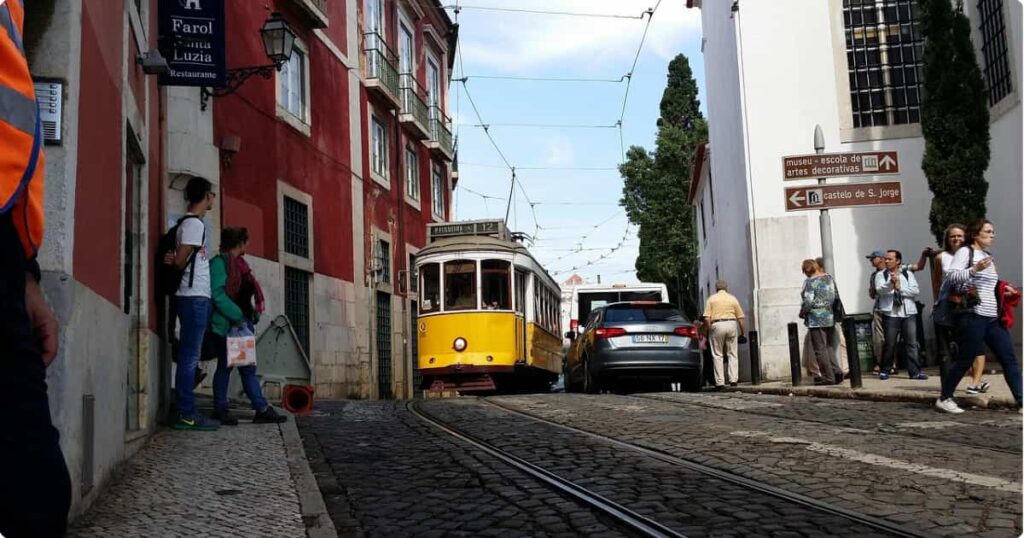
Portugal packs remarkable variety into a small country — most first-timers underestimate how different each region feels.
- Lisbon: capital city, historic trams, fado music, world-class food scene
- Porto: smaller, grittier, famous for port wine and stunning riverside architecture
- Algarve: 150km of Atlantic coastline, dramatic cliffs, resort beaches
- Sintra: fairy-tale palaces 40 minutes from Lisbon by train
- Douro Valley: wine country inland from Porto — one of Europe’s most beautiful landscapes
- Alentejo: cork forests, medieval villages, ultra-rural Portugal — mostly missed by tourists
Most first-time visitors split time between Lisbon and Porto, then add the Algarve or Sintra as day trips or short detours.
Lisbon
Lisbon rewards slower travel more than almost any European capital.
The city’s historic neighborhoods — Alfama, Belém, and Mouraria — contain some of Europe’s oldest architecture. Alfama’s narrow streets lead up to São Jorge Castle, with views across the Tagus River that stop most visitors cold.
- Use: the tram network for the hills, metro for longer distances
- Visit: Belém Tower and Jerónimos Monastery — both UNESCO World Heritage Sites
- Avoid: tourist restaurants near the main squares — walk two streets back for better food at half the price
- Book ahead: Time Out Market for a Lisbon food overview on arrival
- Allow: minimum 3 full days — 4 is better
Lisbon is the natural starting point for any Portugal travel itinerary.
Porto
Porto is smaller than Lisbon but hits just as hard — and many travelers who expected to prefer Lisbon leave preferring Porto.
- Visit: Vila Nova de Gaia across the river for port wine cellar tours
- Walk: Livraria Lello, one of the world’s most photographed bookshops — book timed entry online
- Use: the metro for getting between neighborhoods efficiently
- Allow: 2 full days minimum — 3 to do it properly
- Day trip: Douro Valley wine train from Porto is a highlight for many visitors
Porto’s compact size means you can walk most of what matters without a plan.
The Algarve
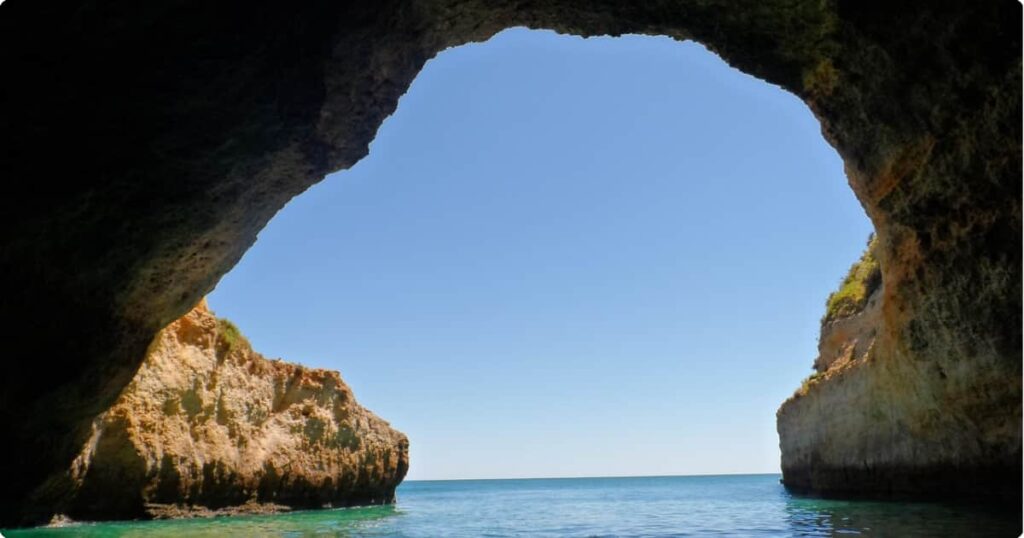
The Algarve is Portugal’s southern coastline and the country’s most popular beach destination.
- Best beaches: Praia da Marinha, Praia de Benagil, and Meia Praia near Lagos
- Avoid: Albufeira in July and August — overcrowded and overpriced
- Choose: Lagos or Tavira as a base for more authentic Algarve experience
- Book: Benagil Cave boat tours weeks ahead in summer
- Drive: a rental car is nearly essential in the Algarve — public transport is limited
The Algarve works best as a 4–7 day add-on after Lisbon or Porto, not as a standalone destination.
Sintra & Day Trips
Sintra is one of the most dramatic day trips in Europe — 40 minutes from Lisbon by direct train.
- Visit: Pena Palace first — arrive before 10am to beat the crowds
- Book: tickets online in advance — lines without pre-booking are brutal in summer
- Allow: a full day — three major palaces spread across the hills
- Also consider: Cascais beach town, 40 minutes by train from Lisbon in the opposite direction
- Skip: the tourist buses in Sintra — they’re expensive and slow
INSIDER SECRET: Take the Lisbon–Sintra train from Rossio station, not Oriente. It drops you directly in Sintra town — 10 minutes closer to the palaces.
Getting Around Portugal
Portugal’s transport infrastructure is solid for a country its size — but knowing which option to use where saves serious time.
- Trains: fast and affordable between major cities — Lisbon to Porto takes 3 hours
- Buses: cheaper than trains; slower but reach smaller towns
- Uber: available in Lisbon and Porto — cheaper and safer than taxis
- Car rental: essential for the Algarve, Alentejo, and rural routes
- Domestic flights: rarely worth it — distances are short and train is more central
Driving in Portugal
Driving in Portugal is manageable once you understand the road network and toll system.
- Tolls: many motorways use electronic tolling — rent a transponder or pre-register a card
- Driving side: right side of the road — same as the US
- Speed limits: 50km/h in towns, 90km/h on rural roads, 120km/h on motorways
- Parking: challenging in Lisbon and Porto city centers — use park-and-ride instead
- International Driving Permit: US travelers should carry one alongside their license
- Fuel: petrol stations are widespread — prices similar to UK rates
Driving is the best way to explore the Algarve coast, the Douro Valley, and the Alentejo.
Trains & Buses
Portugal’s rail network connects all major cities affordably and reliably.
- Book: CP (Comboios de Portugal) tickets online at cp.pt
- Alfa Pendular: the fast intercity train — book ahead for best prices
- Rede Expressos: the main national bus network for routes trains don’t cover
- Lisbon metro: clean, cheap, and covers most neighborhoods tourists need
- Porto metro: 6 lines — connects airport, city center, and riverside
Train travel between Lisbon and Porto is one of the most pleasant rail journeys in Southern Europe.
Where to Stay in Portugal
Accommodation options in Portugal span every budget, and quality at the mid-range is consistently high.
- Budget: hostels in Lisbon and Porto average €25–€45 per night for a private room
- Mid-range: 3–4 star hotels run €80–€160 per night in most cities
- Luxury: 5-star properties in Lisbon and the Algarve range from €250–€600+
- Pousadas: state-owned historic properties in castles and monasteries — a uniquely Portuguese experience
- Airbnb: widely available — good value for longer stays or groups
- Book ahead: for July and August, especially in the Algarve and Sintra
Travelers visiting Portugal in shoulder season find the best combination of availability, price, and atmosphere.
What to Eat & Drink in Portugal
Portuguese food is one of Europe’s great underrated cuisines — and it’s remarkably affordable.
- Pastel de nata: custard tarts — eat them fresh and warm from Pastéis de Belém in Lisbon
- Bacalhau: salt cod, prepared 365 different ways — try bacalhau à brás first
- Francesinha: Porto’s signature sandwich — rich, meaty, covered in beer-based sauce
- Grilled fish: sardines and sea bass cooked simply — the coastal standard
- Vinho verde: light, slightly sparkling white wine — fresh, cheap, and perfect for summer
- Galão: Portuguese milky coffee — halfway between a latte and a flat white
Portugal’s food culture rewards eating where locals eat. That means avoiding the main tourist squares and walking one or two streets off the obvious path.
Tours of Portugal: Are They Worth It?
Small group tours of Portugal work well for first-timers who want expert context without the effort of self-planning.
- Best for: solo travelers, first-time visitors, and anyone wanting curated local access
- Avoid: large bus tours — they move too fast and skip what matters
- Choose: small group tours capped at 12–16 people for the best experience
- Consider: food tours in Lisbon and Porto as a standalone experience
- Self-guided: confident travelers with 10+ days do equally well with good research
Tours of Portugal range from 7-day highlights packages to 14-day deep dives. For most US and UK travelers on their first visit, a 10-day small group tour combining Lisbon, Sintra, Porto, and the Algarve covers the essential ground efficiently.
The Verdict
Portugal deserves its reputation as one of Europe’s best-value, most rewarding destinations for US and UK travelers. Our research consistently shows that first-timers underestimate it — and repeat visitors can’t stop going back.
The combination of safety, affordability, food quality, and sheer scenic variety is difficult to match anywhere in Western Europe. Lisbon and Porto alone justify a trip. Add the Algarve or Sintra and you have one of the most complete destination packages on the continent.
Go in April, May, or September. Start in Lisbon. End in Porto. Eat the pastel de nata. You’ll understand why Portugal keeps winning.
