

Bordeaux has centuries of prestige. Napa has the marketing budget. Tuscany has the Instagram algorithm. But none of that tells you which wine region is actually worth your vacation days or your money.
The real problem isn’t finding a list of great wine regions. Every travel site has one. The problem is that no list tells you which region fits your travel style, your budget, or the kind of experience you actually want from a wine trip.
This guide organizes the world’s best wine regions the way a trip actually works by what you’ll see, spend, eat, and taste when you get there.
SHORT ANSWER:
The best wine regions for travelers are Burgundy, Tuscany, Douro Valley, Napa Valley, Mendoza, and Marlborough. Europe leads on history and food culture. New World regions win on accessibility and value. The right choice depends on your travel style and budget.
What Makes a Wine Region Worth Traveling To
Not every famous wine region delivers a great travel experience. Some are stunning to visit. Others are best left to the bottle.
- Pick regions where wineries offer public tastings — not all do
- Choose destinations that combine food, scenery, and culture alongside wine
- Avoid harvest season crowds in August and September if you prefer quieter visits
- Check entry requirements — some top estates require advance booking months ahead
- Consider flight connections: direct routes from the US/UK matter for short trips
The difference between a wine trip and a great wine trip is almost always the surrounding experience.
Scenery, Culture, and the Full Experience
Wine regions that make the best travel destinations share one quality. The landscape itself tells the story of the wine.
- Choose terraced vineyards over flat plains — Douro and Cinque Terre reward the eye
- Pick regions with historic towns nearby: Beaune for Burgundy, Siena for Tuscany
- Look for regions with strong food cultures attached — wine without local cuisine is half a trip
- Consider shoulder season visits in April–May or October for golden light and fewer crowds
Burgundy’s medieval villages and Tuscany’s cypress-lined roads deliver scenery that no other industry produces.
How to Choose the Right Region for Your Trip
Your wine knowledge level, trip length, and budget should drive the decision not a top-ten list.
- First-timers: choose Tuscany or Napa — infrastructure is strong and English is widely spoken
- Budget travelers: Douro Valley and Rioja offer world-class wine at a fraction of Burgundy prices
- Luxury seekers: Burgundy, Champagne, and Franschhoek set the global standard
- Food-focused travelers: Douro Valley, Tuscany, and Cape Winelands are the top three
- Short trips from the UK: Champagne and Burgundy are under two hours by train from Paris
The Best Wine Regions in Europe
Europe remains the center of gravity for wine travel. These regions set the global benchmark.
- Book tasting appointments at least 4–6 weeks ahead for top estates
- Rent a car — most European wine regions are not well served by public transport
- Combine wine regions where geography allows: Porto + Douro Valley, or Reims + Beaune
- Shoulder season (April–May, October) offers lower prices and fewer tourist crowds
- Budget €50–€150 per person per day for tastings, meals, and transport in Europe
No other continent matches Europe’s density of world-class wine destinations within short driving distance.
Burgundy, France
Burgundy is where wine becomes philosophy. This is the spiritual home of Pinot Noir and Chardonnay and the most studied wine region on earth.
The Route des Grands Crus runs through a string of villages Gevrey-Chambertin, Chambolle-Musigny, Vosne-Romanée each producing wines of staggering complexity. The medieval town of Beaune sits at the region’s heart and makes an excellent base. Most premier cru and grand cru domaines require advance appointments, but négociant houses in Beaune often take walk-ins.
Expect to pay more here than anywhere else in France. That’s not a deterrent it’s a signal of what’s at stake.
Champagne, France
Champagne is the most misunderstood wine region in the world. Most people know the wine. Very few understand how extraordinary the region is to visit.
The cathedral city of Reims anchors the northern zone. Épernay with its famous Avenue de Champagne lined with grand Maison cellars is the other essential stop. Houses like Moët & Chandon, Pol Roger, and Taittinger offer cellar tours that descend into kilometers of chalk tunnels beneath the city. Book these months ahead in summer.
INSIDER SECRET: Skip the big-house tours and book a visit to a small récoltant-manipulant (grower Champagne producer) instead. You’ll taste single-vineyard wines that never leave France, for a fraction of the famous-label price and the producer will often pour with you personally.
Tuscany, Italy
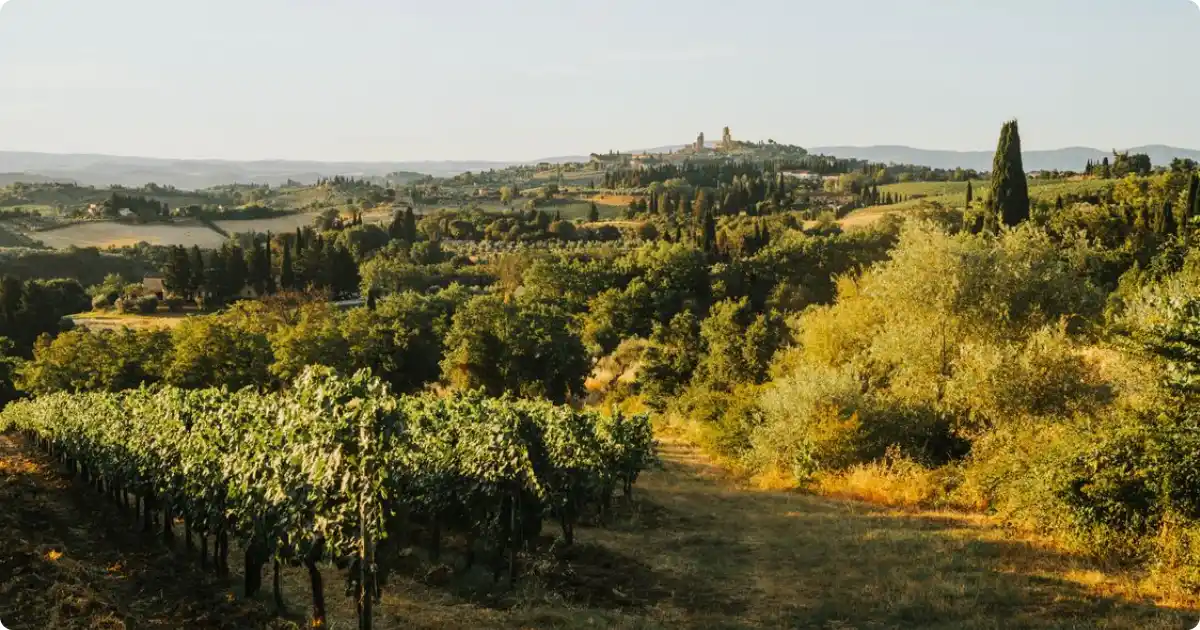
Tuscany is the most complete wine travel destination in the world. Wine, food, art, architecture, and landscape arrive in one package and the execution is flawless.
The Chianti Classico zone between Florence and Siena is the obvious starting point. Montalcino produces Brunello, one of Italy’s greatest reds. Montepulciano offers Vino Nobile. All three are within a comfortable day-trip loop from Siena or Florence.
- Book agriturismo stays inside working vineyards — they are outstanding value
- Visit during harvest (late September to October) for the most atmospheric experience
- Avoid August in Chianti — roads are congested and prices spike sharply
- San Gimignano and Volterra add medieval architecture to any wine itinerary
Tuscany rewards slower travel. Give it five days minimum not two.
Douro Valley, Portugal
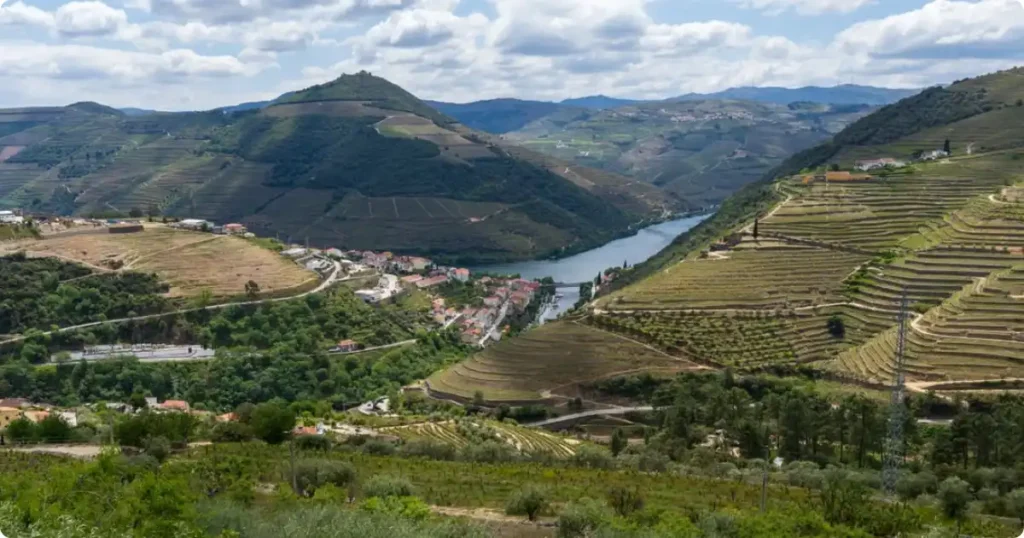
The Douro Valley is the most visually dramatic wine region in Europe. Terraced schist vineyards drop in sharp steps to the river below a UNESCO World Heritage landscape that stops travelers cold.
Porto is the natural gateway. The N-222 road along the river is considered one of the most scenic drives in the world. The valley produces both Port the world’s greatest fortified wine and increasingly impressive dry table reds and whites. Quinta do Crasto, Quinta do Vale Meão, and Ramos Pinto are among the estates worth visiting.
- Combine Porto city with the Douro Valley — they are 90 minutes apart by car
- Book a river boat trip through the valley for the best views of the terraced vineyards
- Visit Port wine lodges in Vila Nova de Gaia, across the river from Porto’s center
- The valley is at its most beautiful in spring (flowering) and October (harvest gold)
Douro punches far above its price point this is one of Europe’s best-value wine trips.
Rioja, Spain
Rioja is Spain’s most famous wine region and one of Europe’s most visitor-friendly. The region sits in northern Spain, anchored by the city of Logroño and surrounded by vineyards stretching across the Ebro River valley.
Tempranillo dominates here, producing wines that range from fresh joven styles to long-aged Gran Reservas with serious complexity. The Marqués de Riscal winery housed inside a Frank Gehry-designed titanium building is one of the most photographed wineries on earth. Nearby, the medieval village of Laguardia makes one of the best bases in European wine country.
- Combine Rioja with San Sebastián — one of Europe’s greatest food cities, two hours north
- Tastings at most bodegas cost €10–€25 per person and often include food pairings
- Gran Reservas from top producers represent outstanding value at €20–€50 per bottle
- The Museo de la Cultura del Vino in Briones is worth a half-day stop
Best New World Wine Regions Worth the Flight
The New World reshaped global wine in the 20th century. These regions now challenge Europe on quality and often win on experience.
- New World wineries tend to be more visitor-friendly than European estates
- English is universally spoken — a practical advantage for US and UK travelers
- Tasting room infrastructure is often superior: better signage, easier bookings, more walk-in access
- Combine wine regions with broader country travel — Mendoza plus Patagonia, or Napa plus San Francisco
Napa Valley, California
Napa is the easiest major wine region in the world for American travelers to reach and one of the most polished wine destinations on earth. The 30-mile valley north of San Francisco produces Cabernet Sauvignon that trades blows with Bordeaux’s finest.
Expect luxury at every turn. Tasting fees have risen sharply $50–$150 per person is now standard at top estates. However, the experience reflects the price: immaculate grounds, expert staff, and wines of genuine world-class quality. Yountville anchors some of the best restaurants in California. Thomas Keller’s The French Laundry remains one of the great wine-pairing dining experiences anywhere.
- Book Napa tasting appointments 4–8 weeks ahead in summer — walk-ins are rare at top wineries
- Sonoma, directly west, offers similar quality at significantly lower prices and fewer crowds
- Use a driver or wine tour operator — DUI laws are strict and roads are narrow
Willamette Valley, Oregon
Willamette Valley is America’s answer to Burgundy and serious wine drinkers take that comparison literally. Oregon’s cool-climate Pinot Noir from the Dundee Hills and Eola-Amity Hills rivals the finest examples from France.
The region is more laid-back and affordable than Napa. Most tasting rooms are genuinely welcoming to walk-ins on weekends. Portland is 45 minutes away one of America’s best food cities. This combination of wine quality, food culture, and accessible pricing makes Willamette one of the most underrated wine trips in the US.
Mendoza, Argentina
Mendoza sits in the rain shadow of the Andes at 3,000 feet elevation conditions that produce Malbec of extraordinary depth. Argentina’s wine capital is also one of South America’s most livable cities: wide boulevards, excellent steakhouses, and world-class wine at honest prices.
- Luján de Cuyo and Valle de Uco are Mendoza’s two finest sub-regions for serious wine
- Combine a Mendoza wine trip with a day trip to Aconcagua base camp for the scenery
- Tastings and winery lunches cost a fraction of European equivalents outstanding value
- Argentine asado (barbecue) paired with Malbec is one of travel’s great simple pleasures
Marlborough, New Zealand
Marlborough produces the Sauvignon Blanc that changed how the world drinks white wine. The Wairau Valley’s intense sunshine and cool nights create an aromatic freshness that made New Zealand wines famous globally.
The Marlborough Wine Trail connects most of the region’s key producers by bike or car. Cloudy Bay remains the benchmark estate but dozens of smaller producers offer excellent tastings in a completely relaxed, crowd-free environment. Combine with the Marlborough Sounds, one of New Zealand’s most beautiful coastal landscapes, for a complete trip.
Franschhoek & Stellenbosch, South Africa
The Cape Winelands sit 45 minutes from Cape Town and deliver one of the world’s most complete wine travel experiences. Franschhoek meaning “French Corner” was founded by Huguenot settlers in the 17th century. Its main street is lined with exceptional restaurants and boutique wineries.
Stellenbosch, 15 minutes away, is the academic and commercial heart of South African wine. The region produces world-class Chenin Blanc, Cabernet Sauvignon, and Pinotage. Most estates offer food-and-wine pairings on beautiful mountain-framed terraces.
- Cape Winelands combine perfectly with Cape Town, one of the world’s great food cities
- South African wine represents extraordinary value top bottles rarely exceed $30 locally
- Visit during the Cape summer: November to March offers ideal weather and harvest access
Emerging Wine Destinations Travelers Are Discovering
These regions lack the global profile of Burgundy or Napa but increasingly challenge them on both wine quality and experience.
- Emerging regions offer fewer crowds, lower prices, and more authentic winery access
- Language barriers are more common — plan ahead or use a local guide
- Infrastructure is improving rapidly — but book ahead as accommodation is limited in peak season
Santorini, Greece
Santorini’s volcanic ash soils produce Assyrtiko a white wine of mineral intensity and longevity that surprises every serious wine traveler who encounters it. The island’s basket-trained vines, coiled low against the pumice to withstand Aegean winds, are among the most distinctive viticultural sights anywhere.
Domaine Sigalas and Hatzidakis are the benchmark producers. Tastings here come with caldera views that make every other wine region feel ordinary by comparison.
Central Otago, New Zealand
Central Otago is the world’s southernmost wine region and the most scenically dramatic. Pinot Noir thrives in the extreme continental climate hot dry summers and genuinely cold winters produce wines of precision and power.
The landscape around Queenstown and Wanaka is the same terrain used for Lord of the Rings filming. This combination of extraordinary scenery and serious wine makes Central Otago one of the most compelling wine travel destinations in the Southern Hemisphere.
Wachau, Austria
The Wachau is a 30km stretch of the Danube west of Vienna — a UNESCO World Heritage valley of terraced vineyards, medieval fortresses, and Grüner Veltliner and Riesling of world-class quality. It is one of Europe’s most beautiful and least-visited wine regions.
Vienna is 90 minutes by car making the Wachau an easy addition to any Austria trip. Wine tourism infrastructure here remains genuinely underdeveloped, which means more authentic access and significantly lower prices than comparable European regions.
Alentejo, Portugal
Alentejo covers roughly a third of Portugal’s landmass but produces some of its most approachable and food-friendly wines. The rolling cork oak plains, whitewashed villages, and slow pace of life make this one of Europe’s most underrated rural destinations.
Red wines here based on Aragonez, Trincadeira, and Touriga Nacional deliver rich, generous profiles at prices that embarrass more famous regions. The city of Évora, a UNESCO World Heritage town, makes an excellent base.
Best Wine Regions by Travel Style
| Travel Style | Best Region | Country | Key Wine | Why It Works |
|---|---|---|---|---|
| First-Timers | Tuscany | Italy | Chianti, Brunello | English-speaking staff, guided tours, world-class food and art alongside wine |
| First-Timers | Napa Valley | USA | Cabernet Sauvignon | Polished infrastructure, easy booking, close to San Francisco |
| Luxury | Burgundy | France | Pinot Noir, Chardonnay | World’s most prestigious wines, Michelin-starred dining throughout |
| Luxury | Champagne | France | Champagne | Iconic cellar tours, under two hours from London by train |
| Luxury | Franschhoek | South Africa | Chenin Blanc, Cabernet | Five-star estates with mountain views at lower prices than Europe |
| Budget | Rioja | Spain | Tempranillo | World-class wine, low tasting fees, affordable accommodation |
| Budget | Douro Valley | Portugal | Port, Douro Reds | UNESCO landscape, outstanding value, excellent food culture |
| Budget | Mendoza | Argentina | Malbec | Low cost of living, Andean scenery, world-class steak pairings |
| Food + Wine | Tuscany | Italy | Chianti, Brunello | Most naturally integrated food-and-wine culture in the world |
| Food + Wine | Rioja + San Sebastián | Spain | Tempranillo, Txakoli | Most concentrated food-and-wine combination in Europe |
| Food + Wine | Cape Winelands + Cape Town | South Africa | Chenin Blanc, Pinotage | World-class food city 45 minutes from exceptional wine estates |
The best wine region for your trip depends on what you’re actually looking for not what’s most famous.
Best for First-Timers
- Choose Tuscany or Napa Valley — English-speaking staff, excellent infrastructure
- Both regions offer guided tours that handle logistics, transport, and booking
- Avoid regions with limited public access to wineries or language barriers
- Tuscany adds food, art, and architecture as backup if wine fatigue sets in
Best for Luxury Wine Travel
- Burgundy: the world’s most prestigious wines, matched by Michelin-starred dining
- Champagne: iconic cellar tours, the finest bubbles on earth, under two hours from London
- Napa Valley: American luxury at its most polished — exceptional hotels and restaurants
- Franschhoek: five-star wine estates with mountain views, at a fraction of European prices
Best for Budget Wine Travelers
- Rioja: world-class Tempranillo, low tasting fees, affordable accommodation
- Douro Valley: extraordinary scenery and Port wine at honest Portuguese prices
- Mendoza: Argentina’s low cost of living makes this one of the world’s best-value wine trips
- Alentejo: Portugal’s most underrated region delivers exceptional value across the board
Best for Food and Wine Combined
- Tuscany: the world’s most naturally integrated food-and-wine culture
- Douro Valley and Porto: outstanding Portuguese cuisine alongside the Douro’s best reds
- San Sebastián + Rioja: the most concentrated combination of great food and wine in Europe
- Cape Winelands + Cape Town: one of the world’s most exciting food cities, 45 minutes from world-class wine
How to Plan a Wine Region Trip from the USA or UK
| Region | Country | Daily Budget (Per Person) | Avg. Tasting Fee | Best Value Stay | Trip Tier |
|---|---|---|---|---|---|
| Alentejo | Portugal | $100–$150 | Free–$15 | Évora guesthouse | Budget |
| Mendoza | Argentina | $100–$150 | Free–$20 | City hotel, Luján de Cuyo | Budget |
| Rioja | Spain | $120–$170 | $10–$25 | Logroño or Laguardia | Budget |
| Douro Valley | Portugal | $150–$250 | $10–$30 | Quinta guesthouse, Pinhão | Mid-Range |
| Marlborough | New Zealand | $180–$280 | Free–$25 | Blenheim boutique hotel | Mid-Range |
| Tuscany | Italy | $200–$350 | $20–$50 | Agriturismo, Chianti zone | Mid-Range |
| Willamette Valley | USA | $200–$300 | $25–$50 | McMinnville inn | Mid-Range |
| Franschhoek | South Africa | $200–$350 | $10–$30 | Winelands guest farm | Mid-Range |
| Champagne | France | $300–$500 | $30–$80 | Épernay boutique hotel | Luxury |
| Burgundy | France | $350–$600+ | $40–$150+ | Beaune wine hotel | Luxury |
| Napa Valley | USA | $400–$700+ | $50–$150+ | Yountville or St. Helena | Luxury |
Logistics separate a good wine trip from a frustrating one. These are the decisions that matter most.
Best Time to Visit Wine Regions
- Spring (April–May): wildflowers, green vineyards, low crowds, comfortable temperatures
- Harvest (late September–October): the most atmospheric time — but book everything months ahead
- Avoid August in European wine regions — peak tourist traffic, heat, and inflated prices
- Winter visits work in Napa, Cape Winelands, and Mendoza (Southern Hemisphere summer)
Guided Tours vs. Self-Guided
Both approaches work — the right choice depends on how much control you want.
- Guided tours handle bookings, transport, and insider access — worth it for first visits
- Self-guided trips require advance planning but deliver more flexibility and lower costs
- Hire a local driver for a day in complex regions like Burgundy or Douro — it’s often surprisingly affordable
- Wine tour operators in most major regions offer half-day and full-day options from $80–$250 per person
How Much Does Wine Travel Cost
Wine travel costs vary dramatically by region and style.
- Budget: $100–$150 per day (Alentejo, Mendoza, Rioja) — tastings, meals, guesthouse
- Mid-range: $200–$350 per day (Tuscany, Douro, Marlborough) — quality hotels and tasting experiences
- Luxury: $500+ per day (Burgundy, Napa, Champagne) — top estates and Michelin dining
- Tasting fees range from free (many New World regions) to $150+ per person (top Napa estates)
- Budget for a designated driver, taxi, or tour operator — wine regions rarely reward driving yourself after tastings
Final Word
The best wine regions in the world are not just about the wine. They are about the full experience the landscape, the food, the people who made what’s in your glass.
Our research points to Tuscany and Douro Valley as the two regions that consistently over-deliver for US and UK travelers combining scenery, cuisine, accessibility, and wine quality at a price that makes sense. For serious wine travelers, Burgundy remains the pinnacle.
The emerging regions Wachau, Alentejo, Central Otago are where the most interesting wine travel is happening right now. Less crowded. More authentic. Often better value.
Start with one region. Go deep rather than wide. A week in Burgundy will teach you more than a rushed tour of five countries ever could.
