

Spend two weeks planning a trip to Bali or Oaxaca, then book a cooking class in five minutes on the way to the airport and you’ve already made the most common culinary travel mistake.
The problem isn’t the class itself. It’s that most travelers treat it as a filler activity rather than a destination experience. The result is a forgettable kitchen session, a laminated recipe card, and a meal that tasted better at the restaurant down the street.
Bali, Oaxaca, and Mexico City each offer something genuinely different in price, depth, and what you actually walk away knowing. This guide tells you exactly what to expect, where to book, and which destination matches how you travel.
The Fast Take:
Bali, Oaxaca, and Mexico City are the top three destinations for cooking classes while traveling. Bali suits first-timers with spice-forward, market-to-kitchen formats from $35. Oaxaca leads for mole and indigenous cuisine from $60. Mexico City offers the widest culinary range from $45.
What Makes a Cooking Class Worth Adding to Your Trip
Not every cooking class deserves a slot on your itinerary. The best ones earn their place by teaching something you cannot learn at home.
- Choose classes that include a market visit — not just a kitchen session
- Avoid hotel-run classes that skip sourcing and focus only on plating
- Pick small groups — eight people or fewer means more hands-on time
- Check if the instructor is a local chef or a professional guide — big difference
- Look for classes that end with a shared meal, not a packaged recipe card
- Skip classes under 90 minutes — depth requires time
The single biggest indicator of quality is whether you leave knowing why a dish tastes the way it does not just how to assemble it.
Bali Cooking Classes Jungle Kitchens and Ancient Spice Routes
Bali has built one of the world’s most consistent culinary travel experiences. The island’s cooking culture runs deep rooted in ceremony, community, and an extraordinary spice tradition.
- Most Bali cooking classes run 4–6 hours including a market visit
- Ubud is the primary hub — Seminyak and Canggu offer shorter urban formats
- Expect to cook 4–7 dishes per session in a full-day class
- Average price: $35–$75 USD per person
- Most classes include transport from your accommodation
- Vegetarian and vegan formats are widely available
Bali rewards the traveler who slows down. A half-day class here feels like a full cultural immersion not just a meal.
What a Bali Cooking Class Actually Looks Like
A typical Bali cooking class starts before 8am. Your instructor takes you to a local pasar a traditional wet market where the day’s ingredients are selected. You’ll learn to identify galangal from ginger, smell the difference between fresh and dried turmeric, and understand why Balinese cooking begins with a base paste, not a recipe.
Back in an open-air kitchen often surrounded by rice paddies or tropical garden you cook dishes like nasi goreng, satay lilit, lawar, and pandan cake. The focus is technique over tourism. Most instructors explain the ceremonial context of each dish. By the time you sit to eat, the food means something.
Best Areas in Bali for Cooking Classes
Ubud is the undisputed center of Bali’s culinary class scene. The surrounding rice fields and traditional markets make it the most authentic environment on the island.
- Choose Ubud for the full traditional experience — market, spice garden, open-air kitchen
- Pick Seminyak if you want a shorter class closer to beach accommodation
- Consider Canggu for modern Balinese fusion formats — less traditional, more contemporary
- Avoid Kuta — the tourist density there filters into the cooking class quality
- Sidemen and Tegallalang offer smaller, quieter alternatives to Ubud’s busy operators
How to Book a Bali Cooking Class
Book directly through the school when possible you get better pricing and direct communication. Airbnb Experiences and Viator both list reputable Bali operators, but add a booking margin.
- Book at least 3 days in advance — top Ubud classes fill fast
- Ask if transport is included before comparing prices
- Confirm group size — anything over 12 guests loses the hands-on quality
- Read reviews specifically for the instructor, not just the food
- Traveling Spoon lists vetted home-cook experiences across Bali for a more personal format
Oaxaca Cooking Classes Mole, Markets, and Mezcal Culture
Oaxaca is the most complex culinary destination in this guide. Mexico’s food capital sits in a highland valley where seven distinct mole sauces, tlayudas, chapulines, and indigenous corn varieties converge in one extraordinary cooking tradition.
- Oaxaca cooking classes average $60–$120 USD per person
- Most classes run 4–5 hours with a Mercado Benito Juárez or Mercado 20 de Noviembre visit
- Mole negro is the signature dish — expect at least one class session dedicated to it
- Mezcal education is often woven into the cooking experience
- English-language classes are widely available in the city center
- Classes are available year-round — but November’s Día de los Muertos season books out months ahead
Oaxaca is where culinary travel stops being a hobby and becomes a serious education.
What an Oaxaca Cooking Class Actually Looks Like
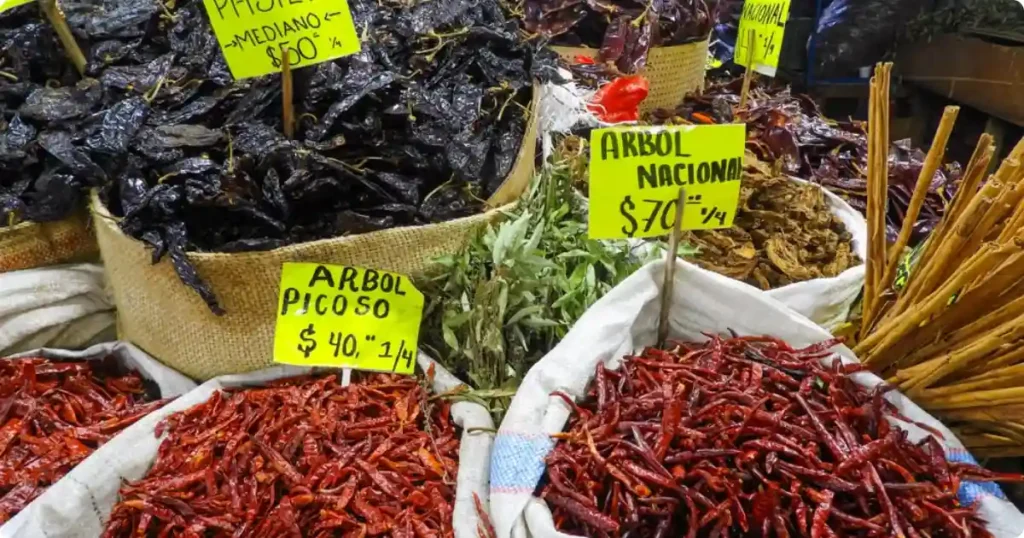
An Oaxaca class typically begins at the mercado. Your instructor usually a local cook with deep family roots in Oaxacan cuisine walks you through dried chile varieties, fresh herbs, heirloom corn, and the specific chocolate used in mole negro. The market itself is an education before a single dish is cooked.
Back in the kitchen, expect to grind spices by hand on a metate the traditional stone grinding tool. You’ll toast chiles, char tomatoes directly on a comal, and learn why Oaxacan mole takes hours, not minutes. Most classes produce three to five dishes. You eat everything together, family-style, with fresh tortillas made during class.
Local Tip: Ask your Oaxaca instructor to show you the difference between mezcal joven and reposado using locally produced bottles most will, and it extends your cultural education well beyond the kitchen.
Best Neighborhoods in Oaxaca for Culinary Classes
The historic center of Oaxaca holds the highest concentration of cooking class operators. Most are within walking distance of the main markets.
- Stay near Santo Domingo for easy access to the best cooking school operators
- Book market-first classes — skipping the mercado misses half the Oaxacan experience
- Avoid classes based entirely outside the city — authenticity dilutes with distance
- Look for classes run from a casa particular — a private home — for the most genuine format
- El Origen and Los Danzantes both offer structured culinary experiences with serious kitchen credentials
How to Book an Oaxaca Cooking Class
Oaxaca’s top cooking classes book out weeks ahead during peak season October through December especially.
- Book 2–4 weeks ahead for October and November travel
- Use Airbnb Experiences for vetted private home formats
- Check if your class visits both markets — Benito Juárez and 20 de Noviembre serve different purposes
- Confirm the class covers at least one mole variation — it’s non-negotiable in Oaxaca
- Ask about group cap — the best Oaxaca classes cap at six to eight guests
Mexico City Cooking Classes Urban Kitchens and Deep Culinary Roots
Mexico City is the most diverse culinary classroom in Latin America. It holds pre-Hispanic cooking traditions, colonial-era techniques, and a contemporary food scene that ranks among the world’s best. A cooking class here is different from anywhere else because the city itself is the ingredient.
- Mexico City cooking classes range from $45–$150 USD per person
- Classes range from 2-hour focused sessions to full-day culinary tours
- Neighborhoods like Roma Norte, Condesa, and Coyoacán each offer distinct formats
- Expect to cook mole, tamales, salsas, or Mexican street food depending on class focus
- Many operators offer market-to-table formats including Mercado de la Merced or Mercado de Jamaica
- Pre-Hispanic cuisine classes — focusing on ancient Mexican ingredients — are unique to CDMX
Mexico City rewards the curious traveler. The deeper you go, the better it gets.
What a Mexico City Cooking Class Actually Looks Like
A Mexico City class varies more than Bali or Oaxaca because the city’s culinary range is wider. You might spend a morning at Mercado de la Merced one of the largest markets in Latin America learning to select epazote, huitlacoche, and chiles en nogada ingredients. Or you might join a smaller Roma Norte kitchen session focused entirely on tamale technique.
The strongest CDMX classes connect each dish to its cultural and historical context. A good instructor explains why the mole at Pujol took years to develop and what that means for how you understand the sauce you’re making. Mexico City’s classes have intellectual depth that matches their culinary range.
Best Areas in Mexico City for Cooking Classes
Mexico City’s cooking class scene is spread across several distinct neighborhoods, each with a different character.
- Pick Roma Norte for contemporary culinary school formats in a walkable, stylish neighborhood
- Choose Coyoacán for a more traditional, local market-first experience
- Consider San Ángel for boutique cooking studios with a quieter pace
- Avoid classes based in tourist-heavy Zona Rosa — quality drops with foot traffic
- La Merced neighborhood offers the most authentic market access but requires a guide
How to Book a Mexico City Cooking Class
Mexico City has the widest booking options of the three destinations which makes vetting more important, not less.
- Use Airbnb Experiences for home-cook formats with strong community reviews
- Check if your class visits a working market — not a curated tourist market version
- Confirm instructor credentials — look for trained chefs or documented culinary lineage
- Ask if the class covers pre-Hispanic ingredients — a sign of real depth
- Book at least one week ahead — popular Saturday classes in Roma Norte fill fast
Bali vs Oaxaca vs Mexico City Which Destination Wins for Culinary Travel
| Factor | Bali | Oaxaca | Mexico City |
|---|---|---|---|
| Average Class Price | $35–$75 USD | $60–$120 USD | $45–$150 USD |
| Typical Duration | 4–6 hours | 4–5 hours | 2–6 hours |
| Market Visit Included | Most classes | Most classes | Varies by operator |
| Signature Dishes | Nasi goreng, satay lilit, lawar | Mole negro, tlayuda, tamales | Mole, tamales, pre-Hispanic cuisine |
| Best For | First-time culinary travelers | Regional food education | Culinary range and depth |
| Group Size (typical) | 6–12 guests | 6–8 guests | 4–12 guests |
| Vegetarian Options | Widely available | Available on request | Available on request |
| Booking Lead Time | 3+ days | 2–4 weeks (peak season) | 1+ week (weekends) |
| English Instruction | Standard | Widely available | Widely available |
| Culinary Complexity | Moderate | High | Very High |
Each destination offers a completely different culinary travel experience. The right choice depends on what you want to learn and how deep you want to go.
- Choose Bali for a serene, sensory experience rooted in spice and ceremony
- Choose Oaxaca if mole, mezcal, and indigenous Mexican cuisine is your primary goal
- Choose Mexico City for the widest culinary range and the most intellectually demanding classes
- Pick Bali if you’re a first-time culinary traveler the format is the most welcoming
- Pick Oaxaca if you want the single most focused regional food education available
- Pick Mexico City if you want urban depth, diversity, and proximity to world-class restaurants
No destination loses here. But Oaxaca edges ahead for pure culinary education. Mexico City wins for variety. Bali wins for experience.
How to Choose the Right Cooking Class While Traveling
| What to Check | Green Flag | Red Flag |
|---|---|---|
| Market Visit | Included in the class itinerary | Kitchen-only — no sourcing component |
| Group Size | 8 or fewer guests | 12 or more guests |
| Instructor Background | Local chef or documented culinary lineage | Professional guide with no cooking credentials |
| Duration | 3 hours minimum — 4 to 6 hours ideal | Under 90 minutes |
| Meal at End | You eat what you cook — communal table | Packaged recipe card only |
| Reviews | Specific praise for instructor knowledge | Generic “great experience” with no detail |
| Booking Platform | Direct with school or vetted Airbnb Experience | Mass tourism aggregator with no instructor info |
| Dietary Accommodation | Confirmed in writing before arrival | Vague “we can try” response |
| Price Transparency | All inclusions listed — transport, market, meal | Base price with unclear add-ons |
| Class Language | Confirmed English instruction | Translated only — instructor speaks no English |
The class that looks best on Instagram is rarely the one that teaches you the most. Use these filters before you book.
- Prioritize market visits — they separate real classes from kitchen theatre
- Check group size — eight or fewer means hands-on, twelve or more means watching
- Read instructor reviews specifically — not just overall class ratings
- Confirm the language of instruction before booking
- Ask if dietary restrictions are accommodated — good operators plan around them
- Look for classes that end with a communal meal — it signals the instructor values the full experience
Price is not a reliable quality indicator in culinary travel. Some of the best classes cost $40. Some of the worst cost $130.
What to Expect on the Day Practical Guide for First-Timers
First-time culinary travelers often arrive underprepared. These details matter more than they seem.
- Wear closed-toe shoes — market floors and kitchen tiles are unforgiving
- Arrive 10 minutes early — market classes often move immediately at start time
- Bring a small notebook — recipe cards get lost, handwritten notes survive the trip
- Eat a light breakfast — you’ll taste throughout the class and eat a full meal at the end
- Ask questions constantly — instructors value curiosity over cooking skill
- Take photos of ingredients at the market — not just the finished dishes
Most culinary travel regrets come from not engaging enough, not from cooking badly. The instructor has seen every skill level. What they remember is who asked the best questions.
Closing Thoughts
We’ve researched culinary travel across dozens of destinations. Bali, Oaxaca, and Mexico City sit at the top because each one offers something the others cannot. Bali delivers serenity and spice culture. Oaxaca delivers the world’s most complex regional cuisine in its original setting. Mexico City delivers intellectual depth and culinary range that rivals any food capital on earth.
If you’re booking one cooking class while traveling this year make it Oaxaca. The mole alone justifies the flight. If you want variety and urban energy, make it Mexico City. If you want beauty and calm alongside your cooking lesson, make it Bali. All three will change how you eat when you get home.
