


Aruba has one of the highest repeat-visitor rates in the Caribbean and that alone should make you pause before writing it off as just another resort island.
The problem is that most reviews pick a side. Either Aruba is paradise and you should book immediately, or it’s an overpriced wind tunnel dressed up in tourist infrastructure. Neither version helps you decide whether your specific trip, your budget, and your expectations will actually be satisfied.
This article lays out exactly what Aruba does well, where it genuinely falls short, and which type of traveller will leave happy versus which type should look elsewhere entirely.
The Short Answer:
Aruba is worth visiting if you prioritise guaranteed sunshine, safety, and easy logistics. It sits outside the hurricane belt, accepts US dollars island-wide, and delivers world-class beaches. However, it is expensive, consistently windy, and mid-tier for snorkeling compared to Bonaire or the USVI.
Why Aruba Keeps Pulling Repeat Visitors
Aruba has the highest return-visitor rate in the Caribbean. That loyalty comes from a specific combination of factors most islands cannot match.
- Check the forecast any month Aruba averages 82°F and sits outside the hurricane belt
- Skip the resort bubble the entire island is safe enough to explore independently at night
- Use US dollars everywhere no currency confusion or conversion losses
- Fly direct from most major US cities flight times under five hours from the East Coast
- Drive the full island in under an hour small size means zero wasted transit days
- Pick from all-inclusive resorts or low-key Airbnbs accommodation variety beats most Caribbean islands
The weather factor alone separates Aruba from nearly every competitor. Most Caribbean islands carry hurricane-season risk between June and November. Aruba does not. That makes it one of the only islands where summer bookings carry almost zero weather anxiety.
Safety is the other standout. Boulevards in Palm Beach and Oranjestad stay lit and lively well past midnight. Crime rates sit well below the Caribbean average. Solo travellers and families regularly explore beyond resort zones without issues.
The Real Downsides Nobody Mentions
Aruba earns its praise. However, there are legitimate frustrations that the tourism board will never highlight.
- Budget for US-level prices — restaurant mains run $25–$45, cocktails $12–$18
- Expect constant trade winds — great for kitesurfers, annoying for beach readers
- Accept a desert landscape — no lush jungle, no rainforest waterfalls, no tropical greenery
- Prepare for crowds on Palm Beach — high-rise resorts pack the shoreline shoulder to shoulder
- Skip the “authentic Caribbean” expectation — the island feels closer to Florida than to Jamaica
Cost is the biggest complaint. A couple spending a week in Aruba can easily burn through $4,000–$6,000 including flights, hotels, food, and activities. That puts it among the most expensive Caribbean destinations. Comparable weeks in Curaçao or Playa del Carmen cost 30–40% less.
The wind deserves its own warning. Trade winds blow consistently at 15–25 mph year-round. Eagle Beach handles this better than Palm Beach. However, anyone expecting calm, windless beach days will be disappointed.
Additionally, the desert terrain surprises first-time visitors. Aruba is flat, arid, and covered in cacti. Arikok National Park offers rugged beauty. However, travellers expecting Caribbean jungle will find a landscape closer to the American Southwest.
Is Aruba Good for Snorkeling?
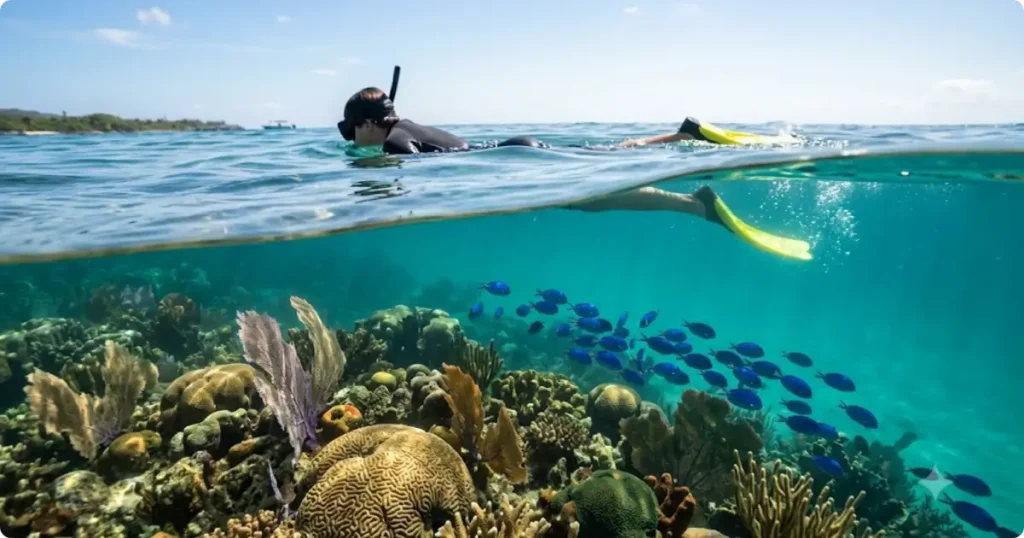
This is one of the most searched questions about Aruba. The honest answer is complicated.
- Visit Mangel Halto for Aruba’s best reef healthy coral, blue tang, parrotfish, and eels
- Snorkel Arashi Beach for easy beginner access shallow water, sandy bottom, colourful small fish
- Book a boat tour to the Antilla shipwreck the largest wreck in the Caribbean is genuinely impressive
- Bring your own gear rental quality varies wildly and most beach spots lack vendors
- Expect wind chop on most days conditions limit visibility compared to calmer islands
Aruba offers decent snorkeling. Mangel Halto genuinely surprised us with reef quality and fish variety. Boca Catalina and Tres Trapi also deliver solid sessions on calm days.
However, honest comparison matters. Bonaire’s shore diving and snorkeling are world-class over 80 protected dive sites with pristine coral. St John USVI offers Trunk Bay and Waterlemon Cay, which outperform anything in Aruba. For serious snorkelers, Aruba ranks mid-tier in the Caribbean.
INSIDER SECRET: Book the earliest morning snorkel slot available. Wind picks up by 10am most days. Early sessions at Mangel Halto offer dramatically better visibility and calmer water than anything after midday.
Aruba or Bonaire Which Is Better?
| Factor | Aruba | Bonaire |
|---|---|---|
| Best For | Beach resorts, nightlife, families | Diving, snorkeling, solitude |
| Beaches | Wide white sand, calm west coast | Rocky coastline, few sandy spots |
| Snorkeling / Diving | Decent — mid-tier Caribbean | World-class — 80+ protected sites |
| Hotel Cost Per Night | $300–$600 average | $150–$300 average |
| Restaurant Meal (Mains) | $25–$45 | $15–$30 |
| Direct US Flights | Many major cities | Limited — most routes connect |
| Nightlife | Casinos, beach bars, clubs | Minimal — quiet evenings |
| Safety | Excellent — low crime island-wide | Excellent — low crime island-wide |
| Hurricane Risk | Outside hurricane belt | Outside hurricane belt |
| Vibe | Developed, Americanised, convenient | Laid-back, DIY, nature-focused |
| Ideal Trip Length | 5–7 days | 4–6 days |
This comparison comes up constantly. Both islands belong to the ABC chain and sit outside the hurricane belt. Beyond that, they serve completely different travellers.
- Choose Aruba for resort beaches, nightlife, and convenience choose Bonaire for world-class diving and solitude
- Expect Aruba prices 25–40% higher than Bonaire for hotels and dining
- Fly direct to Aruba from most US cities Bonaire requires a connection for most routes
- Walk the Palm Beach strip for shopping and casinos Bonaire has one stoplight and zero nightlife
- Pick Aruba if this is your first Caribbean trip pick Bonaire if you own dive gear
Aruba wins on infrastructure, beaches, and ease of travel. Bonaire wins on underwater experiences, affordability, and authentic Caribbean atmosphere. Neither island is objectively better. The right choice depends entirely on what kind of holiday you actually want.
A growing number of travellers combine both islands. A 30-minute flight connects them. Four days on each island covers the highlights of both without feeling rushed.
Who Should Skip Aruba Entirely
Aruba is not a universal recommendation. Certain traveller types will leave disappointed.
- Skip Aruba if you want lush tropical scenery the desert landscape feels barren to some visitors
- Skip Aruba if you’re on a tight budget daily costs rival Miami and the Florida Keys
- Skip Aruba if you’re a serious diver or snorkeler Bonaire, Curaçao, and the USVI offer more underwater variety
- Skip Aruba if you want authentic local culture the resort zones feel heavily Americanised
- Skip Aruba if you dislike wind constant trade winds are not a seasonal issue
Budget-conscious travellers especially should look elsewhere. Curaçao delivers similar Dutch Caribbean charm with better cultural depth and lower prices. Meanwhile, Mexico’s Caribbean coast offers comparable beach quality at roughly half the cost.
Who Will Absolutely Love Aruba
Aruba excels for a specific type of traveller. If the following describes you, book confidently.
- Choose Aruba if you want guaranteed sunshine for a winter escape no other Caribbean island matches the weather consistency
- Choose Aruba if safety is your top priority it ranks among the safest destinations in the Caribbean
- Choose Aruba if you want a low-stress first Caribbean trip English is widely spoken, US dollars work everywhere, infrastructure is excellent
- Choose Aruba if you love beach-hopping — Eagle Beach, Baby Beach, and Arashi each offer distinct experiences
- Choose Aruba if you enjoy off-road adventure Arikok National Park delivers 4×4 trails, caves, and a natural pool
Couples and families consistently rate Aruba highly. The combination of safety, predictable weather, and resort infrastructure removes the friction that makes some Caribbean trips stressful.
Eagle Beach alone justifies the trip for many visitors. It consistently ranks among the top beaches in the world. Wide, uncrowded, and backed by low-rise properties rather than high-rise towers it delivers the Caribbean postcard moment that Palm Beach sometimes cannot.
Aruba Pros and Cons: Quick Summary
Pros: Guaranteed sunshine, no hurricanes, safe streets, US dollars accepted, direct flights from US cities, world-class Eagle Beach.
Cons: Expensive daily costs, constant trade winds, desert landscape, mid-tier snorkeling, crowded Palm Beach resort strip.
Our Call
We walked away from Aruba with a clear picture. The island does three things better than almost anywhere in the Caribbean: weather, safety, and ease of travel. Those three factors alone make it worth visiting for the right person.
However, Aruba is not the best Caribbean island for everyone. Budget travellers, serious divers, and culture-seekers will find better value elsewhere. The prices are real. The wind is relentless. The landscape is desert, not jungle.
Our recommendation: book Aruba if guaranteed sunshine and zero-stress logistics matter more than anything else. If underwater experiences or budget stretching rank higher, explore the full Caribbean budget guide before committing. Either way, go in with clear expectations and Aruba will deliver.
