


I spent years chasing summit views and waterfall trails across Europe and the US. Meanwhile, some of the most dramatic hiking on Earth sat just a few hours south by plane.
Most travelers book the Caribbean for beaches and all-inclusives. However, dozens of islands hide volcanic peaks, rainforest ridgelines, and coastal trails that rival anything in Central America or Southeast Asia. The problem is figuring out which island actually matches your fitness level and adventure goals.
This guide breaks down the best Caribbean islands for hiking by difficulty. I cover trail conditions, standout routes, and which islands pair hiking with beaches and snorkeling — so every day delivers something different.
QUICK ANSWER: Dominica, St. Lucia, and Guadeloupe offer the Caribbean’s most challenging trails. Puerto Rico, Grenada, and St. Kitts suit moderate hikers. Aruba, Bonaire, and Antigua deliver easy scenic walks. Most islands pair hiking with beaches and snorkeling within the same trip making the Caribbean one of the best tropical hiking destinations in the world.
Why the Caribbean Is an Underrated Hiking Destination
The Caribbean sits on a volcanic island arc. That geology created dramatic peaks, crater lakes, and rainforest valleys across dozens of islands.
- Pick from volcanic summits above 3,000 feet on multiple islands
- Explore the Caribbean’s only long-distance trail — 115 miles across Dominica
- Hike through the sole tropical rainforest in the US National Forest System
- Combine summit mornings with afternoon snorkeling on the same island
- Access trails year-round thanks to a mild tropical climate
Most visitors never leave the resort strip. As a result, trails stay uncrowded even during peak season. That combination of dramatic terrain and low foot traffic makes Caribbean hiking feel like a genuine discovery.
Best Caribbean Islands for Serious Hikers
These islands demand real fitness. Expect steep elevation, rugged terrain, and trails that take a full day. The reward is world-class scenery with almost no crowds.
Dominica — The Nature Island
Dominica is the Caribbean’s undisputed hiking capital. The island’s volcanic interior is covered in dense rainforest, river valleys, and geothermal vents.
- Tackle the Boiling Lake Trail — a 6-hour round trip through the Valley of Desolation
- Walk sections of the Waitukubuli National Trail, stretching 115 miles coast to coast
- Reach Middleham Falls, the tallest waterfall in the eastern Caribbean
- Expect river crossings, boulder scrambles, and steep jungle terrain
- Hire a local guide for advanced trails — conditions change fast after rain
Dominica earned its “Nature Island” nickname honestly. Morne Trois Pitons National Park holds UNESCO World Heritage status. Because the island lacks large resort beaches, tourism stays low. That means trails feel wild and unmanaged in the best possible way.
Getting there takes effort. No direct flights connect from most US cities. Most travelers route through Barbados, Antigua, or Guadeloupe. However, that extra step filters out casual visitors and keeps the trails quiet.
INSIDER SECRET: Ferry services connect Dominica to Martinique, Guadeloupe, and St. Lucia. Combining two or three islands into one hiking trip cuts per-island flight costs and doubles your trail variety.
St. Lucia — Volcanic Peaks and Coastal Trails
St. Lucia’s twin Pitons dominate every postcard. However, actually climbing them is a serious physical challenge.
- Summit Gros Piton (2,530 feet) — a steep 2-hour climb with a required guide
- Roughly one in five hikers doesn’t reach the Gros Piton summit
- Walk the Tet Paul Nature Trail for Piton views without the full climb
- Visit Sulphur Springs — a drive-in volcanic geothermal field near the trailheads
- Combine a morning summit push with an afternoon at Jalousie Beach below
Gros Piton is the more accessible of the two peaks. Petit Piton is steeper and more technical. Both are UNESCO World Heritage Sites and among the most photographed landmarks in the Caribbean.
St. Lucia works well for hikers who also want resort infrastructure. The island has far more accommodation options than Dominica. Therefore, it suits travelers who want challenging trails without roughing it.
Guadeloupe — French Caribbean Rainforest Treks
Guadeloupe flies under the radar for US and UK hikers. This French overseas territory offers volcanic terrain, dense jungle, and well-maintained trail systems.
- Summit La Soufrière, an active volcano reaching 4,813 feet
- Navigate the Carbet Waterfall trails — some sections require ropes
- Hike through Guadeloupe National Park across Basse-Terre island
- Experience French-Caribbean culture, food, and rum after the trail
- Choose from beginner waterfall walks to advanced volcanic scrambles
The island’s butterfly shape splits into two distinct halves. Basse-Terre holds the mountains and rainforest. Grande-Terre offers flat terrain, beaches, and reef snorkeling. As a result, one trip covers both serious hiking and easy beach days.
Jamaica — Waterfall Hikes and Blue Mountain Summit
Jamaica’s interior hides steep mountain terrain behind its beach-resort reputation. The Blue Mountains dominate the eastern parish with peaks above 7,000 feet.
- Summit Blue Mountain Peak at 7,402 feet — Jamaica’s highest point
- Expect a 4-hour climb covering nearly 6 miles of steep, forested trail
- Explore Mayfield Falls for an easy 2-hour waterfall walk near Montego Bay
- Discover more than 50 waterfalls hidden across the island’s rainforest interior
- Pair a mountain day with reef snorkeling along the north coast
Blue Mountain Peak is one of the Caribbean’s toughest day hikes. Many hikers start before dawn to catch sunrise from the summit. Meanwhile, the Mayfield Falls trail is flat and family-friendly — proving Jamaica serves all fitness levels.
Best Caribbean Islands for Moderate Hikers
These islands offer real trails with genuine elevation. However, most routes finish in 2-4 hours and don’t require advanced skills.
Puerto Rico — El Yunque National Forest
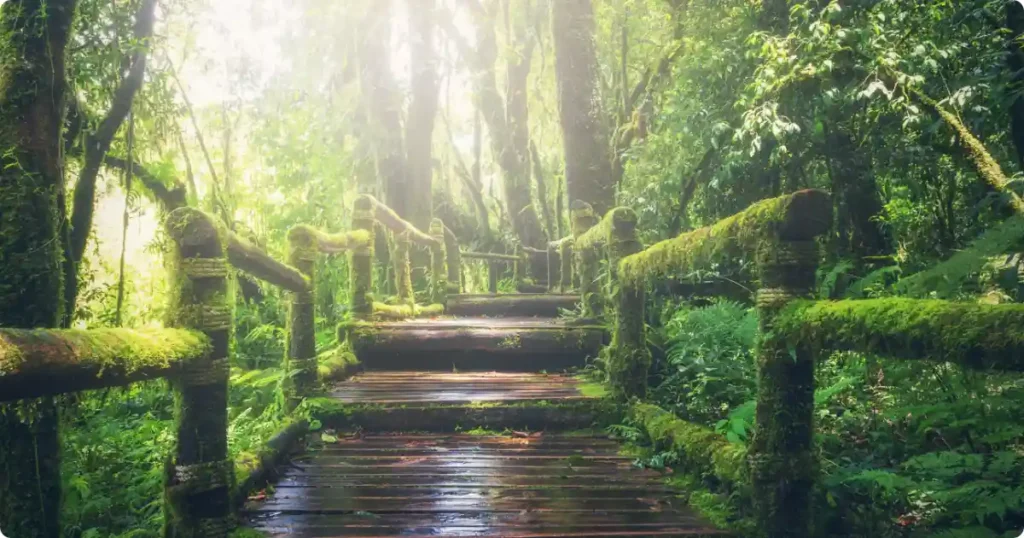
El Yunque is the only tropical rainforest in the US National Forest System. That makes it the most accessible Caribbean hiking for American travelers — no passport required.
- Hike the El Toro Trail to the forest’s highest peak — about 2.5 hours
- Walk the La Mina Trail to a popular swimming waterfall
- Choose from nine marked trails across the forest
- Reach the trailhead in 35 minutes from San Juan
- Expect slippery conditions — the forest receives over 100 inches of rain annually
El Yunque suits hikers who want tropical terrain without logistical complexity. Because it sits within US territory, cell service, trail signage, and emergency access are reliable. Additionally, San Juan offers urban dining and nightlife after trail days.
St. Kitts & Nevis — Volcanic Climbs and Forest Walks
St. Kitts and Nevis straddle a submerged volcanic mountain range. More than a quarter of the islands sit within protected national parkland.
- Climb Mount Liamuiga, the highest peak on St. Kitts — a dormant volcano crater
- Tackle the shorter but steeper Nevis Peak for advanced hikers
- Walk easier trails through the Central Forest Reserve
- Explore Brimstone Hill Fortress, a UNESCO World Heritage Site, after hiking
- Combine trail days with uncrowded beach time on both islands
These islands stay quieter than most Caribbean destinations. Therefore, trails feel genuinely remote even though the islands are small. The mix of challenging volcano climbs and gentle forest walks means couples or groups with mixed fitness levels can find routes that work.
Grenada — Spice Island Jungle Trails
Grenada’s mountainous interior hides waterfalls, crater lakes, and jungle trails beneath its “Spice Island” reputation.
- Hike the Mount Qua Qua trail in Grand Etang National Park for crater lake views
- Summit Mount St. Catherine at 2,760 feet — Grenada’s highest peak
- Walk to Seven Sisters Falls — a 1.5-hour jungle trail ending at cascading pools
- Explore nutmeg plantations and rum distilleries between trail days
- Use St. George’s as a comfortable base for all major trailheads
Grenada suits hikers who enjoy cultural immersion alongside outdoor adventure. The island’s food scene, spice farms, and rum heritage fill rest days naturally. Because trails vary from easy waterfall walks to full-day mountain climbs, the island works for mixed-ability groups.
Best Caribbean Islands for Easy Trails and Scenic Walks
These islands suit travelers who want outdoor time without technical difficulty. Expect short trails, clear paths, and rewarding views.
Aruba — Desert Terrain and Hooiberg Steps
Aruba breaks the Caribbean hiking mold entirely. Instead of jungle, the island offers dry desert landscape, cacti, and exposed rock formations.
- Climb Hooiberg’s 587 steps to the summit of Aruba’s second-highest peak
- Explore Arikok National Park — winner of USA Today’s Best Caribbean Attraction
- Walk coastal trails past natural bridges and limestone caves
- Enjoy reliable dry weather — Aruba sits outside the hurricane belt
- Pair morning hikes with afternoon snorkeling at Baby Beach
Arikok National Park covers roughly 20% of the island. The terrain feels more like the American Southwest than a typical Caribbean island. Because Aruba rarely gets rain, trail conditions stay predictable year-round.
Bonaire — National Park Trails with Ocean Views
Bonaire attracts divers and snorkelers first. However, Washington Slagbaai National Park offers surprisingly good hiking.
- Climb Subi Brandaris to Bonaire’s highest point — a short trail with a rock scramble near the summit
- Enjoy panoramic views stretching to Venezuela on clear days
- Walk coastal trails past flamingo salt flats and secluded coves
- Combine a morning hike with afternoon shore diving or snorkeling
- Expect dry, exposed terrain — bring sun protection and extra water
Bonaire is one of the best Caribbean islands for combining hiking and snorkeling in a single day. The island’s protected marine park surrounds the entire coastline. Therefore, virtually any beach offers underwater exploration after a trail.
Antigua — Coastal Paths and Shirley Heights
Antigua’s low-lying terrain makes it ideal for casual walkers. Trails here focus on coastal scenery rather than elevation.
- Hike the Carpenter Rock Trail — a 1.5-mile coastal path to Shirley Heights lookout
- Catch sweeping views of English Harbour and Falmouth Harbour from the summit
- Explore Nelson’s Dockyard, a UNESCO World Heritage Site, at trail’s end
- Walk easily accessible beach-to-beach paths along the south coast
- Time your visit for the Sunday afternoon barbecue at Shirley Heights
Antigua works best for travelers who want light outdoor activity between beach days. The trails are short, well-marked, and suitable for families.
BVI — Short Hikes with Big Payoffs
The British Virgin Islands offer a handful of compact trails. These short routes deliver dramatic views relative to their modest effort.
- Hike through Gorda Peak National Park on Virgin Gorda — under 2 hours round trip
- Scramble over boulders at The Baths for a unique coastal adventure
- Enjoy elevated views across multiple islands from each summit
- Access trailheads easily from nearby marinas and anchorages
- Combine a quick morning hike with sailing or snorkeling the rest of the day
The BVI suits island-hoppers more than dedicated hikers. However, each island offers at least one trail worth lacing up boots for.
How to Choose the Right Island for Your Hiking Trip
| Island | Difficulty | Top Trail | Trail Time | Snorkeling? | Guide Needed? |
|---|---|---|---|---|---|
| Dominica | Hard | Boiling Lake Trail | 6 hours | Limited | Yes — advanced trails |
| St. Lucia | Hard | Gros Piton Summit | 4–5 hours | Good | Yes — required for Pitons |
| Guadeloupe | Hard | La Soufrière Volcano | 4–5 hours | Good (Grande-Terre) | Recommended |
| Jamaica | Hard | Blue Mountain Peak | 8–10 hours | Good (north coast) | Recommended |
| Puerto Rico | Moderate | El Toro Trail | 2.5 hours | Good | No |
| St. Kitts & Nevis | Moderate | Mount Liamuiga | 4–5 hours | Decent | Recommended |
| Grenada | Moderate | Mount Qua Qua | 3 hours | Good | Optional |
| Aruba | Easy | Hooiberg Steps | 1 hour | Excellent | No |
| Bonaire | Easy | Subi Brandaris | 1–2 hours | Excellent | No |
| Antigua | Easy | Carpenter Rock Trail | 1 hour | Good | No |
| BVI | Easy | Gorda Peak | 1.5 hours | Excellent | No |
Choosing the right Caribbean island for hiking depends on three factors: fitness level, travel style, and what else matters to you beyond the trail.
- Pick Dominica or Guadeloupe for pure hiking focus and rugged terrain
- Choose St. Lucia or Grenada for trails plus resort comfort
- Pick Puerto Rico for easy logistics and no passport requirement
- Choose Aruba or Bonaire for hiking paired with world-class snorkeling
- Skip Antigua and BVI if hiking is your primary goal — they’re beach-first islands
Additionally, consider whether you want one deep island experience or a multi-island trip. Ferry routes connect Dominica, Martinique, Guadeloupe, and St. Lucia. Therefore, combining two islands into one trip is practical and cost-effective.
Best Time to Hike in the Caribbean
| Island | Best Hiking Months | Rainy Season | Hurricane Risk |
|---|---|---|---|
| Dominica | February – April | June – November | High |
| St. Lucia | December – April | June – November | Moderate |
| Guadeloupe | January – April | July – November | High |
| Jamaica | December – March | May – November | Moderate |
| Puerto Rico | December – April | May – November | High |
| St. Kitts & Nevis | January – April | June – November | Moderate |
| Grenada | January – May | June – December | Low |
| Aruba | Year-round | Minimal rainfall | Very Low |
| Bonaire | Year-round | October – January | Very Low |
| Antigua | December – April | August – November | Moderate |
| BVI | December – April | August – November | High |
The Caribbean hiking season follows the weather. Dry season runs roughly December through April across most islands.
- Hike December through April for the driest conditions and coolest temperatures
- Avoid September and October — peak hurricane season makes trails dangerous
- Expect rain year-round on volcanic islands like Dominica and Guadeloupe
- Pack for sudden weather shifts at elevation regardless of season
- Check trail closures before booking — storms can shut routes for weeks
February through April hits the sweet spot. Rainfall drops, temperatures stay comfortable, and trails dry out enough for safe footing. However, this window overlaps with peak tourism pricing. Therefore, shoulder months like November or early December can save money while still offering decent conditions.
What to Pack for Caribbean Hiking
Caribbean trails demand different gear than temperate hiking. Heat, humidity, and sudden rain define every outing.
- Use lightweight moisture-wicking layers — skip cotton entirely
- Pack trail shoes with aggressive grip — volcanic rock gets slippery when wet
- Bring at least 2 liters of water per person for any hike over 2 hours
- Carry reef-safe sunscreen — you’ll likely snorkel the same day
- Add a compact rain shell — afternoon showers hit without warning
A compact dry bag protects electronics during river crossings and sudden downpours. Because many Caribbean hikes end near swimmable beaches or waterfalls, packing a swimsuit and quick-dry towel in your daypack makes the most of every trail day.
The Verdict
I rank Dominica, St. Lucia, and Guadeloupe as the Caribbean’s top three hiking islands — period. Each delivers volcanic terrain, genuine physical challenge, and trail experiences that rival far more famous destinations.
However, the right island depends on who you are. First-time Caribbean hikers should start with Puerto Rico or Grenada. Serious trekkers belong on Dominica. Travelers who want trails and beaches in equal measure should book St. Lucia or Aruba.
The Caribbean remains one of the most underrated tropical hiking destinations in the world. Most travelers never discover what sits beyond the resort fence. Now you know exactly where to look.
